Animal Learning Center · Not currently at the zoo

African Penguin

Spheniscus demersus

Africa’s only native penguin: a seabird of the warm South African and Namibian coast that calls like a donkey.

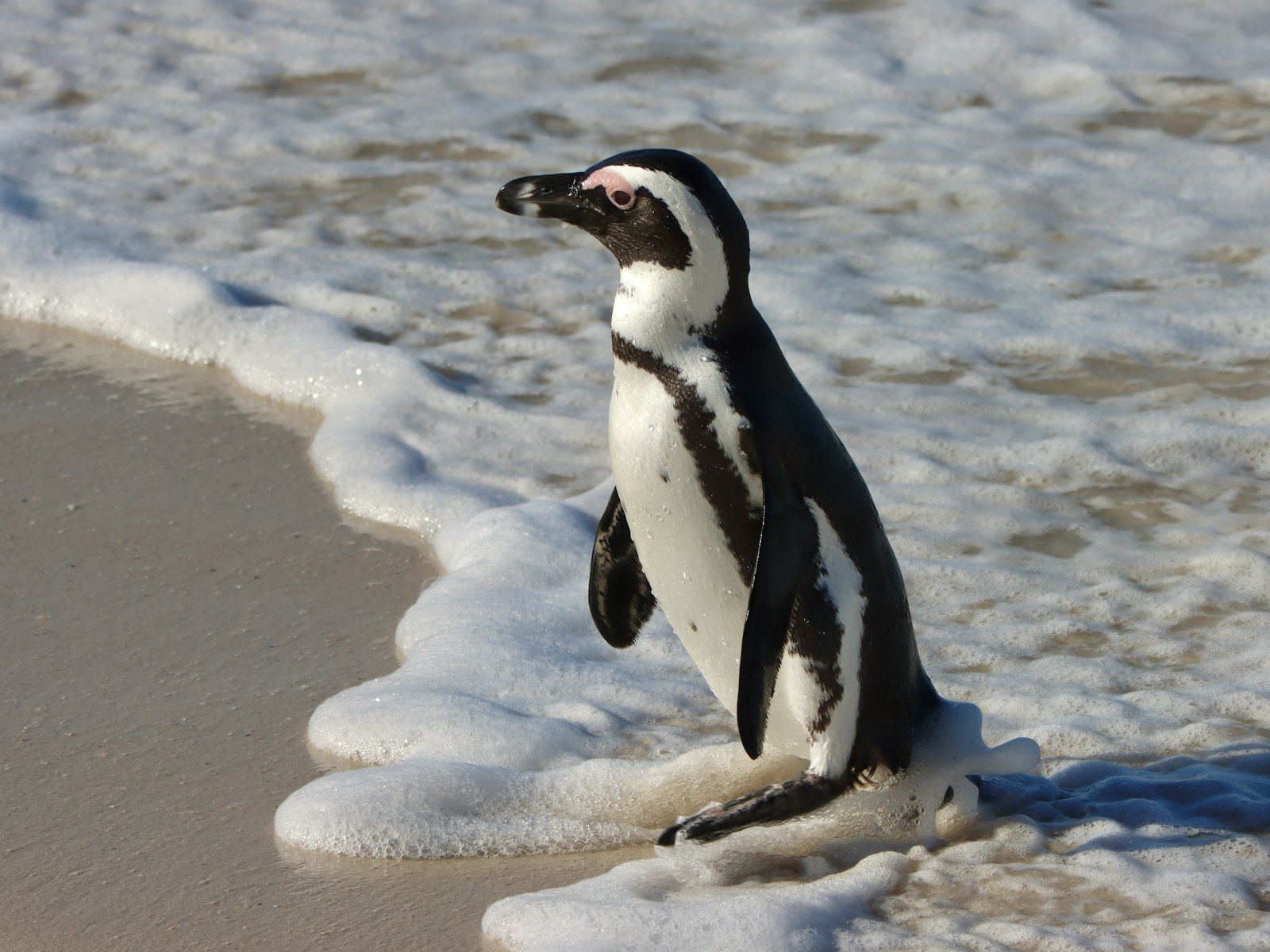
An African penguin standing at the water’s edge on a sandy beach
Size22–26 in tall
WeightAbout 7 lb
LifespanAbout 10–11 years
Conservation statusCritically Endangered

Animal Learning Center

Learn About the African Penguin

This penguin lives on African beaches.

BirdSouthern AfricaNot currently at the zoo

The African penguin is the only penguin native to Africa. It lives along the coasts and islands of South Africa and Namibia, nesting on sandy or rocky islands and at newer mainland colonies.

On land it walks upright. In the water it “flies” with its flipper-like wings, steering with its feet and tail. It is also loud: African penguins make donkey-like calls.

A note for visitors: the African penguin is not currently at Plumpton Park Zoo. This profile is part of our online Animal Learning Center, so you can keep learning about the species. When you visit, meet the birds of our Avian Run, including Danny and Maggie, our blue-and-gold macaws, and Ozzy and Peaches, our Moluccan cockatoos.

For teachers and homeschool families

A free two-page African penguin fact sheet with fast facts, words to know, discussion questions and a drawing activity. Teachers may copy and share it freely as long as they credit Plumpton Park Zoo.

Printable Fact Sheet (PDF)


Field guide

Where do African penguins live?

African penguins are found only in Africa, breeding along the coasts and islands of South Africa and Namibia.

On land they live on flat, sandy islands and steep, rocky ones, and at more recently established mainland colonies. At sea they feed in nearby coastal waters, usually within about 9 miles of shore.

African penguins live in large colonies where they breed and rest together. Preening one another on land helps them clean feathers and remove parasites such as ticks.

Did you know? An African penguin has a patch of bare skin above each eye. It is pink, and turns a darker pink in hot weather.

Sources: BirdLife International: African Penguin factsheet; BirdLife South Africa: 2025 Red Data Book, African Penguin; Animal Diversity Web: Spheniscus demersus; South African National Biodiversity Institute: African penguin.

A close-up of an African penguin resting among rocks, showing the pink bare skin above its eye

An African penguin, showing the bare skin above its eye. Photos on this page: Julia Fiander and Hongbin on Unsplash.


At a glance

African penguin fast facts

Scientific name Spheniscus demersus
Animal group Bird — penguin family (Spheniscidae)
Native region South Africa and Namibia
Habitat Coastal islands, shores and nearby ocean
Diet Mainly anchovy and pilchard; also squid and other fish
Height 22–26 in
Weight About 7 lb on average; males are slightly heavier than females
Eggs 1–2 per clutch; incubated 38–41 days
Lifespan About 10–11 years on average in the wild; the oldest on record in the wild reached at least 27
Conservation status Critically Endangered (IUCN)

Sources: IUCN Red List: African Penguin (2024 assessment); BirdLife South Africa: 2025 Red Data Book, African Penguin; Pichegru et al. 2013, Endangered Species Research: Sex-specific foraging of African penguins; South African government: African Penguin Biodiversity Management Plan (2013); U.S. Fish and Wildlife Service: African penguin listing rule (2010).


38–41

days both parents take turns keeping the eggs warm.

Family life

Both parents share the work

African penguins usually stay with one mate. During courtship, the birds call with necks stretched upward, then bow. Their traditional nest is a burrow, though they also nest in shallow scrapes and covered spots. Most first breed at 4 to 6 years old.

A female lays one or two white eggs; the first is usually a little larger. Both parents take turns incubating, often in shifts of two to four days, for 38 to 41 days.

A chick weighs only about 2.5 ounces when it hatches. It is ready to leave the nest at 55 to 130 days old, usually at about 75 to 80.

Sources: South African government: African Penguin Biodiversity Management Plan (2013); South African government: Draft 2nd African Penguin Biodiversity Management Plan (2019); U.S. Fish and Wildlife Service: African penguin listing rule (2010); Animal Diversity Web: Spheniscus demersus; Smith 2015, Rhodes University: Penguin Parenting (master’s thesis); Tol 2015, University of Cape Town: Breeding success on Robben Island (master’s thesis).


Built for the sea

How is an African penguin built for life at sea?

Penguins cannot fly through the air, but their stiff, flipper-like wings let them “fly” through water. Swimming to its feeding grounds, an African penguin travels about 3 miles per hour, and in short bursts it can reach about 12.

It routinely dives about 100 feet deep and usually stays under for one to two minutes. A thick coat of short, overlapping feathers keeps out water and holds in warmth.

  • Flipper-like wings: used to “fly” underwater
  • Overlapping feathers: waterproof and warm
  • Deep diver: routinely about 100 ft down
  • Bare skin above the eye: turns darker pink when hot
  • Loud voice: donkey-like calls

Sources: Wilson 1985, Marine Ecology Progress Series: Jackass Penguin as a pelagic predator; South African government: African Penguin Biodiversity Management Plan (2013); Australian Antarctic Program: Penguins; British Antarctic Survey: Antarctic Penguins; South African National Biodiversity Institute: African penguin.

On the menu

What do African penguins eat?

African penguins eat mainly small schooling fish, especially anchovy and pilchard. They also catch squid and other fish, such as horse mackerel and round herring, and some crustaceans. While they molt, they go without eating for about 21 days.

Penguins are prey as well as predators. Cape fur seals catch adults at some colonies, sharks may take them at sea, and gulls, ibis, snakes and cats prey on eggs and chicks.

Sources: Crawford et al. 2025, Ostrich: High adult mortality of African Penguins after 2004; BirdLife International: African Penguin factsheet; Animal Diversity Web: Spheniscus demersus; South African government: Draft 2nd African Penguin Biodiversity Management Plan (2019).


Spot the difference

Adult, chick, male or female?

Adult

Black back and white front, with a single black band across the chest, a black bill and feet, and bare skin above each eye.

Chick

Starts out in sooty-grey down, which is replaced by a second coat of down that brings white to the face and belly.

Male or female?

Very hard to tell apart. Males are slightly heavier on average, about 7.6 pounds to a female’s 6.6.

Sources: South African National Biodiversity Institute: African penguin; Penguins International: African Penguins; Smith 2015, Rhodes University: Penguin Parenting (master’s thesis); Pichegru et al. 2013, Endangered Species Research: Sex-specific foraging of African penguins.


Conservation

Conservation status

CRITICALLY ENDANGERED

The African penguin is listed as Critically Endangered on the IUCN Red List (2024 assessment). Fewer than 20,000 mature birds remained in the wild in 2023, about 9,900 breeding pairs.

The species declined sharply because of the historical harvesting of guano and the collecting of eggs. Today’s threats include oil spills, food shortages caused by shifting fish stocks and competition with fisheries, and competition with seals for fish. African penguins have been a listed protected species in South Africa since 2007.

Sources: IUCN Red List: African Penguin (2024 assessment); BirdLife International: African Penguin factsheet; Sherley et al. 2024, Ostrich: African Penguin should be considered Critically Endangered; South African government: African Penguin Biodiversity Management Plan (2013).


Support

Help care for the animals of Plumpton Park

As a nonprofit zoo, Plumpton Park Zoo relies on admissions, memberships and the generosity of people who believe in what we do. Donations help support animal care, veterinary services, nutritious diets, enrichment, habitat improvements and the continued development of the zoo, including free learning resources like this one.

Support Our Animals

Plumpton Park Zoological Gardens, Inc. is a 501(c)(3) nonprofit organization. Donations support the zoo’s charitable mission and are tax-deductible to the extent permitted by law.


Questions

Common questions about African penguins

Do African penguins live in the cold?

No. They nest on the warm coasts and islands of South Africa and Namibia, though they feed in cold ocean water.

Can African penguins fly?

Not through the air. They use their flipper-like wings to “fly” underwater.

What do African penguins eat?

Mainly anchovy and pilchard, plus squid and other fish.

What does an African penguin sound like?

African penguins make loud, donkey-like calls.

How many African penguins are left?

Fewer than 20,000 mature birds, about 9,900 breeding pairs, in the 2023 count. The species is Critically Endangered.

How long do African penguins live?

About 10 to 11 years on average in the wild, according to the U.S. Fish and Wildlife Service. The oldest on record in the wild reached at least 27.

Can I see a penguin at Plumpton Park Zoo?

African penguins are not at Plumpton Park Zoo. This profile is part of our online Animal Learning Center. When you visit, you can meet the birds of our Avian Run.


Keep exploring with Plumpton Park Zoo

Continue learning about birds, animal adaptations and conservation in the Plumpton Park Zoo Animal Learning Center, or explore our birds.

When you visit Rising Sun, meet Danny and Maggie, our blue-and-gold macaws, Ozzy and Peaches, our Moluccan cockatoos, and feed a giraffe.