Rescued · Maryland native
♥ Rescued at Plumpton Park Zoo

Barred Owl

Strix varia

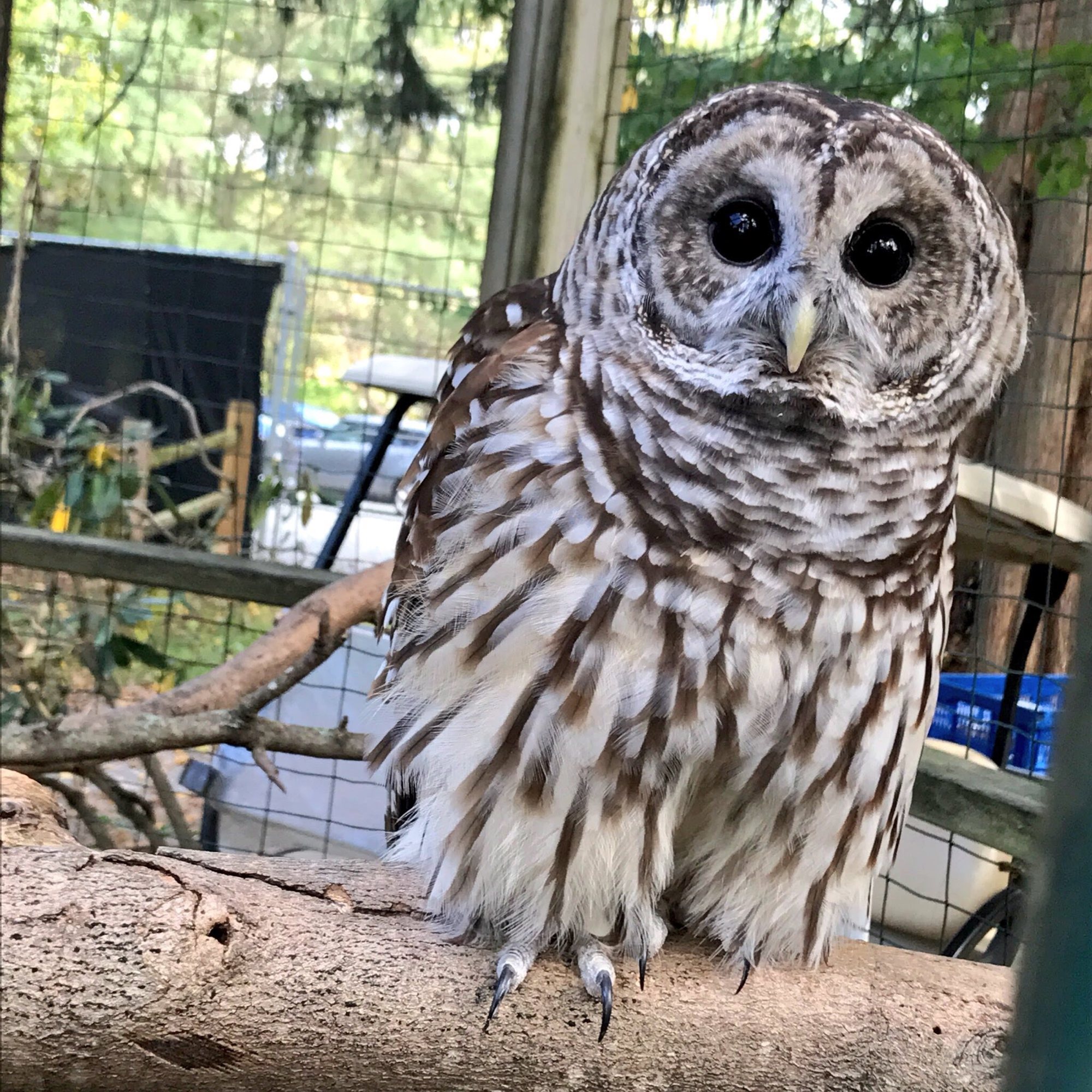
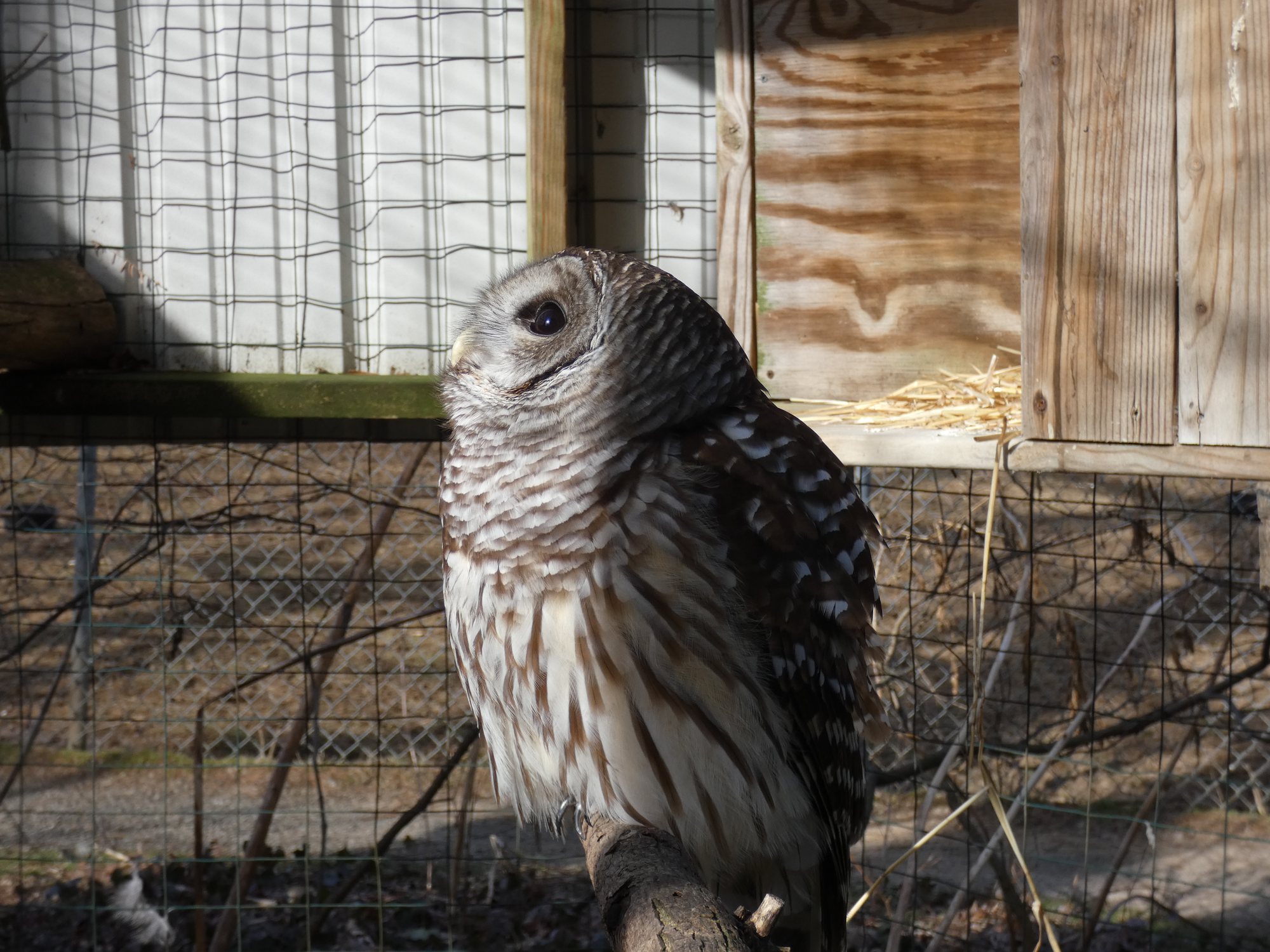
Meet Bebo, Plumpton Park Zoo's barred owl. You can hear barred owls in Maryland's woods at dusk, but you rarely see one. Here in Rising Sun you can see one up close in daylight.

Barred owl at Plumpton Park Zoo in Rising Sun, Maryland
Size17–20 in long
Weight17–37 oz
LifespanAbout 10 years
Conservation statusLeast Concern

Bebo’s story

From Rescue to Plumpton Park

Injured in the wild, unable to be released, and at home at Plumpton Park since 2009.

RescuedNon-releasableMaleSince 2009

Bebo was injured in the wild and taken for care to Tri-State Bird Rescue & Research in Newark, Delaware.

There it was determined that his vision was not good enough for release back into the wild. In 2009 he came to live at Plumpton Park Zoo, where he has been ever since. Like every animal at Plumpton Park, Bebo is cared for daily by our animal-care and veterinary teams.

For teachers and homeschool families

A free two-page barred owl fact sheet with fast facts, words to know, discussion questions and a drawing activity. Teachers may copy and share it freely as long as they credit Plumpton Park Zoo.

Printable Fact Sheet (PDF)


Field guide

How to recognize a barred owl

The barred owl is a large, round-headed owl with no ear tufts and dark brown eyes, one of the few owls in the eastern United States without yellow eyes. Its underparts are pale with dark markings: horizontal bars across the chest and vertical streaks down the belly, which give the barred owl its name.

Its call is a series of eight hoots, often remembered as “Who cooks for you? Who cooks for you-all?”, ending in a drawn-out oo-aw.

Barred owls live in mature woodlands, forests and heavily wooded swamps, usually near water. Originally a bird of the East, the barred owl spread west during the twentieth century and now reaches the Pacific Northwest and California. Barred owls do not migrate, and they rarely move far: of 158 banded barred owls that were later found again, none had traveled more than 6 miles.

Bebo, Plumpton Park Zoo's barred owl, in Rising Sun, Maryland

Bebo at Plumpton Park Zoo


At a glance

Barred owl fast facts

Scientific name Strix varia
Family Strigidae
Diet Carnivore
Native range Eastern North America; now west to the Pacific Northwest
Length About 17 to 20 inches
Wingspan About 39 to 43 inches
Weight About 17 to 37 oz (about 1 to 2 lb)
Lifespan About 10 years in the wild; oldest on record at least 26 years, 7 months
Conservation status Least Concern

8

owl species live in Maryland. The barred owl is one of them, here year-round.

Close to home

Barred owls in Maryland

Maryland’s Department of Natural Resources describes the barred owl as an owl of low-lying woods along rivers, the kind of wooded stream valleys found across Cecil County. In Maryland, barred owls feed mainly on meadow voles, along with birds, frogs and crayfish.

Listen at dusk for the “who cooks for you” call.


Barred owl resting in its shelter at Plumpton Park ZooSilent hunter

How barred owls hunt

Barred owls are nocturnal, most active at night and at dawn and dusk, though they will call to their mates and hunt during the day, especially when it’s overcast. They hunt from a high perch, sitting quietly and rotating their heads as much as 270 degrees to watch for movement on the ground below. When they spot prey, they swoop down silently and seize it with their powerful feet and sharp talons.

Barred owls swallow small prey whole; the fur helps protect the owl’s throat as the meal goes down. Parts that are hard to digest, such as bones, teeth, claws, fur and feathers, are packed into a pellet in the owl’s gizzard. About 6 to 8 hours after a meal, the owl regurgitates the pellet. These pellets are often found on the ground beneath an owl’s roost.

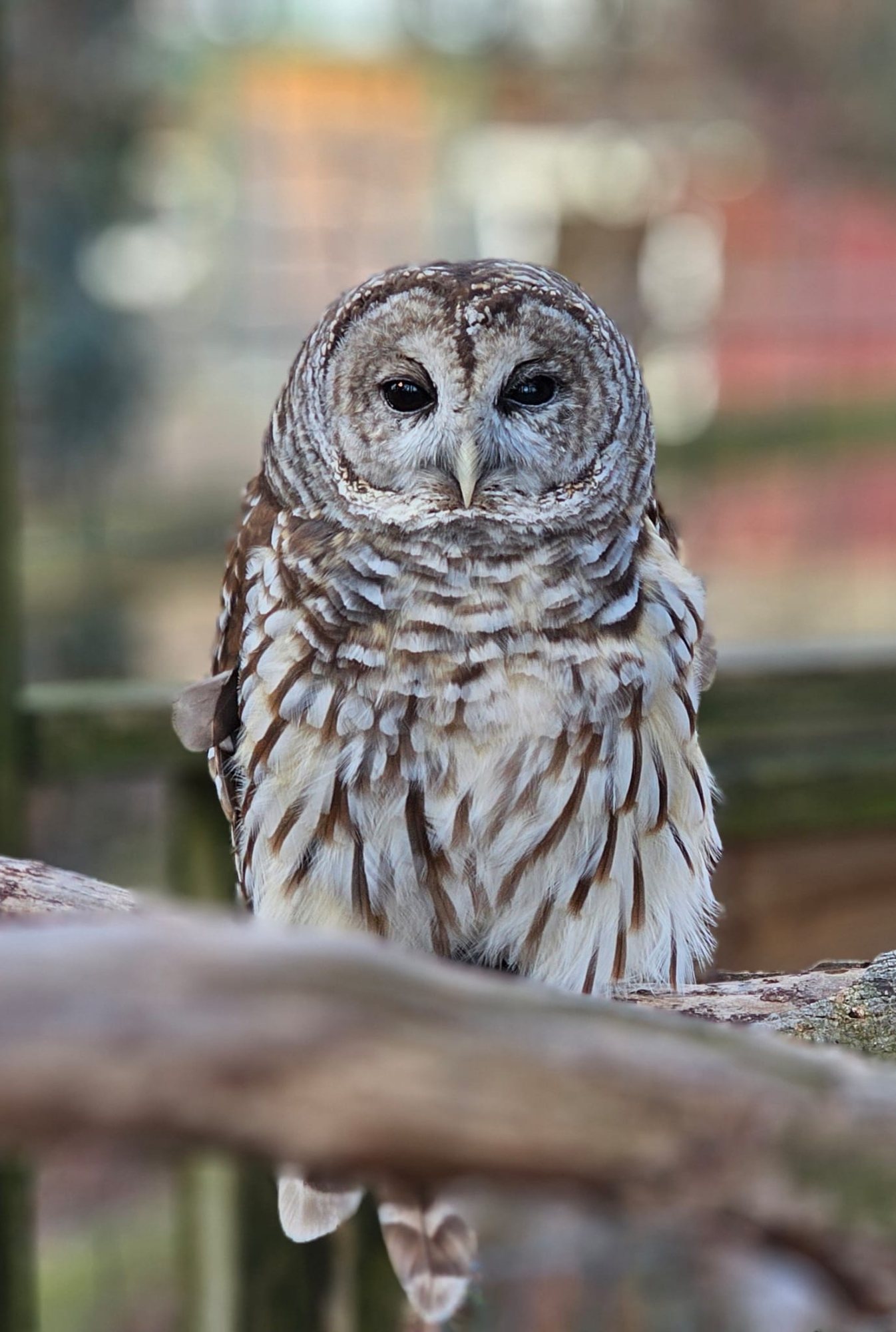
Barred owl perched on a log at Plumpton Park ZooOn the menu

What barred owls eat

A wide variety of small animals, including mice, voles, rats, squirrels, chipmunks, rabbits, bats, moles, opossums, mink and weasels, as well as birds, frogs and other amphibians, snakes and other reptiles, and crayfish and other invertebrates.


Barred owl sitting on a branch at Plumpton Park Zoo
A barred owl at Plumpton Park Zoo.

Family life

Nesting

1–5eggs per clutch
28–33days to hatch
28–35days until the young leave the nest

Barred owls usually nest in a natural cavity 20 to 40 feet up in a large tree, often one carved out by pileated woodpeckers. Young barred owls can climb a tree trunk by gripping the bark with their bill and talons and flapping their wings.


Spot the difference

Barred owl or another owl?

Barred owl

No ear tufts, dark brown eyes, bars across the chest and streaks down the belly.

Great horned owl

Prominent ear tufts and yellow eyes. It is also the barred owl’s most serious predator.

Barn owl

Also dark-eyed, but with a pale, heart-shaped face and a much lighter body.

Snowy owl

Yellow eyes and white feathers. Meet ours on the snowy owl page.


Conservation

Conservation status

LEAST CONCERN

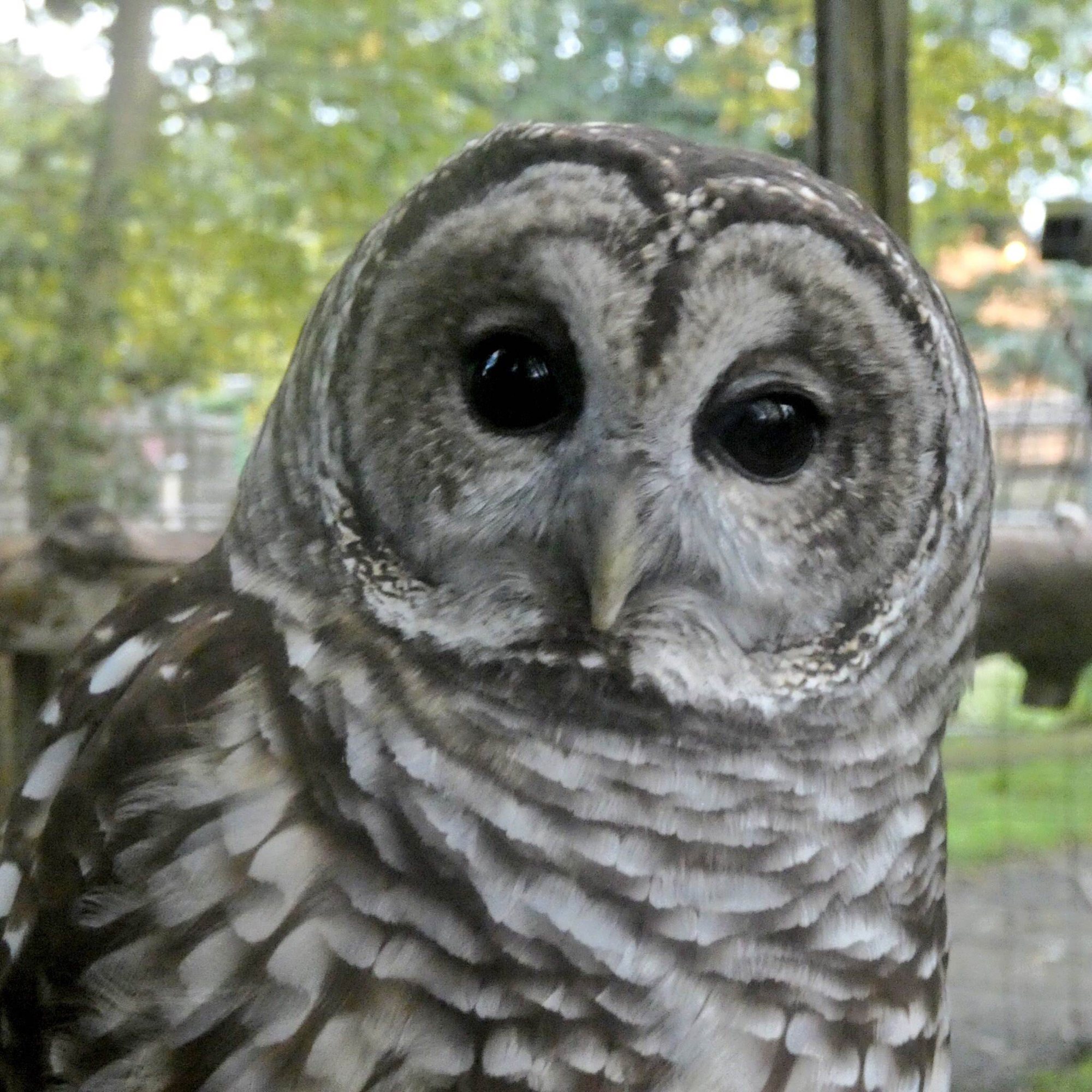
Close-up of a barred owl's face and dark eyes at Plumpton Park Zoo
A close look at a barred owl’s dark eyes.

The barred owl is widespread, and its range has expanded over the past century; Partners in Flight rates it a species of low conservation concern.


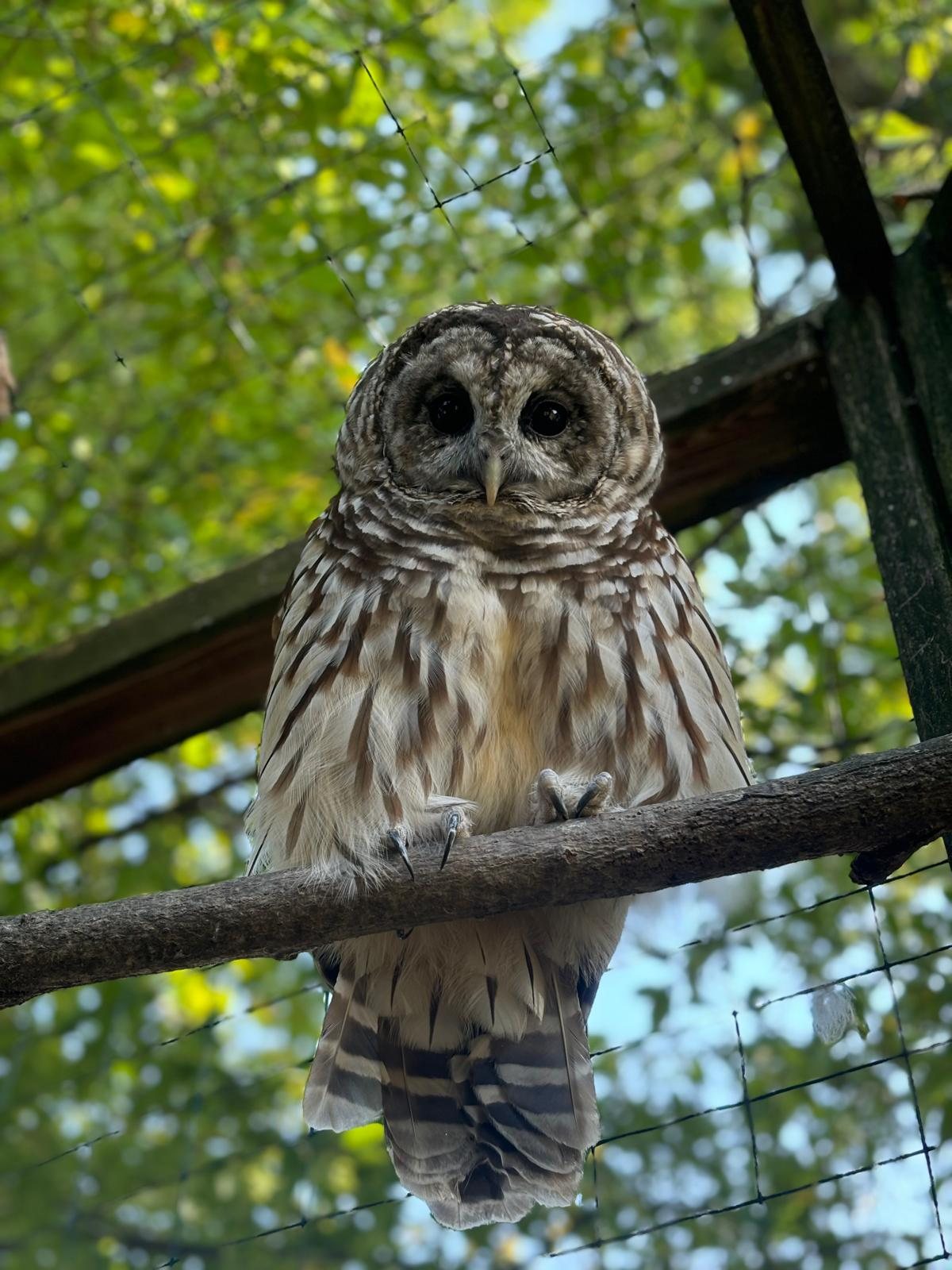
Barred owl perched among green leaves at Plumpton Park Zoo
Among the leaves at Plumpton Park Zoo.

Support

Help care for Bebo & the animals of Plumpton Park

As a nonprofit zoo, Plumpton Park Zoo relies on admissions, memberships and the generosity of people who believe in what we do. Donations help support animal care, veterinary services, nutritious diets, enrichment, habitat improvements and the continued development of the zoo.

Support Our Animals

Plumpton Park Zoological Gardens, Inc. is a 501(c)(3) nonprofit organization. Donations support the zoo’s charitable mission and are tax-deductible to the extent permitted by law.


Questions

Frequently asked questions about barred owls

Why is it called a barred owl?

For the markings on its front: horizontal bars across the chest and vertical streaks down the belly.

What does a barred owl sound like?

Its best-known call is a series of eight hoots, often remembered as “Who cooks for you? Who cooks for you-all?”, ending in a drawn-out oo-aw.

Do barred owls live in Maryland?

Yes. The barred owl is one of eight owl species found in Maryland and lives here year-round, especially in low-lying woods along rivers and streams.

Do barred owls migrate?

No. Barred owls stay in the same area year-round and rarely move far. Of 158 banded barred owls that were later found again, none had traveled more than 6 miles.

What do barred owls eat?

Mostly small mammals such as mice, voles, rats and squirrels, along with birds, frogs and other amphibians, snakes and other reptiles, and crayfish and other invertebrates.

Where can I see a barred owl in Maryland?

At Plumpton Park Zoo in Rising Sun, Cecil County, Maryland, home to Bebo, a rescued barred owl who has lived at the zoo since 2009. See Hours and Tickets for times and admission.


See Bebo at Plumpton Park Zoo

Barred owls are hard to spot in the wild, but visitors to Plumpton Park Zoo can meet Bebo right here in Rising Sun, Maryland.

The zoo is in Cecil County, an easy drive from Delaware and southern Pennsylvania. While you are here, meet our snowy owl and silver pheasants, feed a giraffe, and see the rest of our birds.