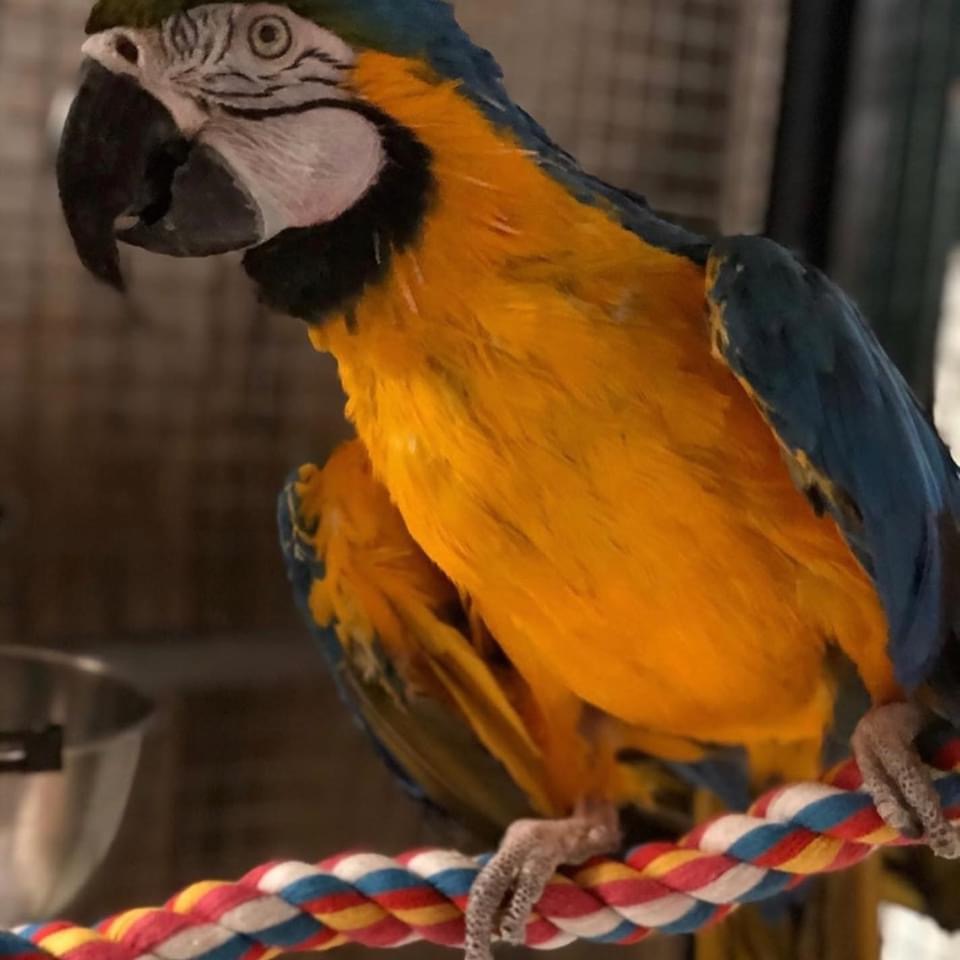
South American parrot

Blue-and-Gold Macaw

Ara ararauna

Discover the blue-and-gold macaw at Plumpton Park Zoo in Rising Sun, Maryland.

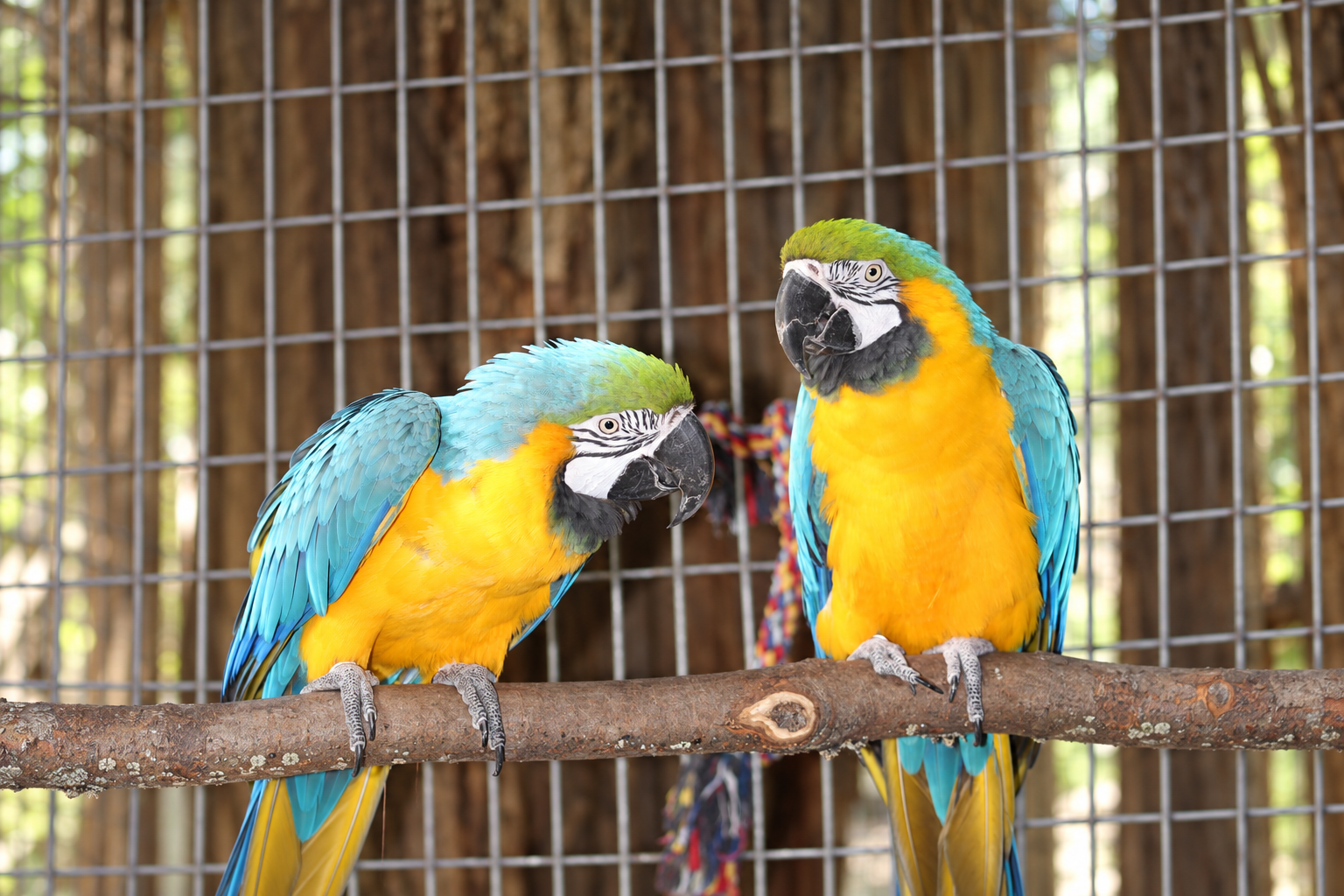
Maggie and Danny, blue-and-gold macaws at Plumpton Park Zoo
SizeAbout 34 in long
Weight36–45 oz
Lifespan30–35 years
Conservation statusLeast Concern

At Plumpton Park

Meet Danny & Maggie

Plumpton Park Zoo is home to two blue-and-gold macaws, Danny and Maggie.

Danny

Danny is a male blue-and-gold macaw who joined the zoo as a donation in 2014. His birth date is unknown.

Maggie

Maggie is a female blue-and-gold macaw who joined the zoo as a donation in 2017. Her estimated birth year is 1997.

For teachers and homeschool families

A free one-page blue-and-gold macaw fact sheet with fast facts, words to know, discussion questions and a drawing activity. Teachers may copy and share it freely as long as they credit Plumpton Park Zoo.

Printable Fact Sheet (PDF)

Field guide

Meet the Blue-and-Gold Macaw

Ara ararauna — a large, intelligent South American parrot built for life in the forest canopy.

At Plumpton Park Zoo: Blue-and-gold macaws are currently part of the zoo’s animal collection.

The Blue-and-Gold Macaw, also called the Blue-and-Yellow Macaw, is one of the most recognizable parrots. Brilliant blue feathers cover the back and wings, while the chest and underside are golden yellow. Green feathers crown the forehead, and lines of tiny dark feathers cross the bare white facial skin.

Those facial feather patterns differ among individuals, almost like fingerprints. The bare skin may also appear pinker when blood flow increases during excitement or activity.

Where Do Blue-and-Gold Macaws Live?

Blue-and-gold macaws are native primarily to tropical South America, with a range that includes parts of the Amazon Basin and surrounding regions. They use lowland rainforest, seasonally flooded forest, palm swamp, woodland and savanna edges.

Large trees are essential. Macaws depend on them for food, nighttime roosts and nesting cavities. A landscape may look green from above yet still provide poor habitat if mature cavity-bearing trees have disappeared.

Sources: World Parrot Trust · Animal Diversity Web · Existing zoo page

Macaw at Plumpton Park Zoo

Blue-and-gold macaws combine powerful flight, dexterous feet and an exceptionally strong beak.

At a glance

Blue-and-Gold Macaw at a Glance

Scientific nameAra ararauna
Animal groupBird — Parrot
Native regionTropical South America
HabitatForest, palm swamp and savanna edge
DietFruits, nuts, seeds and other plant material
Conservation statusLeast Concern
LengthAbout 34 inches
Weight36–45 oz (about 2–3 lb)
LifespanTypically 30–35 years; up to 50

Sources: World Parrot Trust · Animal Diversity Web · Existing zoo page
2 + 2

Two toes forward and two backward.

Built for the canopy

Amazing Adaptations

  • Powerful hooked beak: opens hard nuts, tears food and serves as a climbing aid.
  • Zygodactyl feet: two toes point forward and two backward for gripping branches and holding food.
  • Long tail: helps steer and stabilize the bird during flight.
  • Loud contact calls: carry across dense forest where flockmates may be out of sight.
  • Flexible neck and tongue: provide precise control while feeding and exploring.

Sources: Animal Diversity Web (University of Michigan); World Parrot Trust.

Life in a flock

Behavior and Communication

Macaws are highly social. They communicate with loud calls that travel across broad stretches of forest and help separated flock members remain in contact. Pairs often fly close together, even when traveling within a larger group.

Like many parrots, blue-and-gold macaws are intelligent, curious problem-solvers. They investigate objects with the beak and tongue and learn through observation, repetition and social interaction.

Sources: Animal Diversity Web (University of Michigan); World Parrot Trust.

On the menu

What Do Blue-and-Gold Macaws Eat?

Wild macaws eat fruits, palm fruits, nuts, seeds, flowers and other plant material. Their powerful curved beaks crack hard shells, tear fibrous food and help the birds climb. A muscular tongue allows precise manipulation of food inside the bill.

In parts of South America, macaws and other parrots gather at exposed riverbanks called clay licks. Scientists continue studying this behavior; the clay may provide minerals and may help bind some naturally occurring compounds in the birds’ diet.

Sources: World Parrot Trust; Animal Diversity Web (University of Michigan).

Macaw at Plumpton Park Zoo

Blue-and-gold macaws at Plumpton Park Zoo.

Family life

Breeding and Life Cycle

Blue-and-gold macaws nest in cavities, often high in mature trees or palms. The protected chamber shelters eggs and chicks from weather and many predators. Both parents participate in raising the young, and juvenile macaws remain dependent while learning where to feed, roost and travel.

Macaws mature slowly and can live for many decades. That long life supports complex learning and lasting social relationships, but it also means populations recover slowly when too many adult birds or nesting trees are lost.

Did You Know?

The feather lines on a macaw’s white facial skin form an individual pattern that can help people recognize particular birds.

Sources: Animal Diversity Web · World Parrot Trust · Existing zoo page

Spot the difference

Blue-and-gold macaw or another parrot?

Blue-and-gold macaw

Blue above, golden yellow below, with a black throat and green forehead.

Blue-throated macaw

A blue throat patch helps distinguish this similar-looking species. This comparison is a field guide, not a list of animals at the zoo.

African grey parrot

Gray feathers and a red tail. Explore our African grey page.

Blue-fronted parrot

A mostly green parrot with blue and yellow on the head. Explore our blue-fronted parrot page.

Sources: World Parrot Trust · World Parrot Trust: Blue-throated Macaw · World Parrot Trust: Grey Parrot · World Parrot Trust: Blue-fronted Amazon

Conservation

Conservation

LEAST CONCERN

The Blue-and-Gold Macaw is currently considered less threatened globally than several other macaw species, but local populations still face deforestation, loss of nesting trees and illegal capture. Protecting connected forest and leaving mature cavity trees standing benefits macaws and many other animals.

The IUCN Red List’s 2018 assessment lists this species as Least Concern. International trade is regulated under CITES Appendix II.

Sources: IUCN Red List, 2018 · World Parrot Trust · Animal Diversity Web

Blue and gold macaw at Plumpton Park Zoo in Rising Sun, Maryland

Blue-and-gold macaws at Plumpton Park Zoo.

Support

Help care for our macaws & the animals of Plumpton Park

As a nonprofit zoo, Plumpton Park Zoo relies on admissions, memberships and the generosity of people who believe in what we do. Donations help support animal care, veterinary services, nutritious diets, enrichment, habitat improvements and the continued development of the zoo.

Support Our Animals

Plumpton Park Zoological Gardens, Inc. is a 501(c)(3) nonprofit organization. Donations support the zoo’s charitable mission and are tax-deductible to the extent permitted by law.

Questions

Common Questions About Blue-and-Gold Macaws

Is a Blue-and-Gold Macaw the same as a Blue-and-Yellow Macaw?

Yes. Both common names refer to Ara ararauna.

Why are macaws so loud?

Their voices evolved for communication over long distances. A call must travel through forest vegetation and reach flock members that may be far away.

Can macaws use their feet like hands?

Macaws regularly hold and rotate food with one foot. Their toe arrangement gives them an unusually strong and precise grip.

Do Blue-and-Gold Macaws mate for life?

They form strong long-term pair bonds. Paired birds often feed, travel and rest together.

What do blue-and-gold macaws eat?

Wild macaws eat fruits, nuts, seeds and other plant material.

Where can I see a blue-and-gold macaw in Maryland?

At Plumpton Park Zoo in Rising Sun, Cecil County, Maryland. See Hours and Tickets for times and admission.

Sources: Animal Diversity Web (University of Michigan); World Parrot Trust.

See Blue-and-Gold Macaws at Plumpton Park Zoo

Connect this species profile with a real visit to Plumpton Park Zoo.

Keep Exploring

Continue learning about birds, animal behavior and conservation in the Plumpton Park Zoo Animal Learning Center, or explore more birds at Plumpton Park Zoo.

Explore our blue-fronted parrot and Moluccan cockatoo pages, and feed a giraffe.