
Plumpton Park Zoo · Rising Sun, Maryland
Koi
Cyprinus carpio
Colour, movement and a long history of careful breeding. Discover koi at Plumpton Park Zoo in Rising Sun, Maryland.
Size20–30 in long
WeightAbout 20 lb
Lifespan25–30 years
Conservation statusDomesticated
Field guide
Koi at Plumpton Park Zoo
Koi are an informal group of the colored variants of
the Amur carp. Koi varieties are distinguished by
coloration, patterning, and scalation. Some of the
major colors are white, black, red, yellow, blue, and
cream. Koi were developed from common carp in
Japan in the 1820s. Like most fish, koi reproduce
through spawning in which a female lays a vast
number of eggs and one or more males fertilize them.
They are now grown and propagated all over the
world.
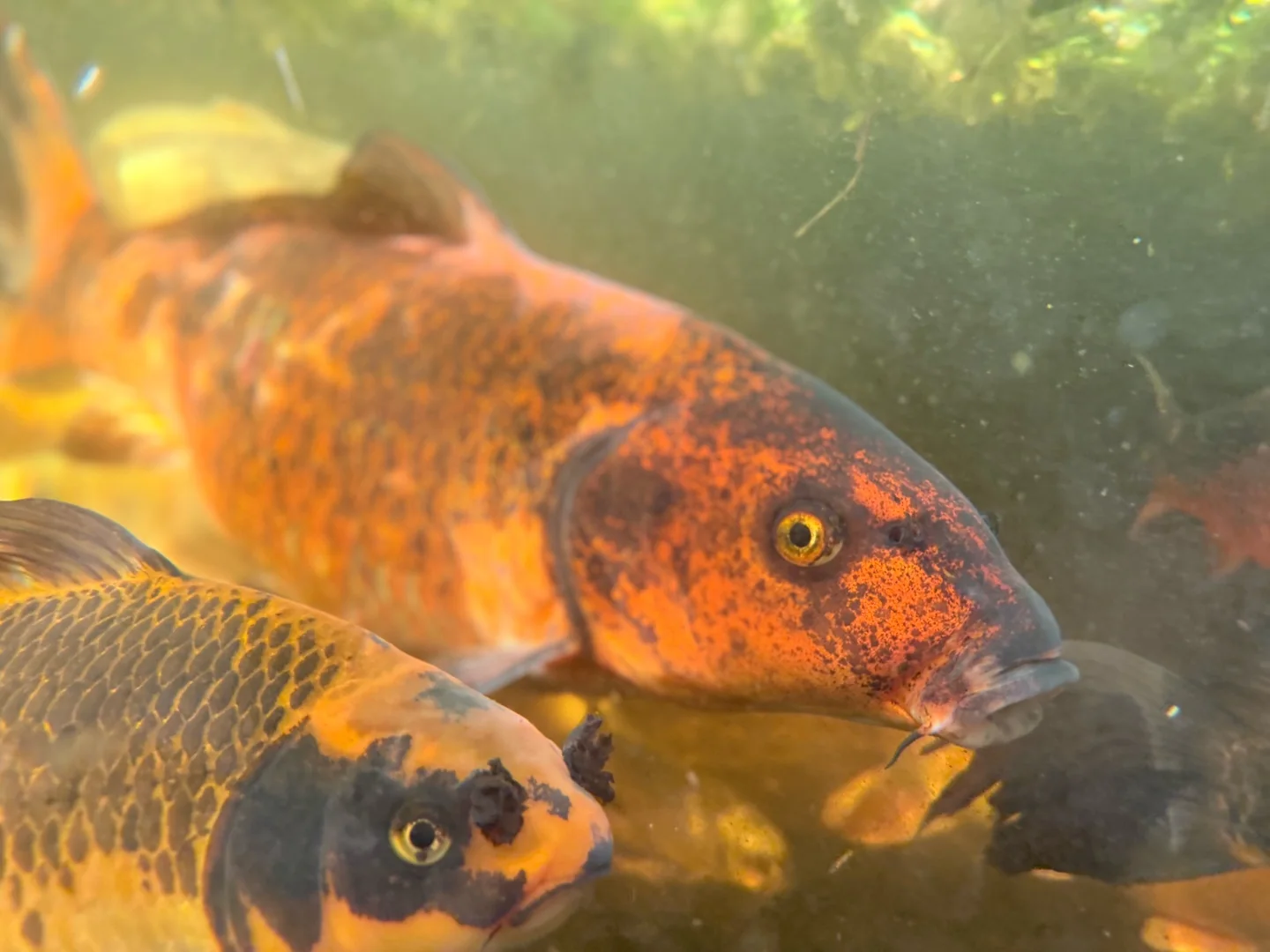
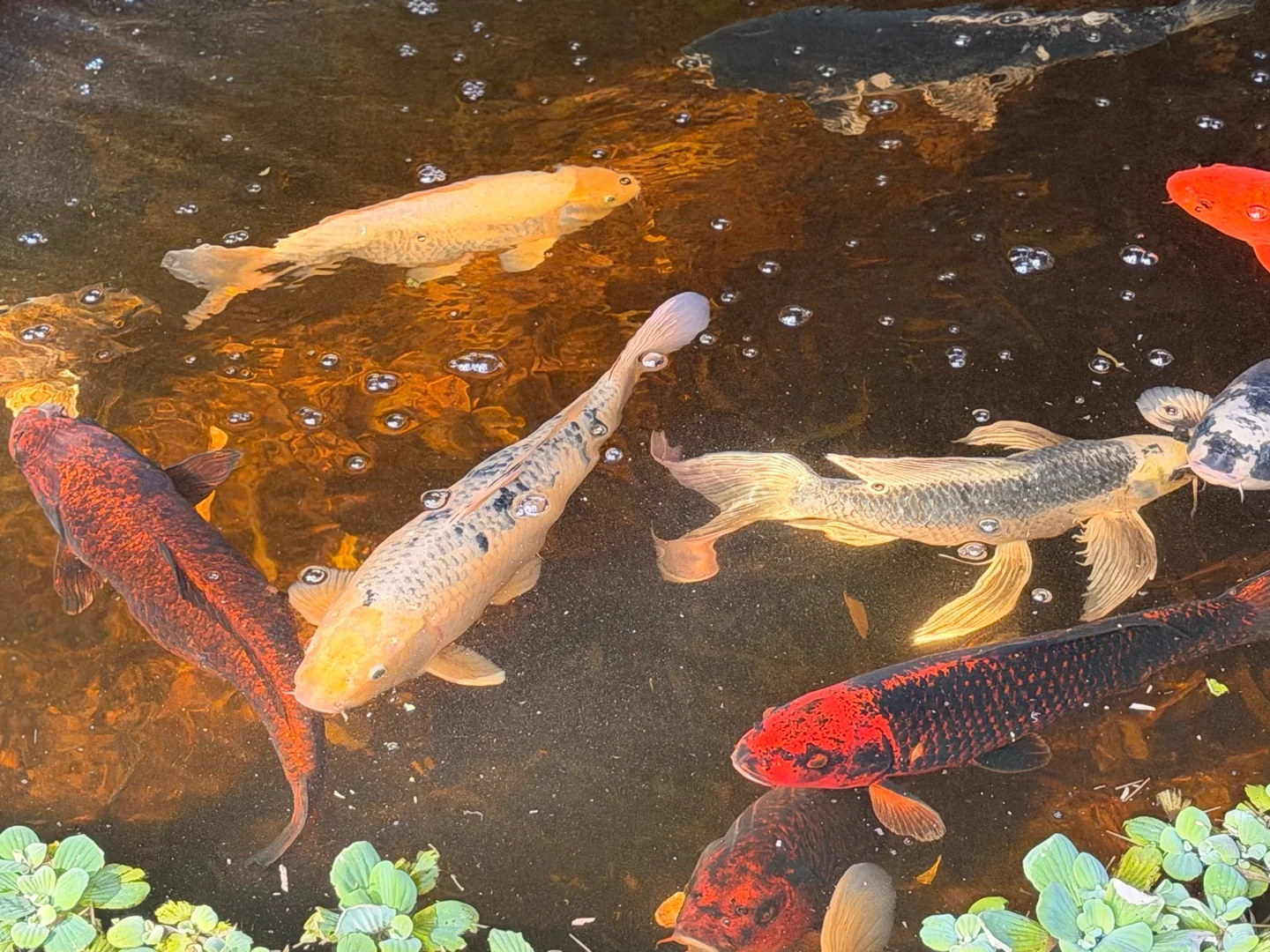
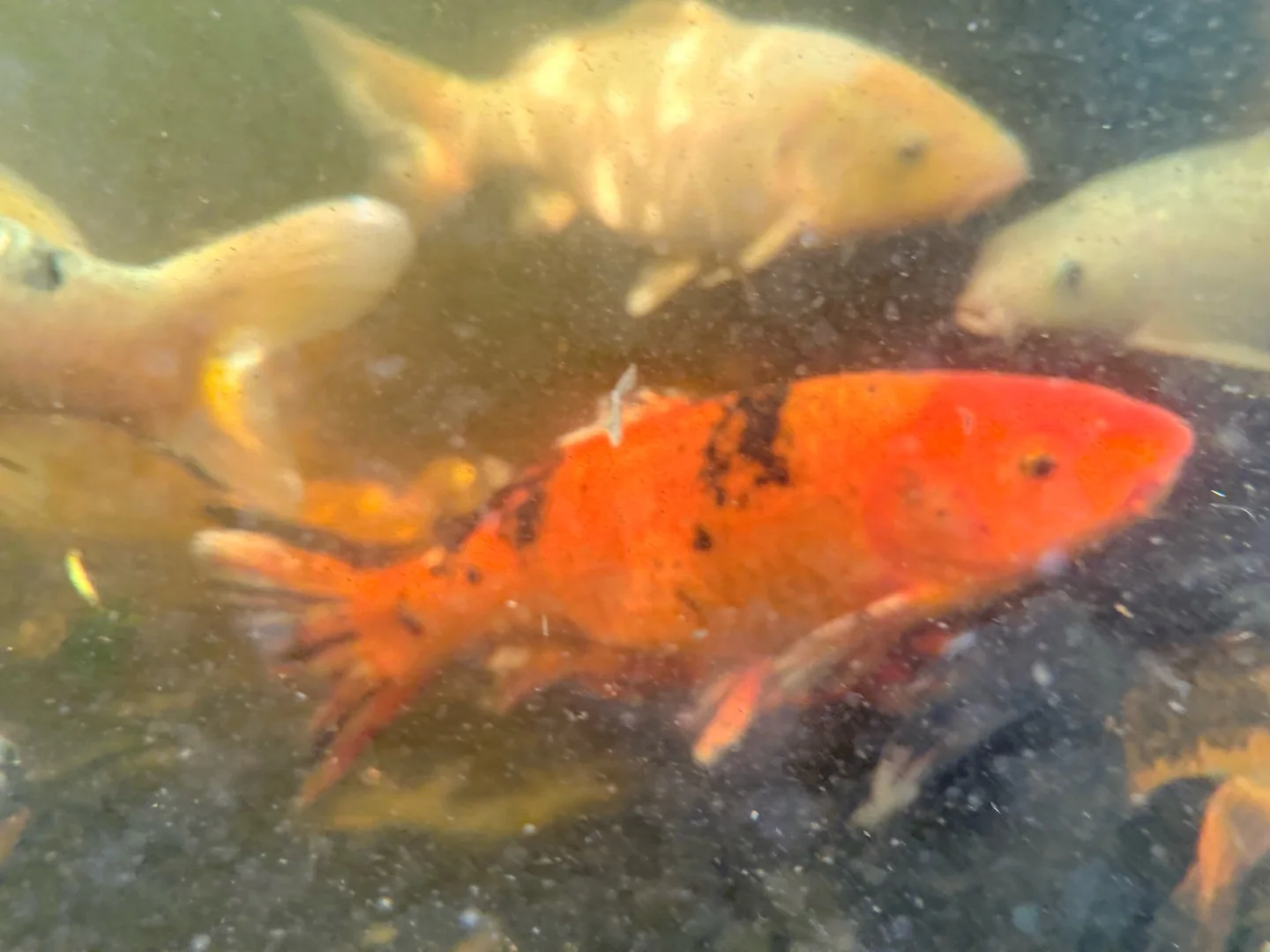
Our pond photograph offers an easy starting point for observation: choose one fish and follow the outline of its head, body and fins. Then compare its pattern with a second fish. The gold and red-and-white colours make it possible to notice differences without assuming that every visible fish belongs to a different species.
Try describing a pattern in words before drawing it. Is the colour spread across the body, concentrated near the head or broken into patches? A drawing can record those observations. Keep the description tied to the photograph or the fish you can actually see, since a koi’s colour does not establish its age, identity or health.
Sources: Niigata Prefecture, nishikigoi history; USGS Fish Health Program; FAO, Cultured Aquatic Species: common carp.
For teachers and homeschool families
Print our free two-page Koi fact sheet: fast facts, words to know, discussion questions and a drawing activity. Teachers may copy and share it freely as long as they credit Plumpton Park Zoo.

The koi pond photograph preserved from our original zoo guide.
Koi above and below the surface
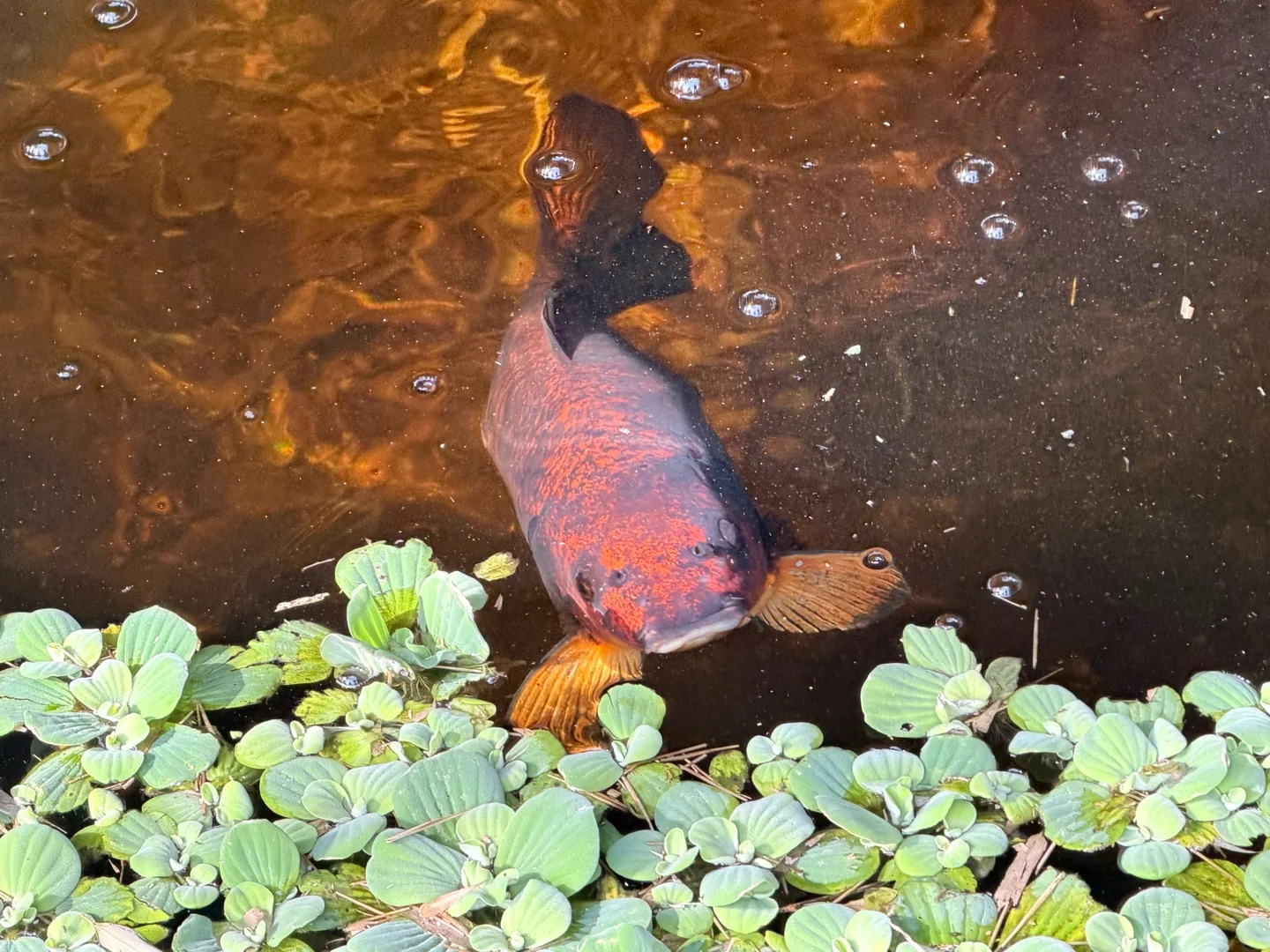
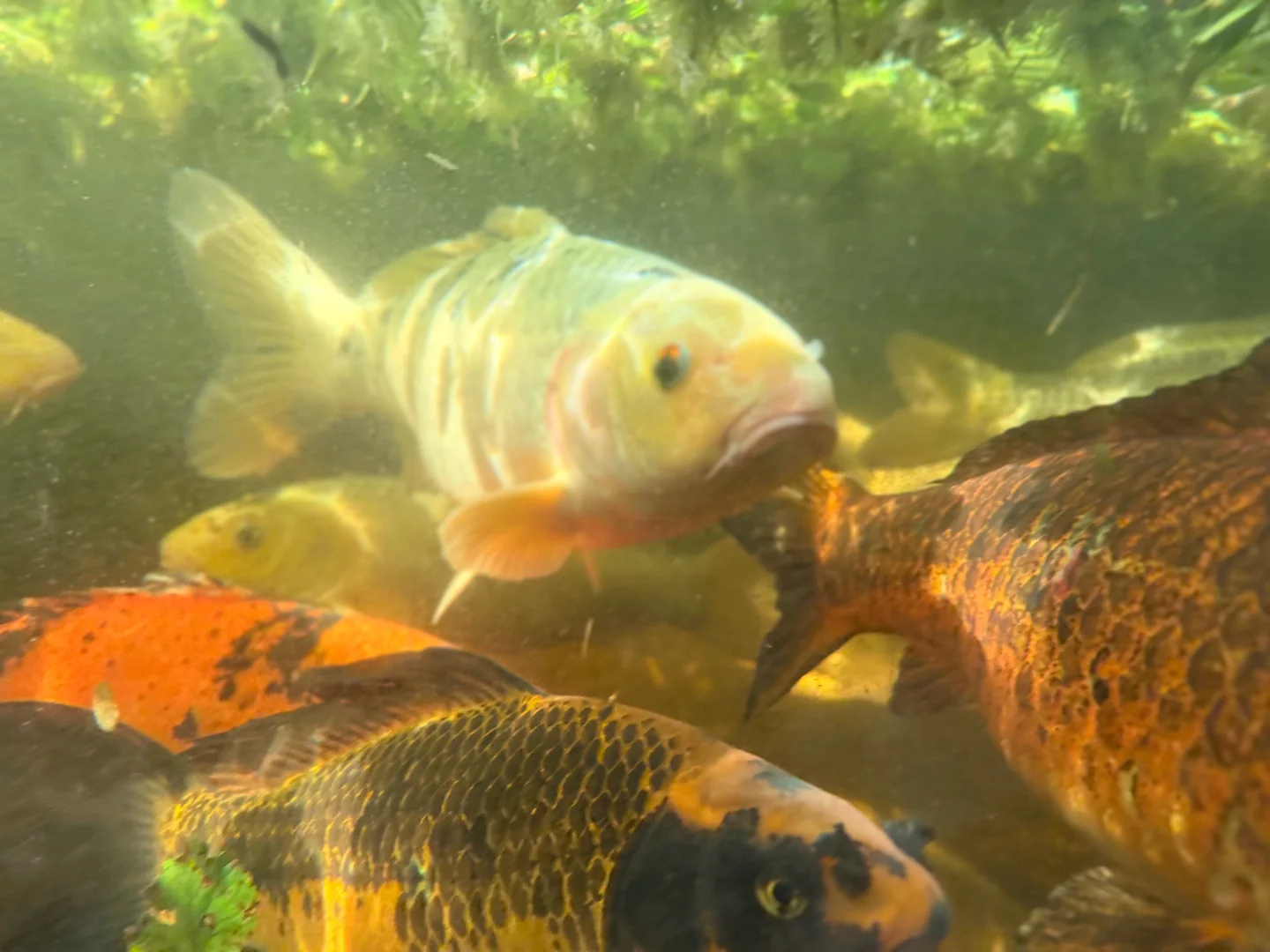
Follow the markings on a koi’s back from the pond bank, then look underwater for its eyes, fins and whisker-like barbels. Select a photo for a closer look.
At a glance
Koi fast facts
Guide scientific nameCyprinus carpio
Japanese nameNishikigoi
HabitatFreshwater
ReproductionSpawning
From our original guide
Size: 20 – 30 inches length
Weight: 20 lbs
Lifespan: 25 – 30 years
DOMESTICATED
The original size, weight and lifespan guide is preserved above; these are not measurements of individual zoo fish. This page retains Cyprinus carpio, the scientific name used by our original guide, USGS and FAO. The original introduction also uses the common name Amur carp; identification of the zoo fish’s precise lineage requires animal-care records rather than colour alone.
Sources: USGS Fish Health Program; FAO, Cultured Aquatic Species: common carp; Niigata Prefecture, nishikigoi history.
2
different tasks: breathing and swimming
Gills and fins do different jobs
Gills take oxygen from water. Fins help a fish move and maintain its position: the tail fin provides propulsion, while other fins assist with balance and direction. South Carolina DNR’s anatomy guide explains these structures separately, which is useful when introducing fish adaptations to students.
A photograph shows the fin outlines more clearly than the breathing surfaces beneath the gill covers. Label what is visible, then use a simple diagram to show the hidden structure. Ask students why a fish still needs oxygen even though it lives underwater. The distinction between a body part and its function supports a much stronger explanation than simply writing fish can swim.
Sources: South Carolina DNR, fish anatomy.
Behaviour
A closer look at colour and pattern
Niigata Prefecture describes nishikigoi as ornamental carp developed through breeding for beauty. It gives Kohaku as a white fish with a red pattern, while Taisho Sanshoku includes red and black on a white base. These are examples of variety names, not identifications assigned to our photographed fish.
Use colour and pattern as separate comparison categories. Two fish can share a colour while differing in where that colour appears. For an art-and-science activity, create a pattern key with simple symbols for patches, stripes and solid areas. A key should explain the observations consistently, rather than ranking one living animal as better than another.
Sources: Niigata Prefecture, nishikigoi history.
On the menu
What koi eat
Koi are known to eat a wide variety of organisms
including, insects, crustaceans, annelids, mollusks, fish
eggs, fish remains, and plant tubers and seeds
including, insects, crustaceans, annelids, mollusks, fish
eggs, fish remains, and plant tubers and seeds
Koi are omnivores. Carp feed mainly near the bottom but also search the middle and upper water, eating insects and their larvae, worms, molluscs, tiny zooplankton and plant material. The original guide’s list illustrates the variety of possible foods. This does not mean that visitors should add food to a zoo pond; animal-care staff plan the diet.
For a classroom food web, start with a koi and add one plant food and one animal food from the guide. Use arrows to show the feeding connections. Then ask what extra information would be needed to describe an actual pond: which organisms are present, where they live and how the relationships change as the fish grow.
Family life
From eggs to young fish
Koi reproduce by spawning. Their eggs turn sticky in water and cling to underwater plants, and the young hatch as tiny larvae a few days later. The young stages need to be included in a life-cycle diagram, even when an adult is the only animal visible in a photograph.
Compare this sequence with the slider’s eggs in a nest on land. Both animals lay eggs, but the place where those eggs develop differs. Put a habitat label beside each stage rather than drawing arrows alone. This helps students connect a life cycle with the surroundings an animal needs at different points in its life.
Compare animals
Three animals, three uses of water
Koi
A fish that uses gills to breathe in water.
Red-eared slider
A freshwater turtle that swims and comes up for air.
Ball python
A legless reptile that hunts animal prey.
Explore our red-eared slider and ball python guides, and compare the land-dwelling Aldabra tortoise. Start with visible structures, then use the guides to add habitat and diet. An animal’s relationship with water involves more than whether it can enter a pond.
Sources: South Carolina DNR, fish anatomy; USGS Fish Health Program.
Conservation
Koi conservation
Domesticated ornamental carp
Domesticated describes koi’s relationship with people; it is not an IUCN Red List category. A pond full of ornamental fish does not establish the condition of wild carp populations. USGS identifies koi as domesticated ornamental carp and uses them in fish-health research.
Pet fish should never be released into the wild. That principle connects our koi guide with the introduced-slider story and with protecting local waterways. For a conservation discussion, ask students to distinguish caring for animals in a managed setting from protecting a wild population. Each requires knowledge of the animals and their environment, but the evidence and decisions are different.
Sources: USGS Fish Health Program; FAO, Cultured Aquatic Species: common carp.
Support
Help care for our koi & the animals of Plumpton Park
As a nonprofit zoo, Plumpton Park Zoo relies on admissions, memberships and the generosity of people who believe in what we do. Donations help support animal care, veterinary services, nutritious diets, enrichment, habitat improvements and the continued development of the zoo.
Plumpton Park Zoological Gardens, Inc. is a 501(c)(3) nonprofit organization. Donations support the zoo’s charitable mission and are tax-deductible to the extent permitted by law.
Frequently asked questions about koi
Are koi giant goldfish?
No. Koi are domesticated common carp, Cyprinus carpio; goldfish are a separate species in the same carp family.
What does nishikigoi mean on this page?
It is the Japanese name used for the ornamental coloured carp described in Niigata’s history.
What do koi eat?
Koi eat both plant and animal foods, including aquatic insects, algae and plants.
How do koi breathe underwater?
They use gills to obtain oxygen from water.
Do koi lay eggs?
Yes. They reproduce by spawning, and sticky eggs can attach to submerged plants or objects.
Where can I see koi in Maryland?
Visit Plumpton Park Zoo in Rising Sun, Maryland. Check Hours and Tickets before your visit.
Sources: USGS Fish Health Program; FAO, Cultured Aquatic Species: common carp; Niigata Prefecture, nishikigoi history; South Carolina DNR, fish anatomy.
See koi at Plumpton Park Zoo
Plan your visit to Rising Sun, Maryland. Compare our red-eared slider, ball python and Aldabra tortoise, and browse the Animals guide. Keep learning in the Animal Learning Center, and discover giraffe feeding.