
Animal Learning Center · Not currently at the zoo

African Elephant

Loxodonta africana

Africa’s savanna giant, with huge cooling ears, a trunk that does almost everything, and families led by wise old females.

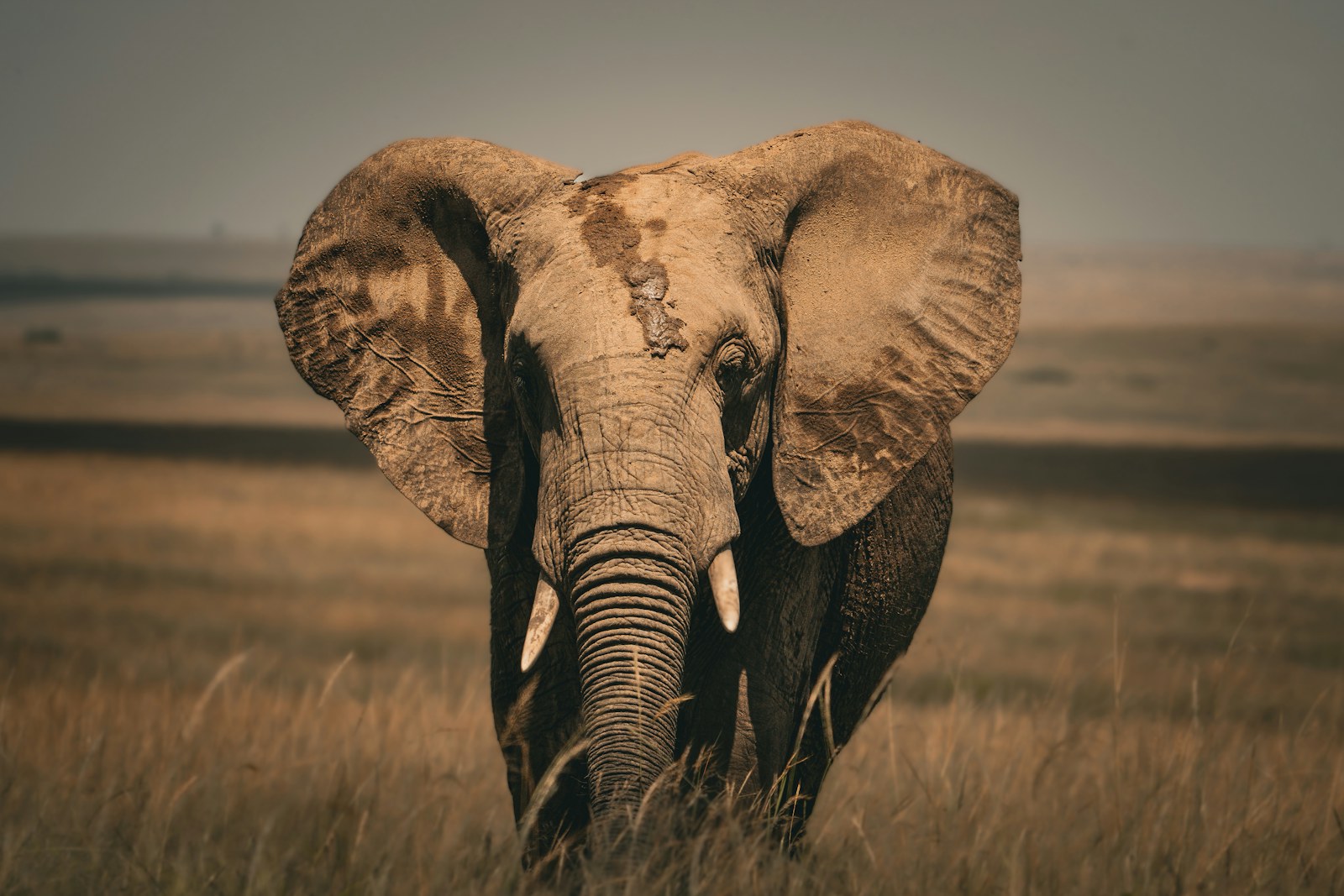
An African savanna elephant facing the camera with its large ears spread
Size8.5–10.5 ft tall
Weight6,600–13,000 lb
Lifespan24–40 years
Conservation statusEndangered

Animal Learning Center

Learn About the African Elephant

There are two kinds of African elephant.

MammalAfricaNot currently at the zoo

Scientists now recognize two species of African elephant: the African savanna elephant and the smaller African forest elephant. This page focuses mainly on the savanna elephant, which lives mostly in East, Central and southern Africa.

Savanna elephants live in families of related adult females and their young, led by a matriarch. Older females hold knowledge that helps their daughters and grand-calves, and in a drought an experienced matriarch can lead her family long distances to water and food.

A note for visitors: the African elephant is not currently at Plumpton Park Zoo. This profile is part of our online Animal Learning Center, so you can keep learning about the species. When you visit, meet two more animals from Africa: Asha, Jill and Kazar, our reticulated giraffes, and Debbie Mae, Ralph and Zoe, our Grant’s zebras.

For teachers and homeschool families

A free two-page African elephant fact sheet with fast facts, words to know, discussion questions and a drawing activity. Teachers may copy and share it freely as long as they credit Plumpton Park Zoo.
Printable Fact Sheet (PDF)


Field guide

Where do African elephants live?

African savanna elephants live mostly in East, Central and southern Africa. They use a remarkable range of habitats: grasslands, woodlands, mountain and other forests, scrub, wetlands and even some dry deserts.

African forest elephants live mostly in Central Africa, with far fewer in West Africa. They live in tropical rainforests, swamp forests and patchworks of forest and savanna, and they keep forest clearings open. The ranges of the two species rarely overlap.

Did you know? Elephants walk on tiptoe. Large pads of fat cushion their feet and absorb shock, and their feet can pick up vibrations in the ground.

Sources: IUCN Red List: African savanna elephant (assessed 2020, amended 2022); IUCN Red List: African forest elephant (assessed 2026); IUCN African Elephant Specialist Group: African forest elephant status report 2024; IUCN: African elephant species now Endangered and Critically Endangered (2021); Royal Society Open Science: Panagiotopoulou et al. 2016, elephant foot pressure; Animal Diversity Web, University of Michigan: Loxodonta cyclotis.

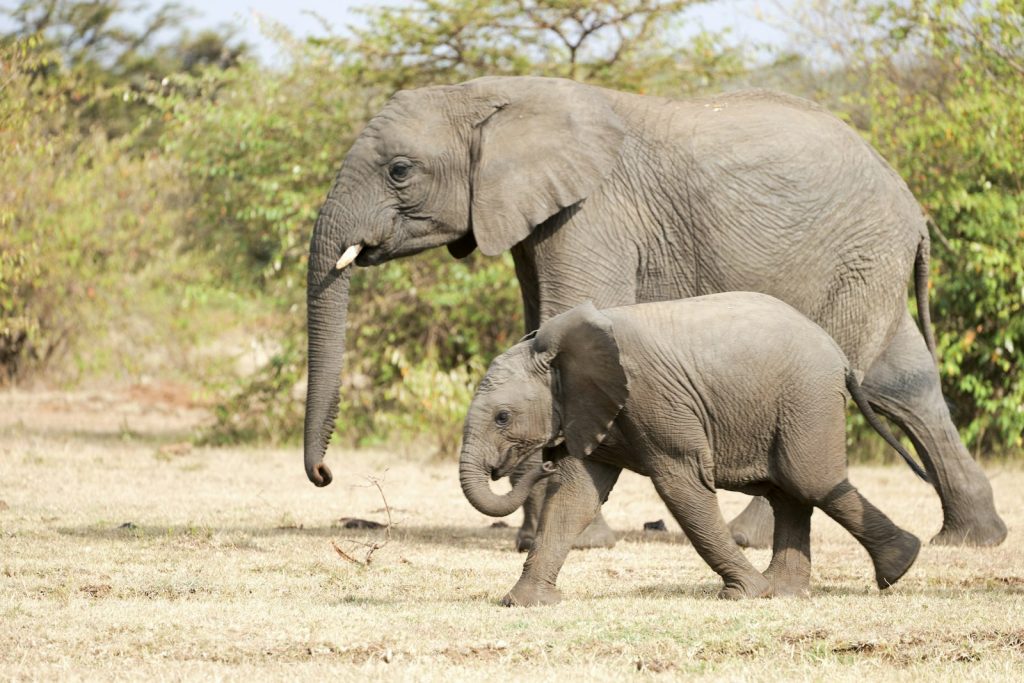
An adult African elephant walking beside a young calf through dry grassland

An adult African elephant with a calf. Photos on this page: Shin B and Udara Karunarathna on Unsplash.


At a glance

African elephant fast facts

Scientific name Loxodonta africana (savanna); Loxodonta cyclotis (forest)
Animal group Mammal — elephant family (Elephantidae)
Native region Savanna: mostly East, Central and southern Africa; forest: mostly Central Africa
Habitat Grasslands, woodlands, forests, scrub, wetlands and some deserts
Diet Herbivore — trees, shrubs, grasses, bark, roots and fruit
Shoulder height Savanna females about 8.5 ft; males about 10.5 ft, on average
Weight Savanna males about 13,000 lb, females about 6,600 lb, on average
Pregnancy About 22 months
Lifespan In the wild, about 40 years for females and 24 for males on average (Amboseli, Kenya); some reach their 60s
Conservation status Savanna: Endangered; forest: Critically Endangered (IUCN)

Sources: IUCN Red List: African savanna elephant (assessed 2020, amended 2022); IUCN Red List: African forest elephant (assessed 2026); Acta Palaeontologica Polonica: Larramendi 2016, proboscidean height and body mass; Animal Diversity Web, University of Michigan: Loxodonta africana; Save the Elephants: Wittemyer et al. 2013, Samburu demography; Amboseli Trust for Elephants: Lee et al. 2016, longevity and reproduction.


22

months: how long an African elephant mother carries her calf before it is born.

Family life

Raised by a family of females

An African elephant pregnancy lasts about 22 months, and the mother usually has a single calf. A newborn savanna elephant weighs about 200 to 265 pounds.

Savanna females reach maturity at about 11 years old and usually have their first calf at about 13 to 14, then a calf every three to five years. Calves grow up surrounded by their mothers, grandmothers and other related females.

Young males spend more and more time away from their families as they near adulthood, then leave for good. Savanna males become independent between about 10 and 18 years old, often at around 14.

Sources: Animal Diversity Web, University of Michigan: Loxodonta africana; Amboseli Trust for Elephants: Lee et al. 2016, longevity and reproduction; Save the Elephants: Wittemyer et al. 2013, Samburu demography; UN Convention on Migratory Species: elephant culture report, 2023; Biology Letters: Foley et al. 2008, drought and calf survival; University of Bristol: Evans 2006, adolescent male elephants in the Okavango; South African National Parks: Elephant Behaviour.


Built big

How does an elephant use its trunk, tusks and ears?

The trunk has about six major groups of muscles and two finger-like tips. Elephants use it to breathe (about 70 percent of the air they inhale passes through it), to smell, to drink and feed, to lift things, to spray dust and water over their bodies, and to touch one another.

Tusks are long upper incisor teeth. Male and female African elephants usually both have them, and a male’s tusks keep growing throughout his life. Elephants use them to strip bark, dig for water and minerals, and defend themselves.

A savanna elephant’s ears can measure up to about 79 inches from top to bottom. Many blood vessels lie under the thin skin on the back of the ears, so flapping them helps release body heat. That matters, because elephants lack sweat glands.

  • Trunk: about six major muscle groups and two finger-like tips
  • Tusks: modified upper incisor teeth
  • Ears: flapped to release body heat
  • Molars: up to six sets in a lifetime
  • Rumbles: calls often too low for people to hear

Sources: University of Geneva: Dagenais et al. 2021, trunk biomechanics; South African National Parks: African Elephant Biology; South African National Parks: Tusks & Ivory; University of Pretoria: Steenkamp et al. 2007, tusklessness and tusk fractures; Elephant journal: Kahl and Armstrong 2000, drought observations in Zimbabwe; International Journal of Speleology: Lundquist and Varnedoe 2006, salt ingestion caves; University of Pretoria: Mole et al. 2016, savanna elephants coping with heat; Gajah: Athurupana et al. 2015, ear movement; South African National Parks: Elephant Behaviour.

On the menu

What do African elephants eat?

Savanna elephants eat plenty of grass in the wet season and switch to trees and shrubs in the dry season. They also eat bark, twigs, roots, herbs and fruit. Forest elephants eat mostly fruit, leaves and bark.

A savanna elephant eats about 4 percent of its body weight in fresh food each day, roughly 660 pounds for a large bull, and drinks about 50 gallons of water. Huge molars grind it all down; a single molar can be as large as a house brick.

Sources: PeerJ: Marston et al. 2020, megaherbivore diet; Animal Diversity Web, University of Michigan: Loxodonta africana; Animal Diversity Web, University of Michigan: Loxodonta cyclotis; Pachyderm: Lagendijk et al. 2005, elephant food intake in mopane woodland; South African National Parks: African Elephant Biology; South African National Parks: Amazing Facts.


Spot the difference

Savanna, forest or Asian elephant?

African savanna elephant

The larger African species, with very large ears and tusks that curve out and forward. Endangered.

African forest elephant

Smaller, with rounder ears and straighter tusks that point down. Critically Endangered.

Asian elephant

Has one finger-like tip on its trunk instead of two. Unlike African elephants, its females usually do not have tusks.

Sources: Elephant journal: Grubb et al. 2000, two species of African elephant; South African National Parks: African vs Asian Elephants.


Conservation

Conservation status

ENDANGERED

The African savanna elephant is listed as Endangered and the African forest elephant as Critically Endangered on the IUCN Red List (savanna assessed in 2020, forest in 2026).

About 350,000 savanna elephants were estimated in a 2014–2015 survey of 18 of the countries where they live, and about 136,000 forest elephants were estimated in surveys from 2016 to 2024. Forest elephants have declined by more than 80 percent over 93 years (2026 assessment), and savanna elephants now live in an estimated 15 percent of their historic range.

The main threats are poaching and the illegal ivory trade, habitat loss, and conflict with people. In 2024, about 48 percent of the dead elephants found at monitored sites in Central Africa had been killed illegally. Elephants matter to the whole landscape: they are keystone species that shape forests, keep clearings open and spread seeds in their dung, sometimes up to 40 miles from where the seeds were eaten.

Sources: IUCN Red List: African savanna elephant (assessed 2020, amended 2022); IUCN Red List: African forest elephant (assessed 2026); IUCN African Elephant Specialist Group: African forest elephant status report 2024; Great Elephant Census: Chase et al. 2016, PeerJ; University of Cape Town: Bunney and Bond elephant seed study; Save the Elephants: Wittemyer et al. 2013, Samburu demography.


Support

Help care for the animals of Plumpton Park

As a nonprofit zoo, Plumpton Park Zoo relies on admissions, memberships and the generosity of people who believe in what we do. Donations help support animal care, veterinary services, nutritious diets, enrichment, habitat improvements and the continued development of the zoo, including free learning resources like this one.

Support Our Animals

Plumpton Park Zoological Gardens, Inc. is a 501(c)(3) nonprofit organization. Donations support the zoo’s charitable mission and are tax-deductible to the extent permitted by law.


Questions

Common questions about African elephants

How much does an African elephant weigh?

Adult male savanna elephants weigh about 13,000 pounds on average, and females about 6,600 pounds.

How long is an elephant pregnant?

About 22 months, usually with a single calf.

Do female African elephants have tusks?

Usually, yes. Male and female African elephants both usually have tusks, though some females are tuskless.

Why do African elephants have such big ears?

Their ears help them stay cool. Flapping them releases body heat through the thin skin on the back of the ears.

How much does an elephant eat and drink?

A savanna elephant eats about 4 percent of its body weight in fresh food a day, roughly 660 pounds for a large bull, and drinks about 50 gallons of water.

Are African elephants endangered?

Yes. The savanna elephant is Endangered and the forest elephant is Critically Endangered on the IUCN Red List.

Can I see an elephant at Plumpton Park Zoo?

African elephants are not at Plumpton Park Zoo. This profile is part of our online Animal Learning Center. When you visit, you can meet our reticulated giraffes and Grant’s zebras.


Keep exploring with Plumpton Park Zoo

Continue learning about mammals, animal adaptations and conservation in the Plumpton Park Zoo Animal Learning Center, or explore our mammals.

When you visit Rising Sun, meet our reticulated giraffes and Grant’s zebras, and feed a giraffe.