Camel family · Five live here
♥ Rescued at Plumpton Park Zoo

Alpaca

Vicugna pacos

Soft fleece, curious faces and a life shaped by the herd. Meet the alpacas at Plumpton Park Zoo in Rising Sun, Maryland.

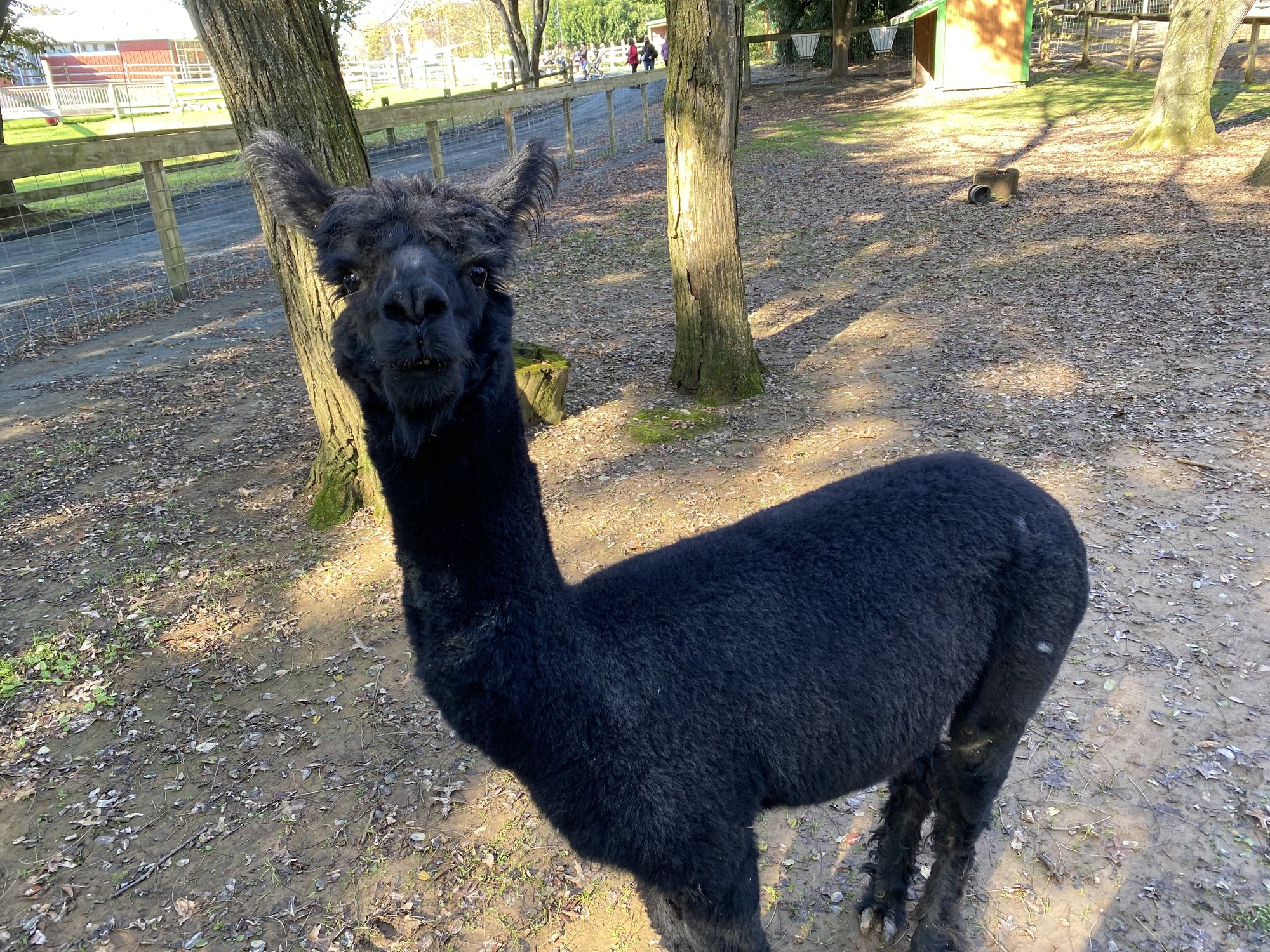
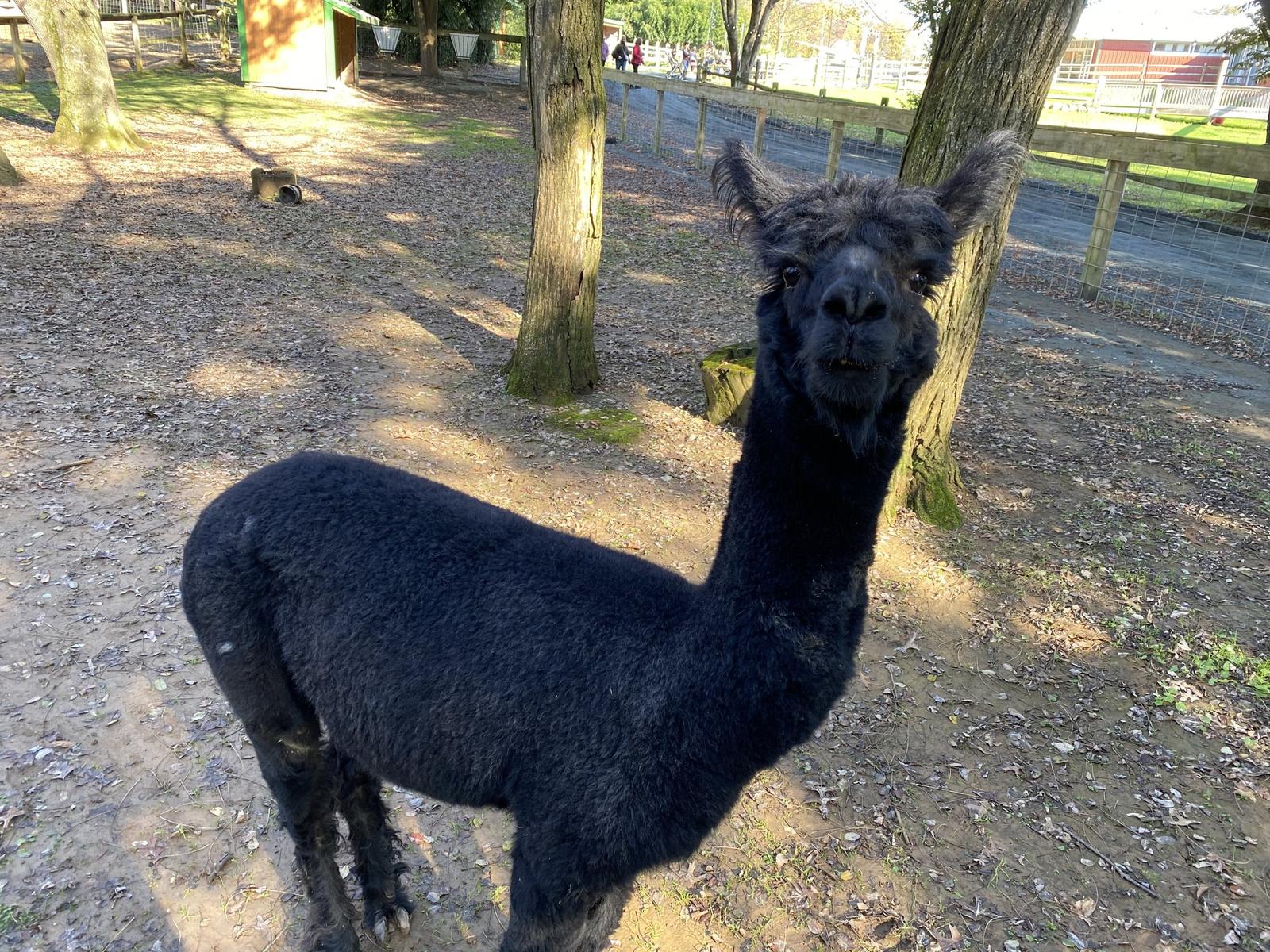
Black alpaca looking toward the camera in its yard at Plumpton Park Zoo in Rising Sun, Maryland
Height2½–3½ ft
Weight100–175 lb
LifespanOften 20+ years
Conservation statusDomesticated
Our alpacas

Meet the alpacas of Plumpton Park

CasperCloverJuniperNimbusSuri

Five alpacas live at Plumpton Park Zoo: Casper, Clover, Juniper, Nimbus and Suri.

Meet our alpacas at Plumpton Park Zoo — plan your visit.

Alpacas with different fleece colors standing together outdoors

Several of our alpacas together, with different fleece colors and haircuts.

For teachers and homeschool families

A free two-page Alpaca fact sheet with fast facts, words to know, discussion questions and a drawing activity. Teachers may copy and share it freely as long as they credit Plumpton Park Zoo.

Printable Fact Sheet (PDF)

Field guide

How to recognize an alpaca

The alpaca is a domesticated species of South American camelid. It resembles a small llama in appearance. Alpacas were not bred to be pack animals but were bred specifically for their fiber. Similar to sheep wool, alpaca fiber is used to make knitted and woven items, such as clothing and other textiles. All alpacas can spit when they feel threatened, but this defense mechanism is usually reserved for other alpacas.

Alpacas have been domesticated for thousands of years, first bred by Andean peoples in Peru for their soft, warm fleece — prized because it comes in dozens of natural colors and, unlike sheep wool, contains no lanolin, making it hypoallergenic for many people. They’re herd animals with a strong social structure, communicating through a range of hums, and are generally gentle and curious around people. Alpacas also share a distinctive trait with other camelids: they have soft, padded feet rather than hooves, which makes them easier on pastureland than many other grazing livestock.

Fleece clarification: The original “hypoallergenic” wording above should not be read as a guarantee that alpaca fiber cannot irritate skin. Research on alpaca textiles identifies coarse, medullated fibers as a cause of itching.

Source: Genetic parameters for different types of medullated fibre in Alpacas (2024).

Look for a small head, long neck, upright pointed ears and padded feet. The group photo above also shows why color alone is not a good identification tool: alpacas can have very different coats while belonging to the same species.

Try a simple observation challenge on your visit. Compare the ears, watch how an animal holds its neck, and notice whether the group is resting or moving. Take time to look beyond the familiar fluffy face. Those details connect the animal you see with its place in the camel family.

Sources: Oklahoma State University Extension; Animal Diversity Web (University of Michigan).

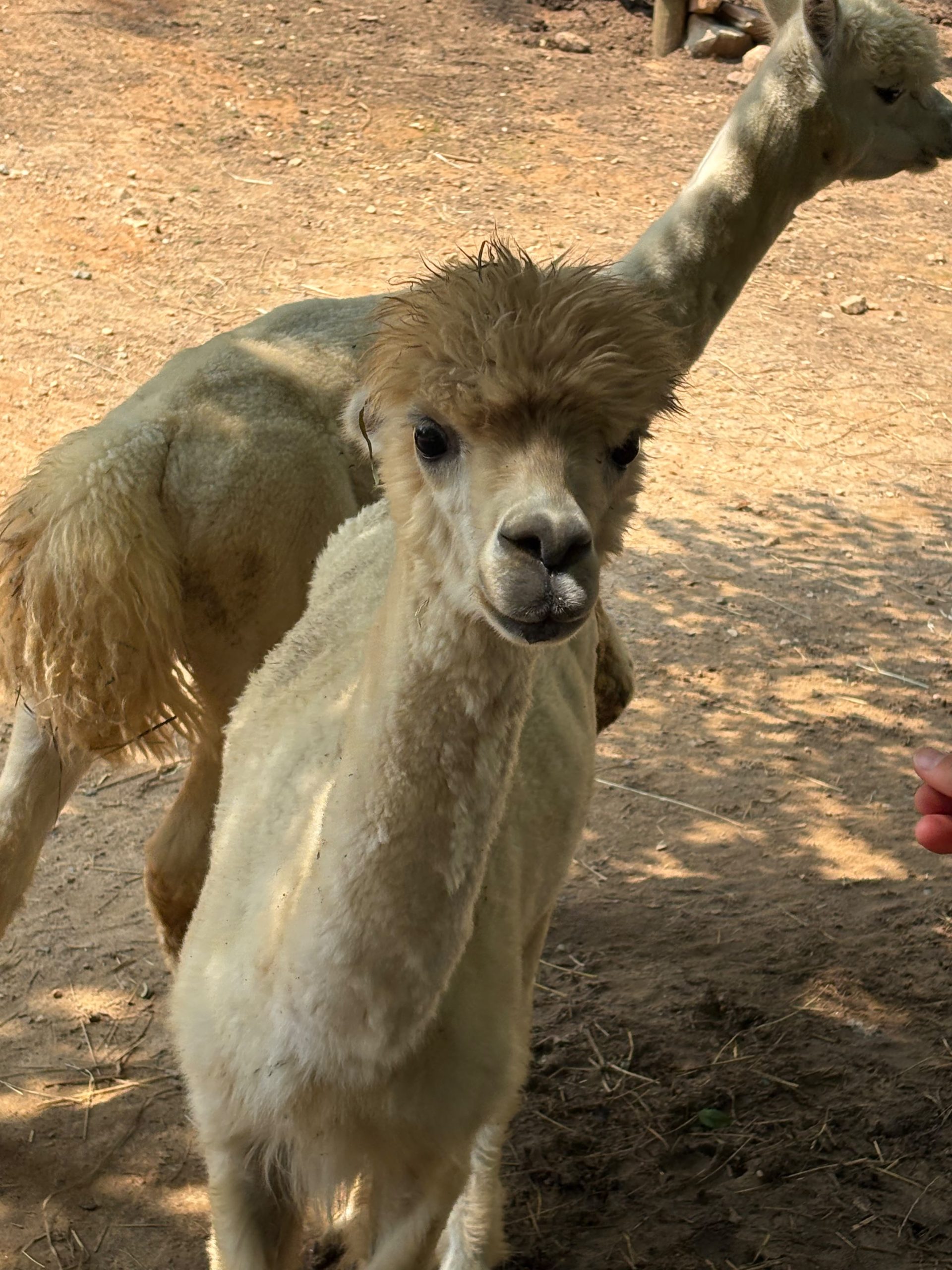
Cream-colored alpaca looking toward the camera with another alpaca behind it

A closer look at an alpaca’s face and fleece at Plumpton Park Zoo.

At a glance

Alpaca fast facts

Scientific nameVicugna pacos
FamilyCamelidae
Height2 1/2 – 3 1/2 feet
Weight100 – 175 lbs
LifespanOften 20 years or more
DietHay, grass and other plants
OriginAndes of South America
Social lifeHerd animal
StatusDOMESTICATED

About lifespan: Alpacas are domesticated animals, so there is no wild-alpaca lifespan to report. With good care, camelids often live 20 years or more.

Sources: Oklahoma State University Extension; Animal Diversity Web (University of Michigan).
2

Distinct fleece types: huacaya and suri.

Fleece

Why alpaca fleece looks different

Huacaya fleece grows outward with a crimped, woolly appearance. Suri fiber hangs in longer locks. These are two types of alpaca, rather than two separate species.

The group photo of our alpacas above invites a closer look at fleece. Compare the fluffy heads with the shorter coats on the bodies. An alpaca’s outline can change dramatically after shearing, so the amount of fleece is not a reliable measure of the animal’s size.

Sources: Oklahoma State University Extension.

White alpaca resting beside a young cria at Plumpton Park ZooHerd life

How alpacas communicate

A soft hum is only part of an alpaca’s communication. Ear position, head movement and posture also carry information. Watching several animals together gives you a chance to notice these quiet exchanges.

Spitting is usually directed at other alpacas, although a frightened animal may spit at a person. Treat it as a signal to respect the animal’s space. A calm visitor can observe much more by watching from outside the habitat than by trying to provoke a reaction.

Sources: Animal Diversity Web (University of Michigan).

Light brown alpaca standing on the grass by its shed at Plumpton Park ZooOn the menu

What alpacas eat

Alpacas generally eat hay or grasses but can eat other plants.

They are plant eaters with a digestive system suited to fibrous food. Their stomach has three compartments, and fermentation helps break down what they eat.

Grass and hay provide the foundation described in the original zoo guide. Learning about this plant-based diet helps explain why an alpaca spends time grazing rather than hunting.

Sources: Oklahoma State University Extension; Animal Diversity Web (University of Michigan).
Family life

A baby alpaca is a cria

1cria per birth, as a rule
~350days of pregnancy
20+years, often, with good care
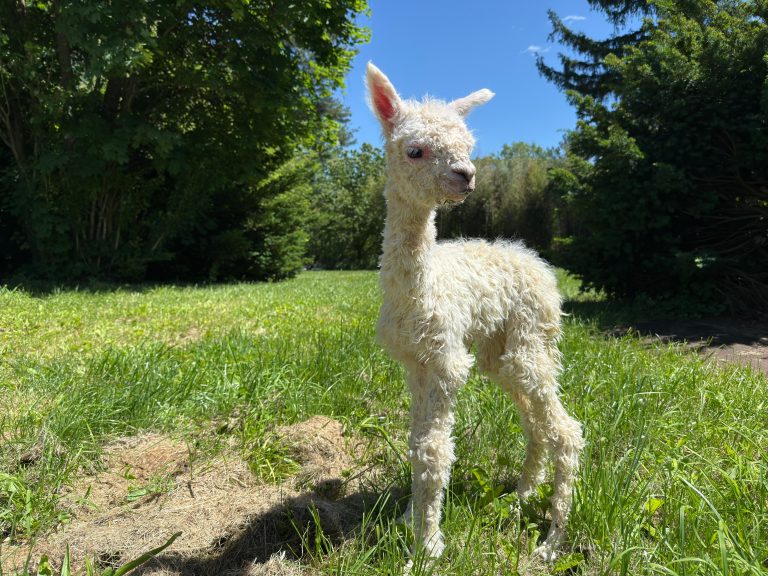
Nimbus, a young white alpaca, standing on grass at Plumpton Park Zoo
Nimbus, a young alpaca, called a cria, at Plumpton Park Zoo.

An alpaca usually gives birth to one young animal, called a cria, after a pregnancy lasting roughly eleven and a half months: about 350 days, give or take two weeks.

A growing cria is part of a social species. Learning about herd life helps explain why the relationships between animals matter as much as their individual appearance. Watch how the animals gather together: group behavior is an important part of an alpaca’s life.

Sources: Oklahoma State University Extension; Animal Diversity Web (University of Michigan).
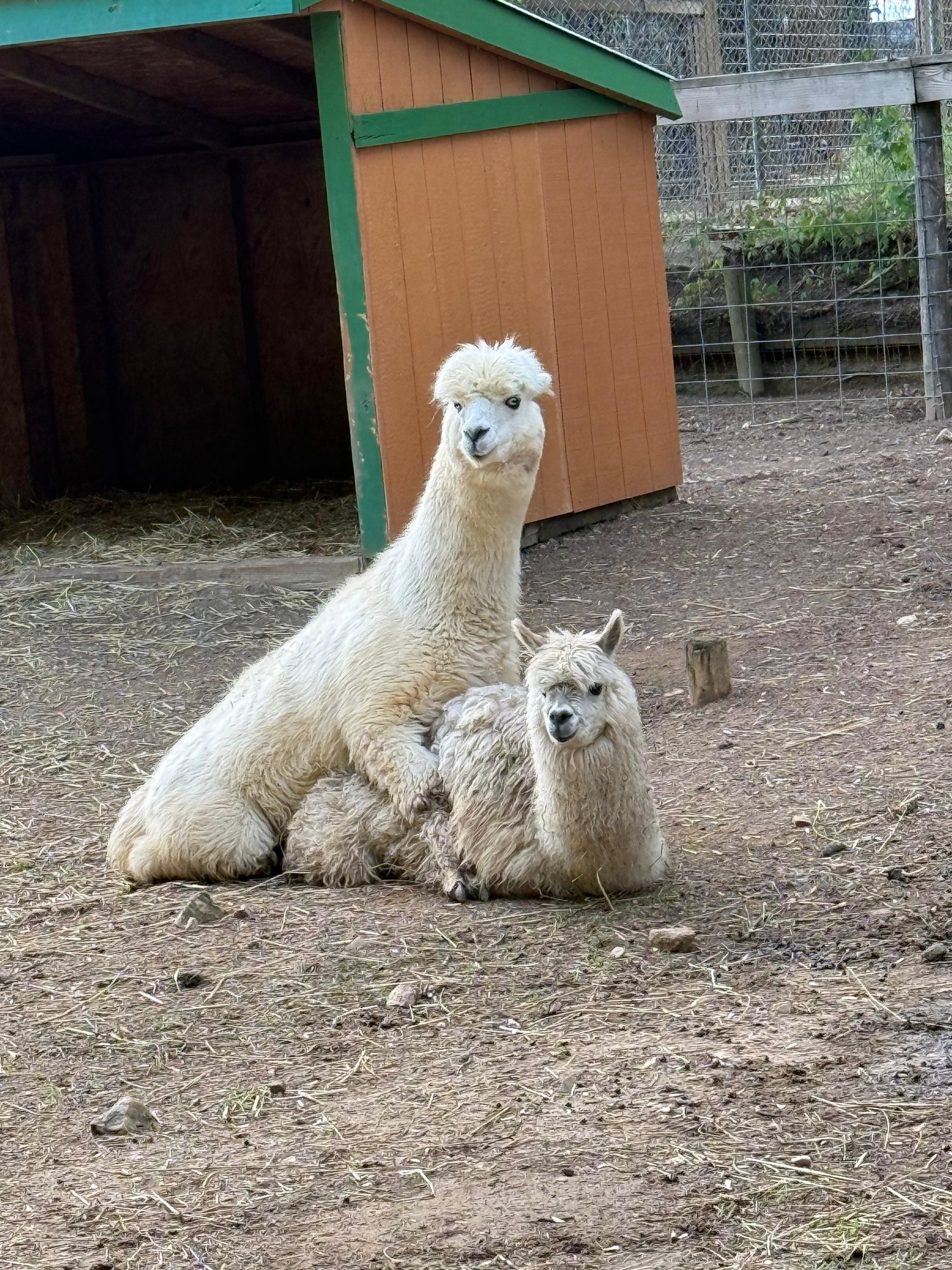
Spot the difference

Alpaca, llama or wild camelid?

Alpaca

A domesticated South American camelid bred especially for fiber. Domesticated means bred by people over generations; fiber is hair used to make knitted or woven items.

Llama

A larger domesticated relative associated with carrying loads. Its wild ancestor is the guanaco.

Vicuña and guanaco

Wild South American camelids. The vicuña is closely connected to the alpaca’s ancestry.

Explore the wider camel family through our Bactrian Camel and Dromedary Camel pages.

Sources: Animal Diversity Web (University of Michigan); Animal Diversity Web: llama; Oklahoma State University Extension.

Conservation

Alpacas are domesticated animals

Black alpaca standing under the trees at Plumpton Park Zoo
Alpacas come in many colors, including black.

DOMESTICATED

The status on our original guide is Domesticated. It describes the alpaca’s relationship with people rather than an extinction-risk category. As a domestic animal, the alpaca has no IUCN Red List assessment of its own.

Do not transfer a wild relative’s conservation label to the alpaca. Understanding that distinction makes it easier to compare the domestic animals you meet here with wild camelids and the habitats they depend on.

Sources: Animal Diversity Web (University of Michigan); Oklahoma State University Extension.

Curious young white alpaca with a woolly coat at Plumpton Park Zoo
A curious young alpaca at Plumpton Park Zoo.

Support

Help care for our alpacas & the animals of Plumpton Park

As a nonprofit zoo, Plumpton Park Zoo relies on admissions, memberships and the generosity of people who believe in what we do. Donations help support animal care, veterinary services, nutritious diets, enrichment, habitat improvements and the continued development of the zoo.

Support Our Animals

Plumpton Park Zoological Gardens, Inc. is a 501(c)(3) nonprofit organization. Donations support the zoo’s charitable mission and are tax-deductible to the extent permitted by law.

Questions

Frequently asked questions about alpacas

How many alpacas live at Plumpton Park Zoo?

Five: Casper, Clover, Juniper, Nimbus and Suri.

Are alpacas related to camels?

Yes. Alpacas belong to the camel family, Camelidae.

What is the difference between an alpaca and a llama?

Both are domesticated South American camelids. Alpacas are smaller and were bred especially for fiber; llamas are associated with carrying loads.

Do alpacas spit?

Yes. They usually spit at other alpacas, but a frightened animal may spit at a person.

What do alpacas eat?

They mainly eat grasses, hay and other plants.

What is a baby alpaca called?

A baby alpaca is called a cria.

Where can I see alpacas in Maryland?

Visit Plumpton Park Zoo in Rising Sun, Maryland. Check Hours and Tickets before your trip.

Sources: Oklahoma State University Extension; Animal Diversity Web (University of Michigan).
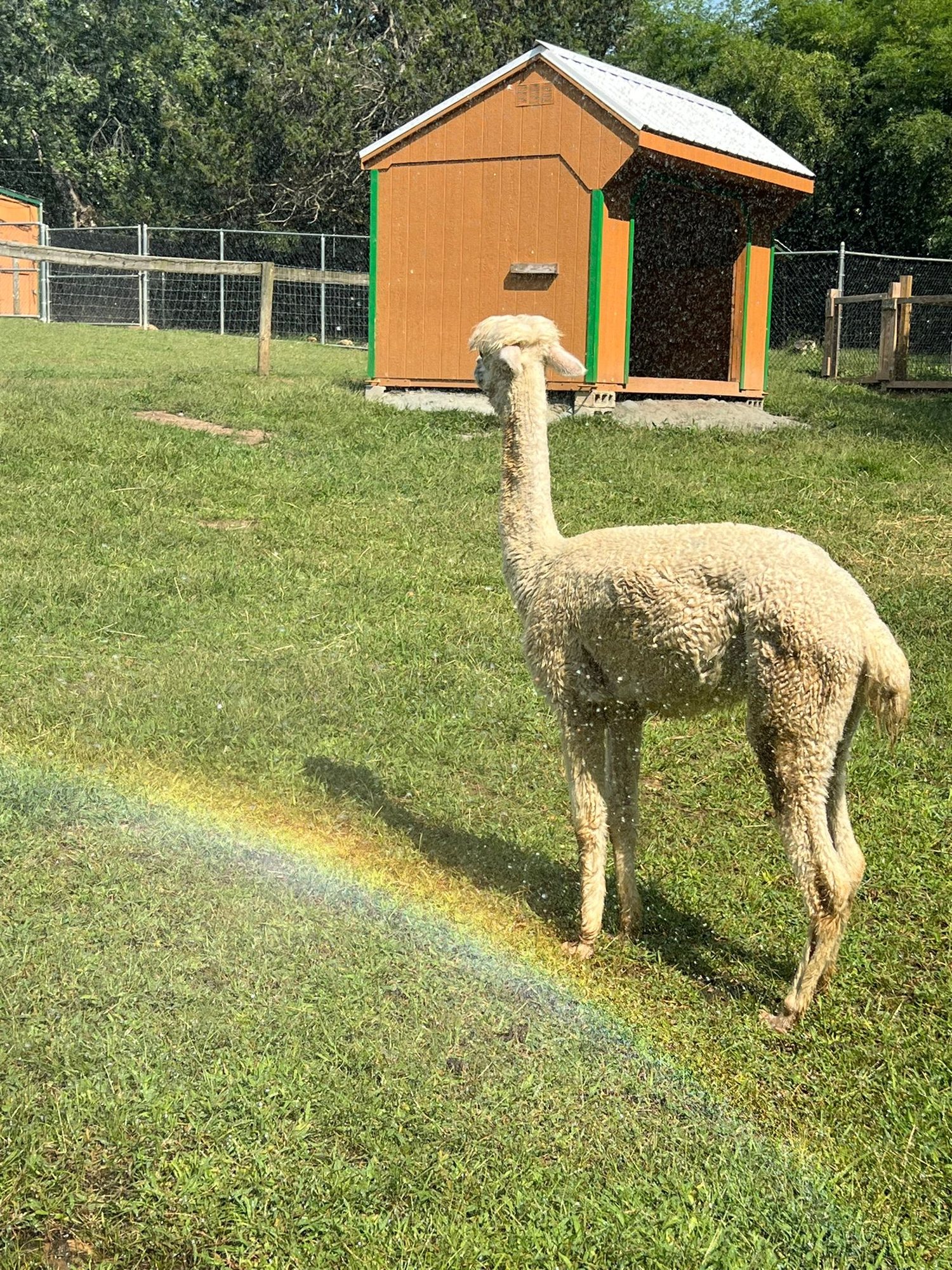
See alpacas at Plumpton Park Zoo

Casper, Clover, Juniper, Nimbus and Suri are waiting to meet you.

Plan a visit to Rising Sun, Maryland, and make alpacas part of your day. Explore our mammals, discover the Bactrian Camel, keep learning in the Animal Learning Center, and learn about giraffe feeding.