Two humps · Central Asian camel

Bactrian
Camel

Camelus bactrianus

Meet Lilly, Plumpton Park Zoo’s Bactrian camel, in Rising Sun, Maryland. Discover the two-humped camel built for cold winters and hot, dry summers.

A Bactrian camel with a shaggy coat and two humps at Plumpton Park Zoo
Size6–8 ft tall
Weight660–2,200 lb
LifespanUp to 50 years
Conservation statusDomesticated

Meet our Bactrian camel

Meet Lilly

Two humps. One unmistakable camel.

LillyFemaleBorn 2005

Lilly is Plumpton Park Zoo’s female Bactrian camel. Her birth date is August 3, 2005. She shares her yard with Chloe, one of our dromedary camels.

Look for the two humps and shaggy coat that distinguish her species from the one-humped dromedary. Like every animal at Plumpton Park, Lilly is cared for daily by our animal-care and veterinary teams.

Resident details verified from the zoo’s animal records.

For teachers and homeschool families

A free two-page Bactrian camel fact sheet with fast facts, words to know, discussion questions and a drawing activity. Teachers may copy and share it freely as long as they credit Plumpton Park Zoo.
Printable Fact Sheet (PDF)

Field guide

A camel built for extremes

The Bactrian camel has served as a pack animal in inner Asia since ancient times. Of the two species of camel, it is by far the rarer. The Bactrian camel has two humps on its back, in contrast to the single-humped dromedary camel. The humps store fat, not water, which the camel can draw on for energy when food is scarce. These humps give camels their legendary ability to endure long periods of travel without water, even in harsh desert conditions. As their fat is depleted, the humps become floppy and flabby.

Three camel species: the traditional comparison above describes the two domestic camels. Scientists also recognise the wild camel, Camelus ferus, as a separate species from the domestic Bactrian camel, Camelus bactrianus.

Bactrian camels live in the Gobi Desert of east Asia. Temperatures can become searingly hot and reach over 120°F in summer. In the winter temperature can drop to –20°F. Bactrian camels have developed special adaptations to allow them to survive in such a brutal environment. One is a thick, shaggy coat that protects them in winter and falls away as seasons change and temperatures rise.

Sources: Animal Diversity Web (University of Michigan); Wild Camel Protection Foundation; Plumpton Park Zoo species guide.

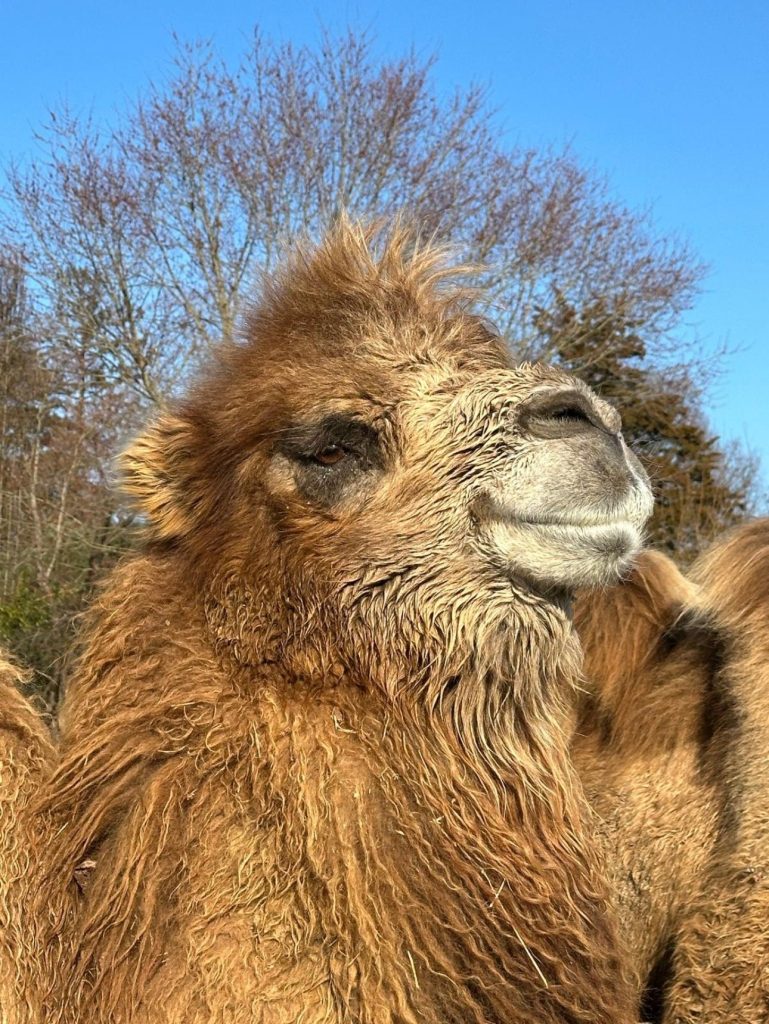
Lilly the Bactrian camel in her shaggy coat against a blue sky at Plumpton Park Zoo

Lilly in her shaggy coat at Plumpton Park Zoo.

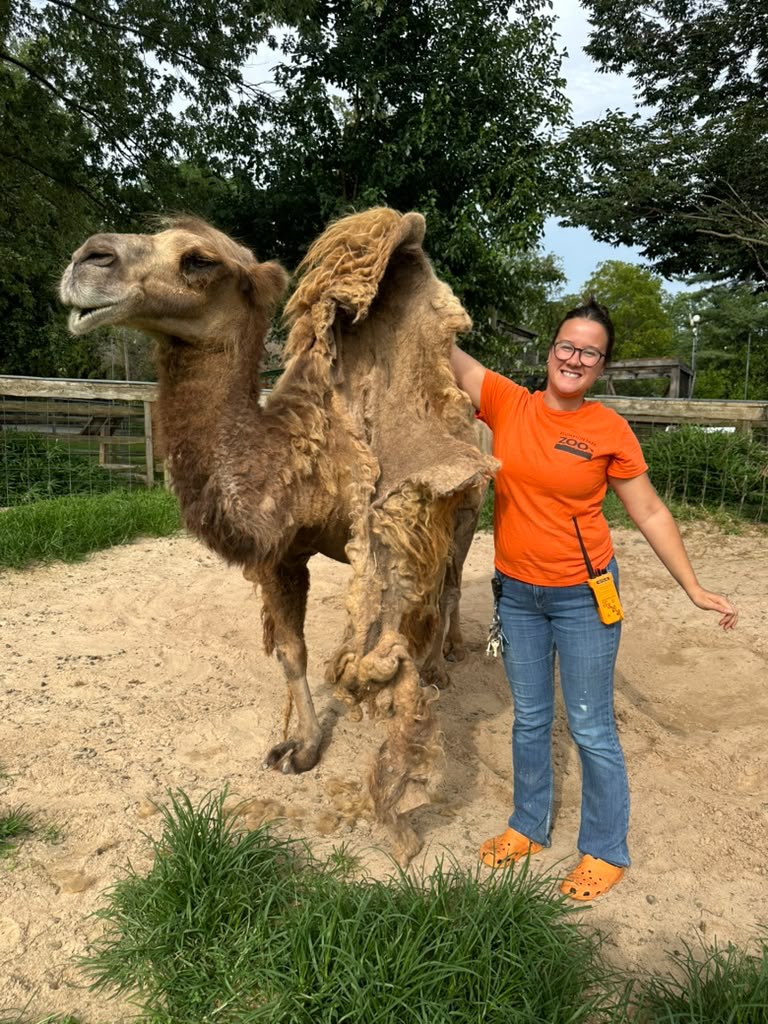
Lilly the Bactrian camel shedding her winter coat in big shaggy clumps, standing beside Jenna Maxwell at Plumpton Park Zoo

Lilly mid-shed with Compliance Officer Jenna Maxwell, a former Plumpton Park keeper.

Seasonal shedding

Why Lilly looks so scruffy

That ragged look is completely normal. Every late summer and fall, a Bactrian camel grows a thick, woolly winter coat. Where the species comes from, winters can drop to –20°F, and that coat is what gets a camel through them.

When warm weather returns, the camel sheds it. Not a few hairs at a time like a dog, but in big sheets and clumps that peel away all at once and leave the camel looking half-shorn. Camels rub against trees and fences to work the loose hair free, and keepers can help with a brush. Underneath is a shorter, lighter coat built for summer heat.

Visit in spring or early summer and you may catch Lilly mid-shed, like in this photo. Come back in winter and she will look like a different camel.

Sources: Animal Diversity Web (University of Michigan); Wild Camel Protection Foundation.

At a glance

Bactrian camel fast facts

Scientific nameCamelus bactrianus
FamilyCamelidae
DietPrimarily herbivorous
RegionCentral Asia
HumpsTwo
At Plumpton ParkLilly, female

Size: 6-7 1/2 feet in height

Weight: 660-2200 lbs

Lifespan: Up to 50 years; often 20 to 40 years in captivity

Sources: Plumpton Park Zoo species guide; Animal Diversity Web.

2

Humps that store fat

Desert survival

Fat reserves, not water tanks

The humps hold fat that can be used for energy when food is scarce. Their shape changes as those reserves are used and replenished.

Like Arabian camels, Bactrians rarely sweat, helping them conserve fluids for long periods of time. In winter, plants may yield enough moisture to sustain a camel without water for several weeks. When camels drink, they soak up water like a sponge. A very thirsty camel can drink about 15 gallons (57 liters) to refill its body, often within minutes.

Sources: Animal Diversity Web (University of Michigan).

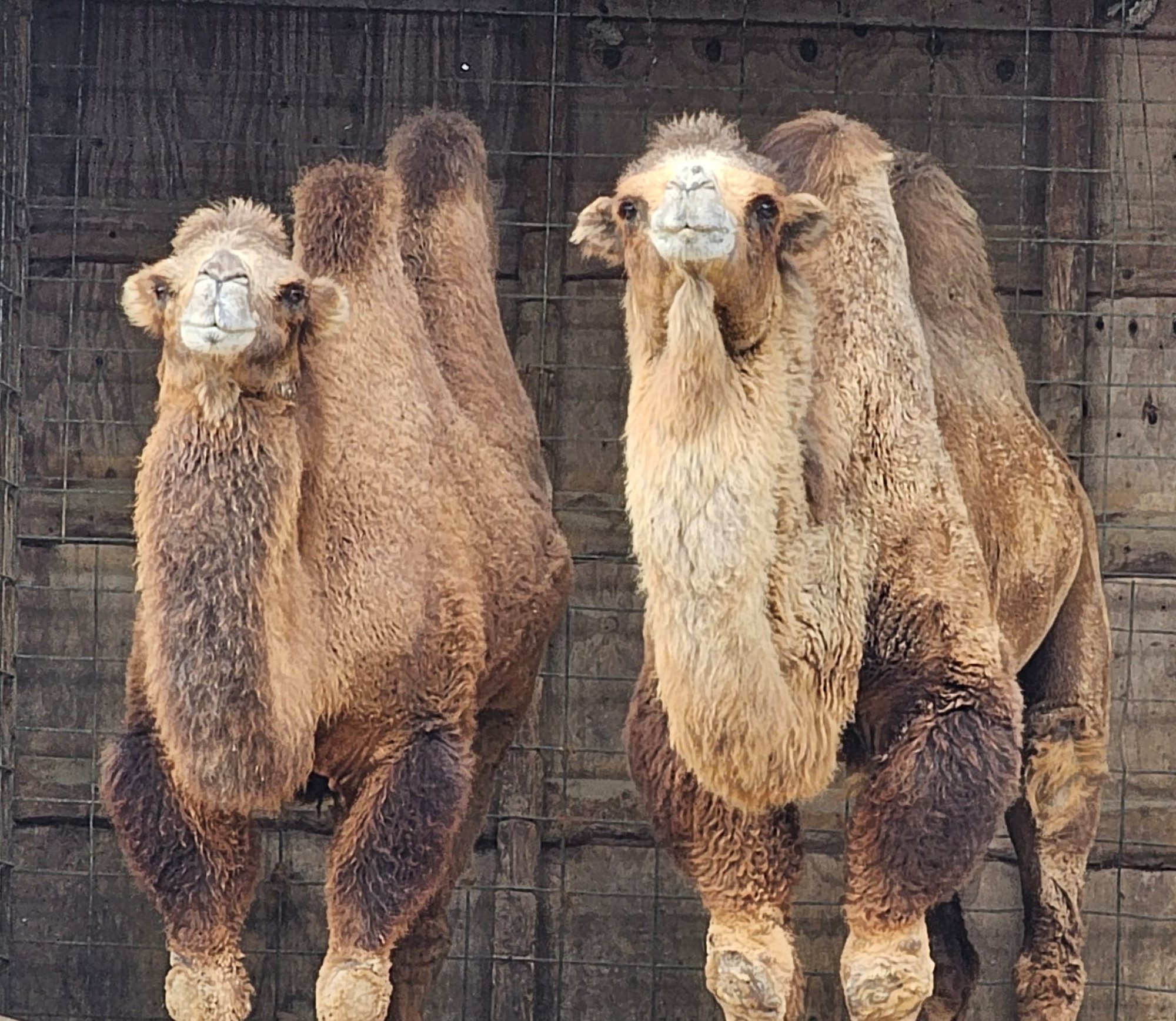
Two shaggy camels standing side by side in the barn at Plumpton Park ZooBuilt to travel

Keeping sand out

Like Arabian camels, Bactrians’ nostrils close to keep sand at bay, and their bushy eyebrows and two rows of long eyelashes protect their eyes. Big, flat footpads help them navigate the rough rocky terrain and shifting desert sands without sinking under their own massive bulk or the weight of heavy packs.

Camels have a pacing gait: both legs on one side move together. Watch for that steady, rolling walk when Lilly is moving.

Sources: Animal Diversity Web (University of Michigan).

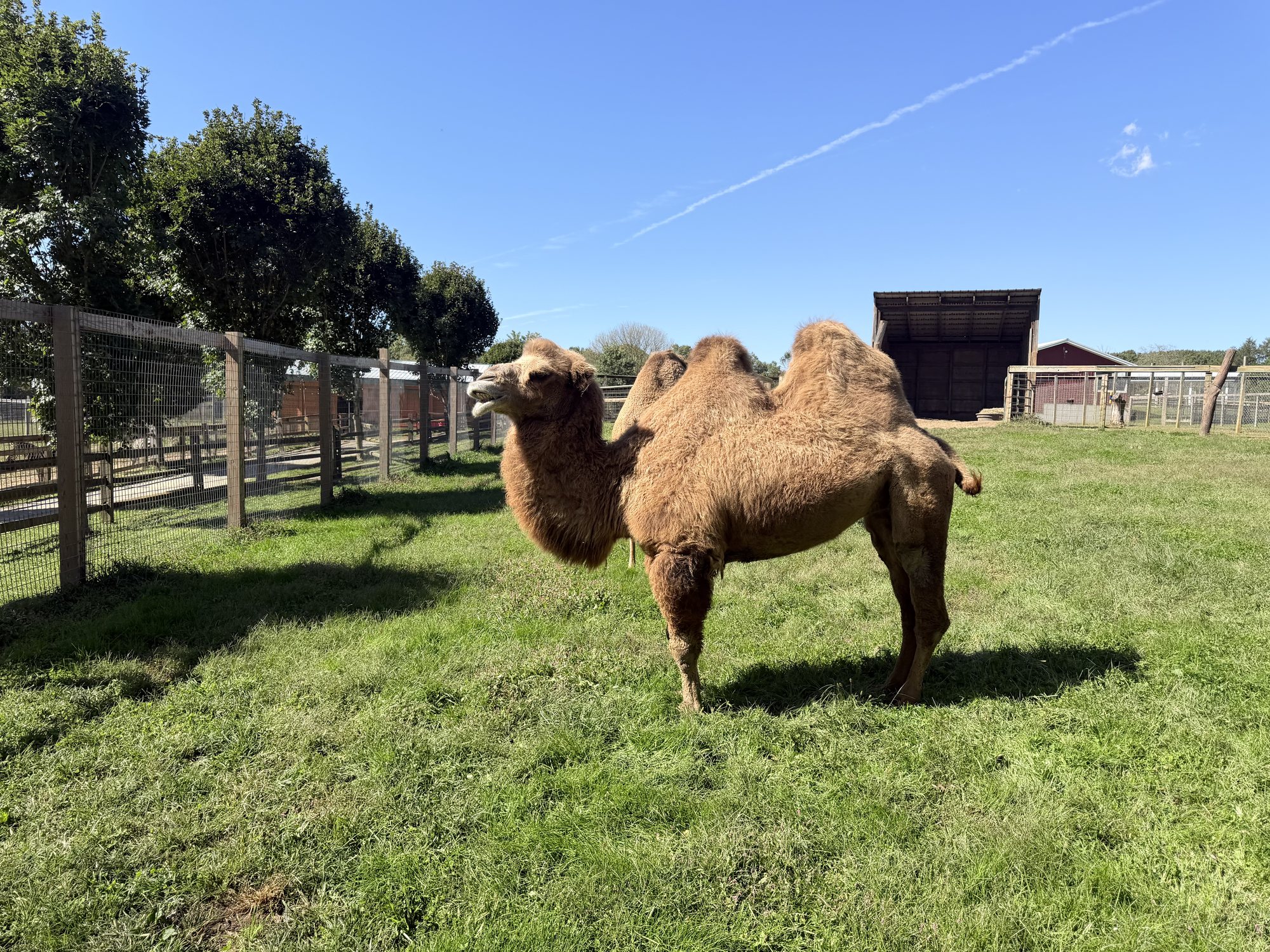
Bactrian camel with two humps standing in its yard at Plumpton Park ZooOn the menu

What Bactrian camels eat

They are primarily herbivores. They are able to eat plants that are dry, prickly, salty and/or bitter, and can ingest virtually any kind of vegetation. These camels may feed on carcasses, gnawing on bones, skin, or various different kinds of flesh.

Plant material is their main food; occasional scavenging is described in species accounts, not as Lilly’s zoo diet.

Sources: Plumpton Park Zoo species guide; Animal Diversity Web.

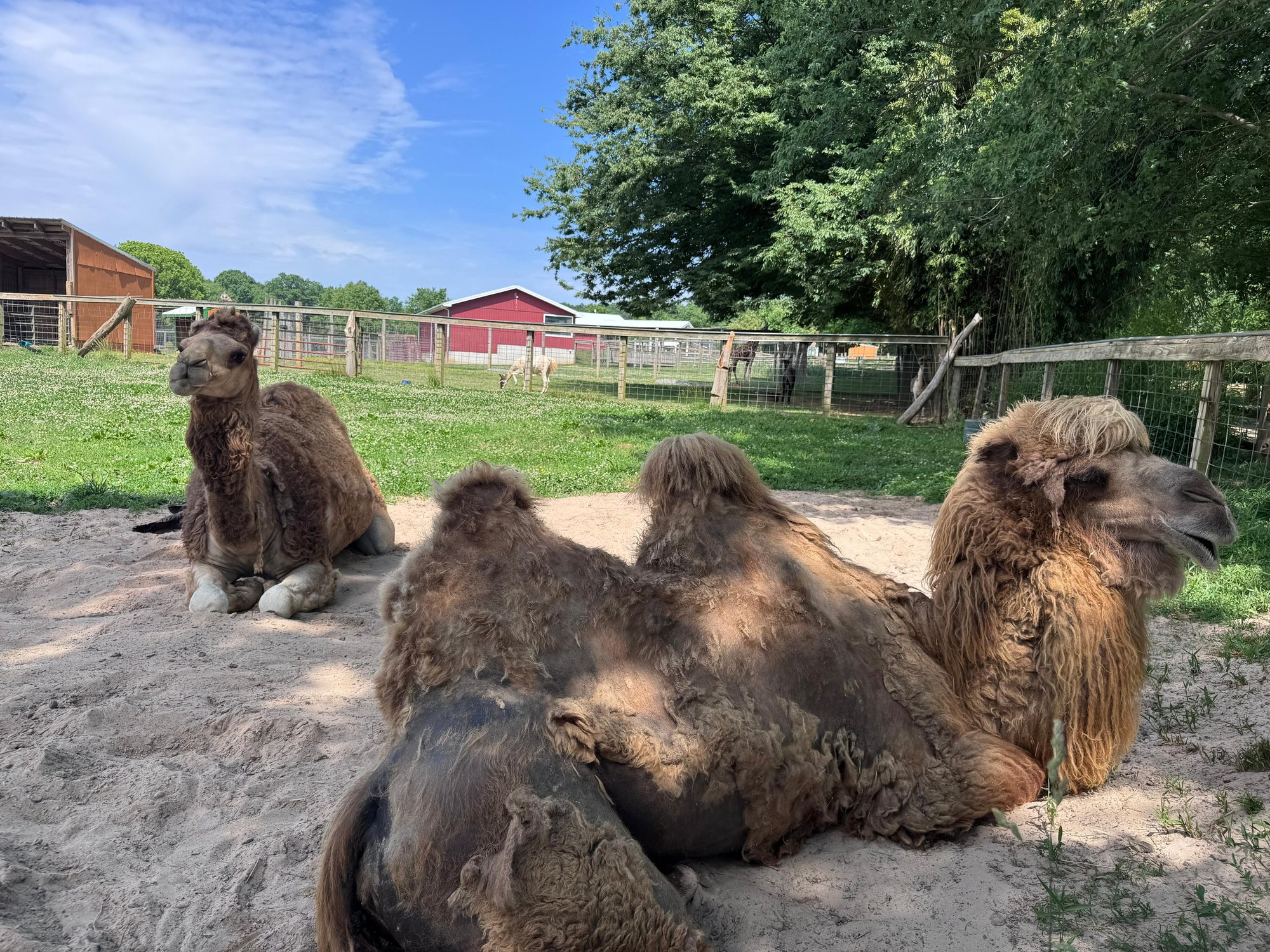
Camels resting on the ground together at Plumpton Park Zoo
Resting together at Plumpton Park Zoo.

Family life

Raising a camel calf

12–14months of gestation
1calf is usual
2calves are rare

Newborn camels can walk soon after birth. Their humps begin as small peaks and develop as they grow. Young calves nurse and stay close to their mothers.

Sources: Animal Diversity Web (University of Michigan).

Spot the difference

Which kind of camel?

Bactrian camel

Camelus bactrianus. The domestic two-humped camel, with a heavy winter coat. Lilly belongs to this species.

Dromedary camel

Camelus dromedarius. One hump. Meet another camel species on our dromedary camel page.

Wild camel

Camelus ferus. Two humps, but a distinct wild species. It is not simply a domestic Bactrian camel living in the wild.

Alpaca

A smaller South American relative in the camel family, without humps. Explore our alpaca page.

Sources: Animal Diversity Web (University of Michigan); Wild Camel Protection Foundation; Animal Diversity Web: dromedary; Animal Diversity Web: alpaca.

Conservation

Domestic camels and their wild relatives

Domestic Bactrian camel

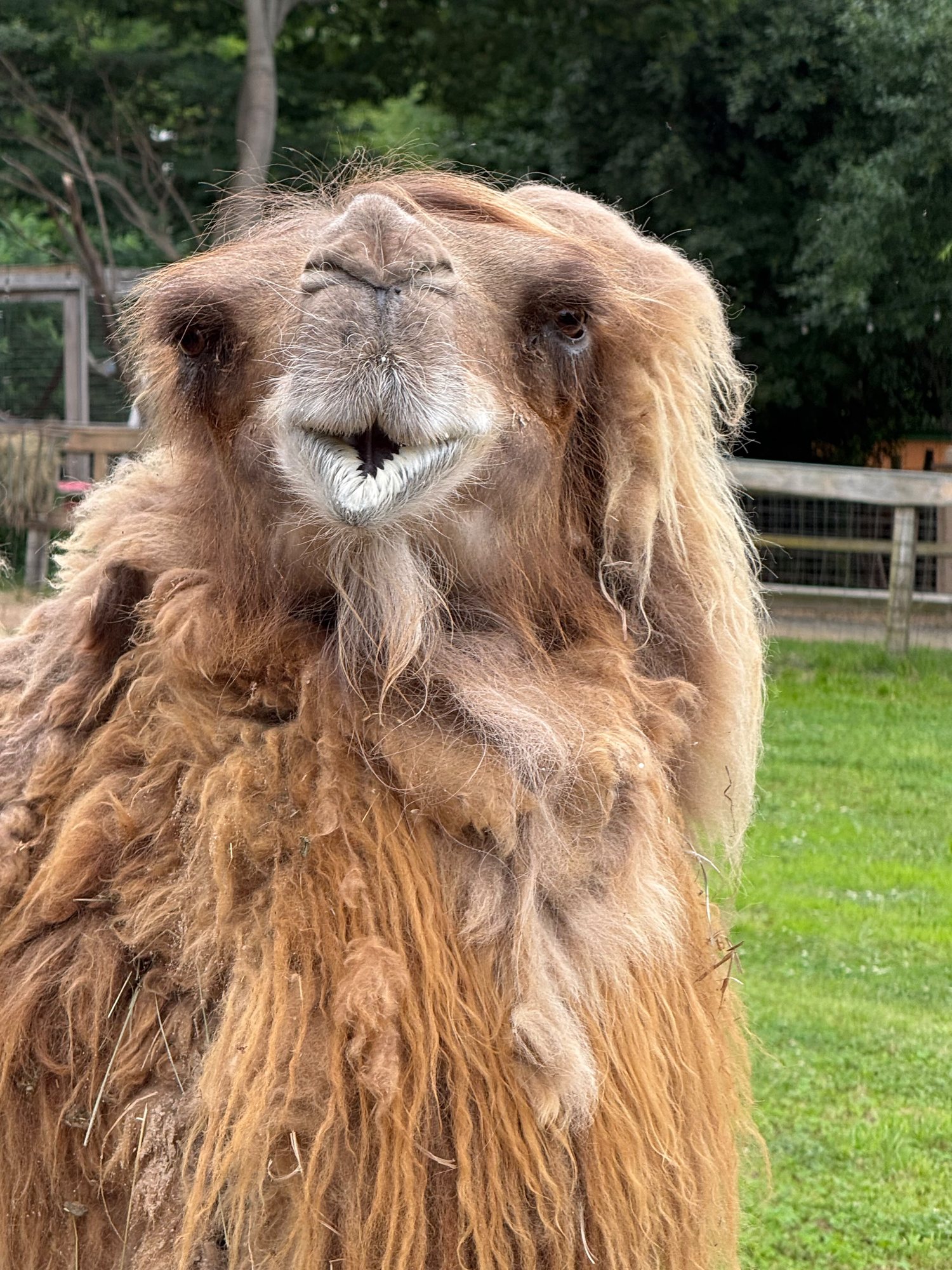
Shaggy Bactrian camel in its thick coat looking at the camera at Plumpton Park Zoo
A thick winter coat at Plumpton Park Zoo.

Lilly is a domestic Bactrian camel (Camelus bactrianus). The wild camel (Camelus ferus) is a separate species with its own conservation assessment.

Earlier conservation label: CRITICALLY ENDANGERED. That label on our original page reflects the wild camel’s former Red List status. The Wild Camel Protection Foundation reported its reclassification to Endangered in October 2025. Wild camels remain threatened by habitat loss, climate change, competition with livestock and hybridisation with domestic camels.

Sources: Wild Camel Protection Foundation (2025 update); Yadamsuren & Kaczensky, CMS Atlas of Ungulate Migration (2025).

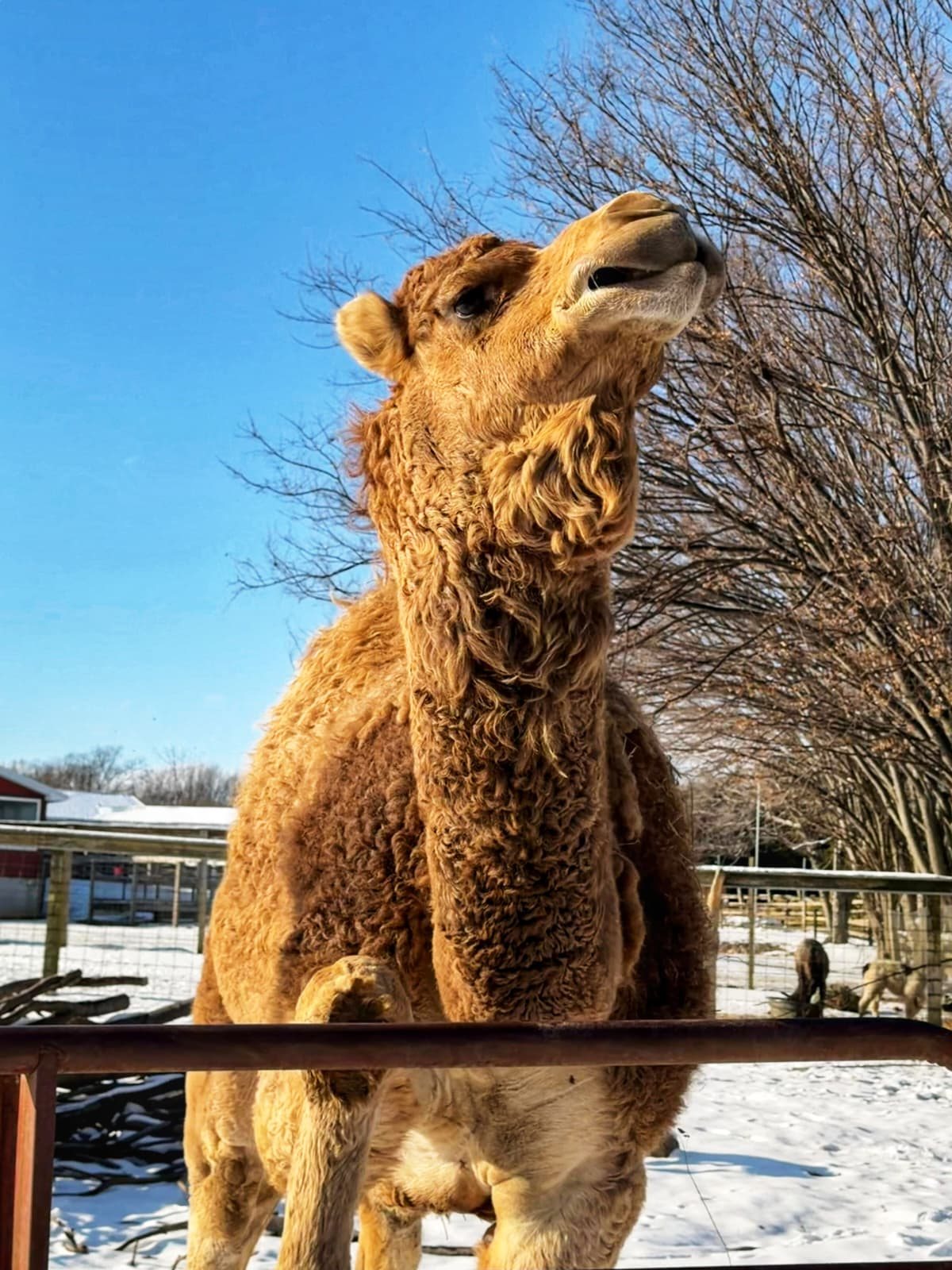
Bactrian camel in a winter coat by the fence at Plumpton Park Zoo
Saying hello at the fence.

Support

Help care for Lilly & the animals of Plumpton Park

As a nonprofit zoo, Plumpton Park Zoo relies on admissions, memberships and the generosity of people who believe in what we do. Donations help support animal care, veterinary services, nutritious diets, enrichment, habitat improvements and the continued development of the zoo.

Support Our Animals

Plumpton Park Zoological Gardens, Inc. is a 501(c)(3) nonprofit organization. Donations support the zoo’s charitable mission and are tax-deductible to the extent permitted by law.

Questions

Frequently asked questions about Bactrian camels

What is the difference between a Bactrian camel and a dromedary?

A Bactrian camel has two humps, while a dromedary has one. They are separate domestic camel species.

Do camel humps store water?

No. The humps store fat, which provides energy when food is scarce.

Who is the Bactrian camel at Plumpton Park Zoo?

Lilly is the zoo’s female Bactrian camel. She was born on August 3, 2005.

Why does a Bactrian camel have a shaggy coat?

The thick coat protects it during cold winters. Much of that coat is shed as temperatures rise.

Are Bactrian camels the same as wild camels?

No. The domestic Bactrian camel is Camelus bactrianus. The wild camel is Camelus ferus, a separate species.

Where can I see a Bactrian camel in Maryland?

At Plumpton Park Zoo in Rising Sun, Cecil County, Maryland. See Hours and Tickets for times and admission.

Sources: Animal Diversity Web (University of Michigan); Wild Camel Protection Foundation.

See Lilly at Plumpton Park Zoo

Meet our Bactrian camel and discover more than 200 animals in Rising Sun, Maryland.

The zoo is in Cecil County, an easy drive from Delaware and southern Pennsylvania. Explore our dromedary camels, alpacas and Animal Learning Center, and feed a giraffe.