A striking crest, bold banded quills and a surprising defense. Meet Penny, Potter and Presley, the African crested porcupines of Plumpton Park Zoo in Rising Sun, Maryland.
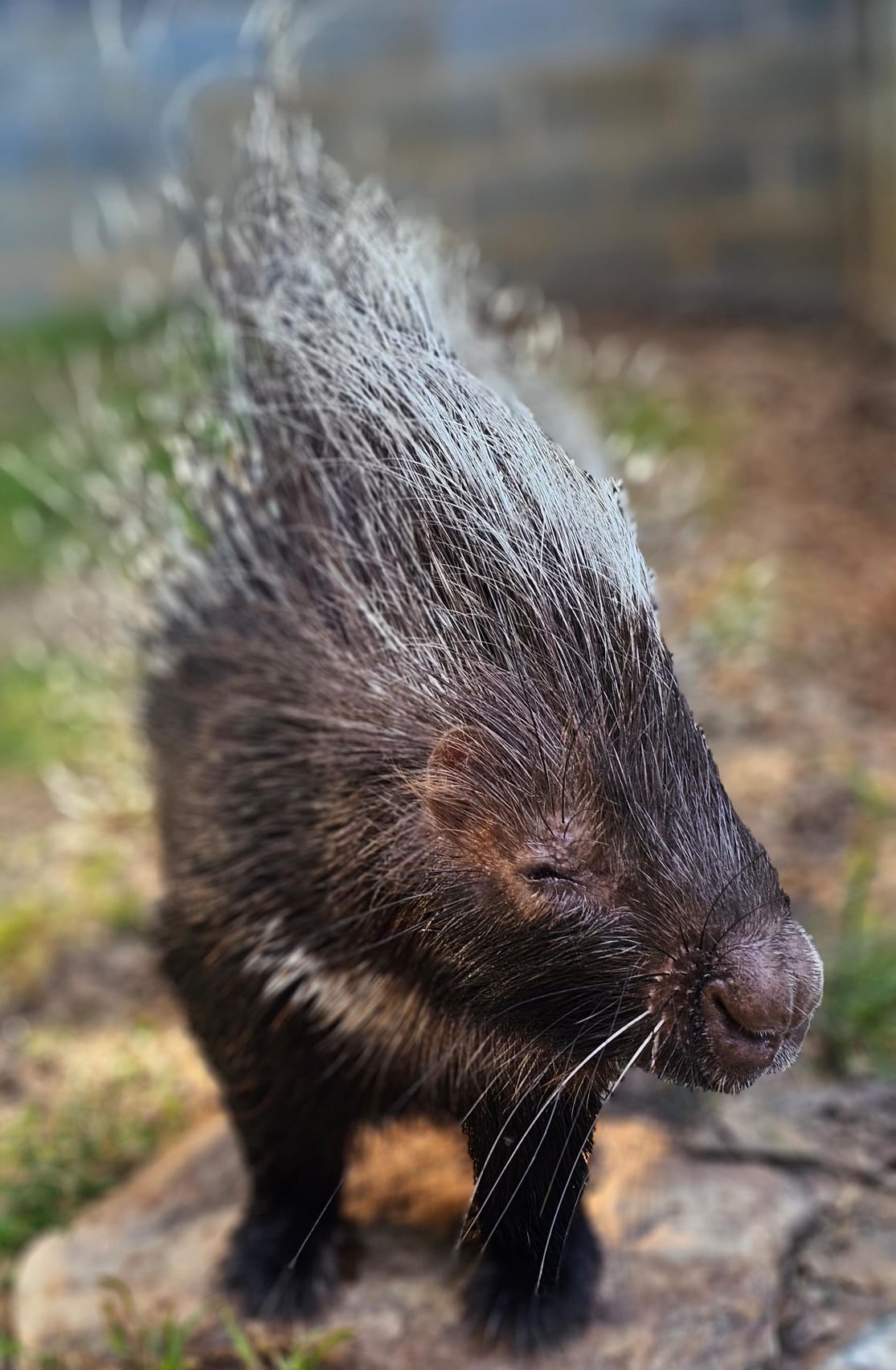
An outdoor portrait showing the long crest and whiskers of a crested porcupine at Plumpton Park Zoo.
Field guide
African crested porcupine at Plumpton Park Zoo
The Crested Porcupine is the largest porcupine in the world. The black and white quills along the head and back of this spiny mammal can be raised into a crest. These sturdy, sharp quills, which are about 14 inches long and marked with alternating light and dark bands, provide highly effective protection against predators. Porcupines cannot shoot quills but will attack a predator by running backward and stabbing their enemy. They can also rattle their quills making a warning sound.
Crested porcupines are mostly nocturnal, spending the day resting in burrows, rock crevices, or caves — such as old aardvark holes, or burrows they dig themselves. They usually live in small family groups of a mated pair and their offspring, and are found in Italy and Sicily, along the Mediterranean coast of Africa, and south into central and East Africa. Come see our three crested porcupines, Penny, Potter and Presley, at Plumpton Park Zoo — plan your visit.
Measurements from Animal Diversity Web, University of Michigan. Wild lifespan is not well documented; crested porcupines have lived up to 28 years in human care.
No. Quills are modified hairs made of keratin, the material in our hair and fingernails. Contact with a predator can dislodge them; they are never fired like arrows.
Raising the crest, rattling hollow tail quills and stamping the feet warn a threat away. Those signals give a predator an opportunity to retreat before the porcupine uses its quills.
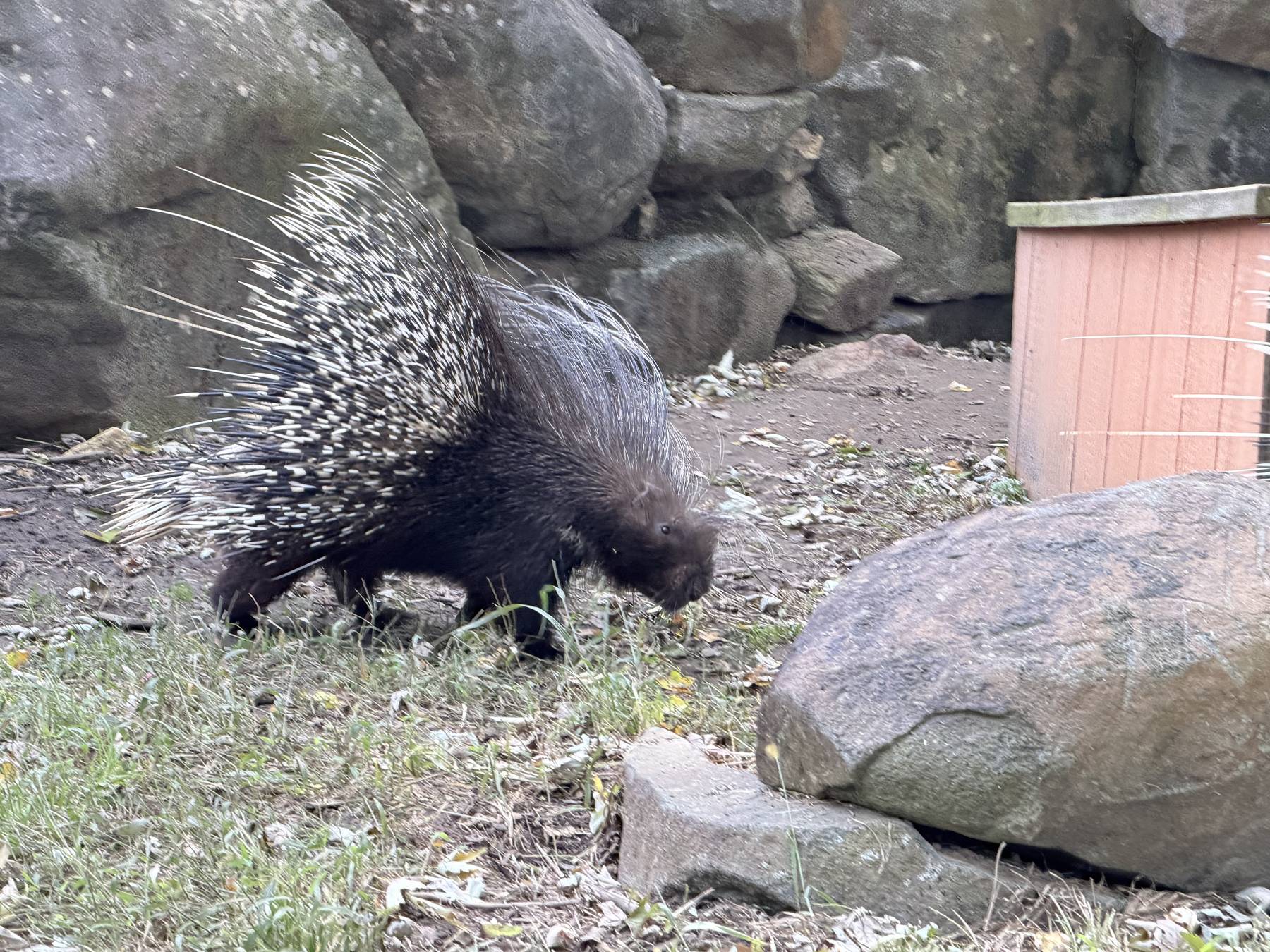
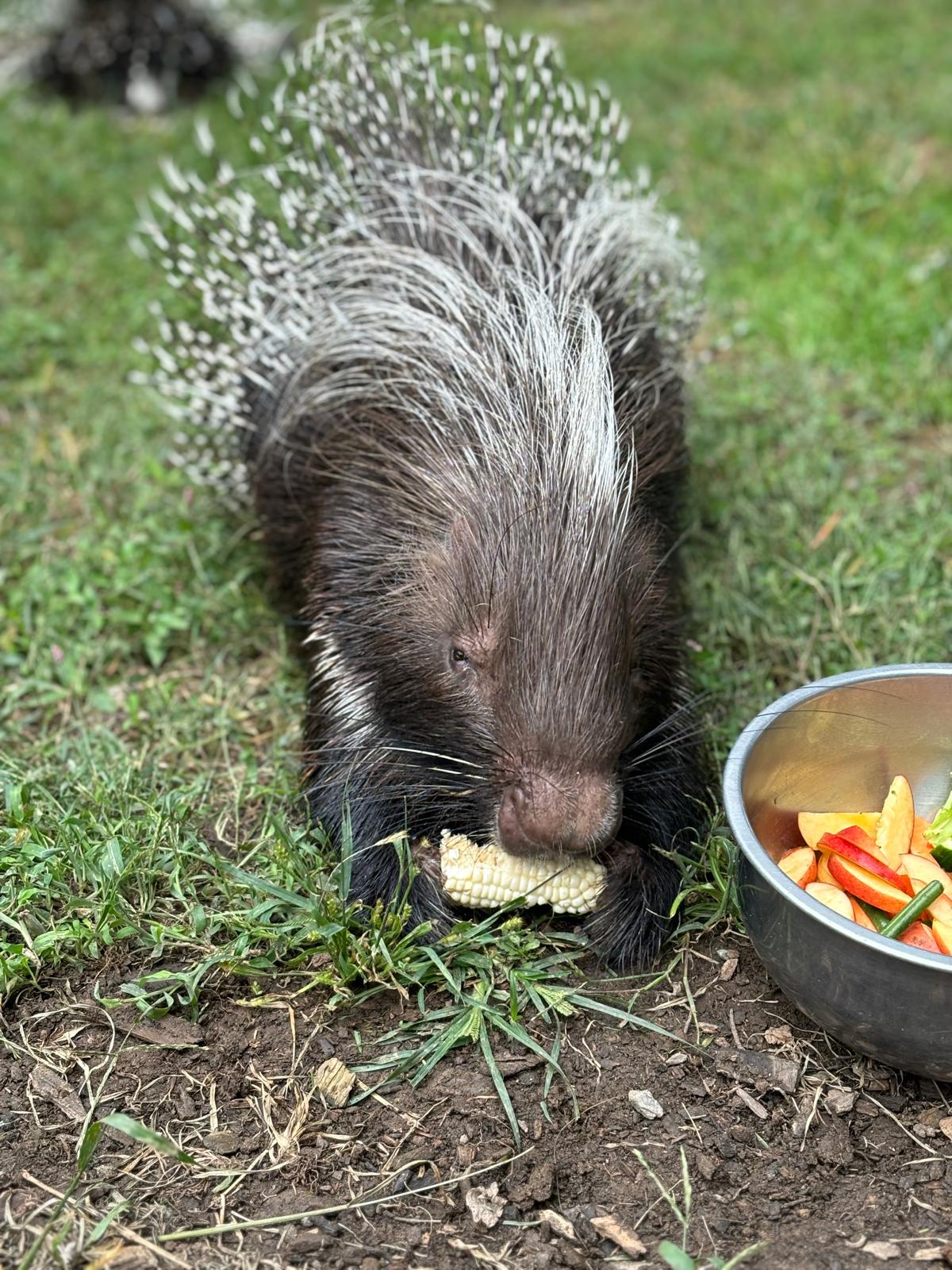
Foraging close to the ground at Plumpton Park Zoo.
Crested porcupines belong to the Old World porcupine family. They are ground-dwelling rodents, unlike the tree-climbing porcupines many visitors know from the Americas. Their world is close to the soil: sheltered resting places, paths between feeding areas and plants within reach.
They can use forests, rocky country and farmland. A secure den matters in each setting. Crested porcupines may dig their own burrows or use existing shelters, and a burrow system can remain in use for years.
The African Crested Porcupine is an herbivore that eats bark, bones of dead animals, roots, tubers, rhizomes, bulbs, fallen fruits, and cultivated crops.
Roots, bulbs and tubers store nutrients underground. Fallen fruit and bark offer other feeding opportunities. A strong sense of smell and chisel-shaped front teeth help porcupines find and tackle these foods.
Bones in the diet may seem surprising for an animal that mainly eats plants. Gnawing bones supplies minerals, including calcium. It is a useful reminder that a food list describes more than a simple division between plants and meat.
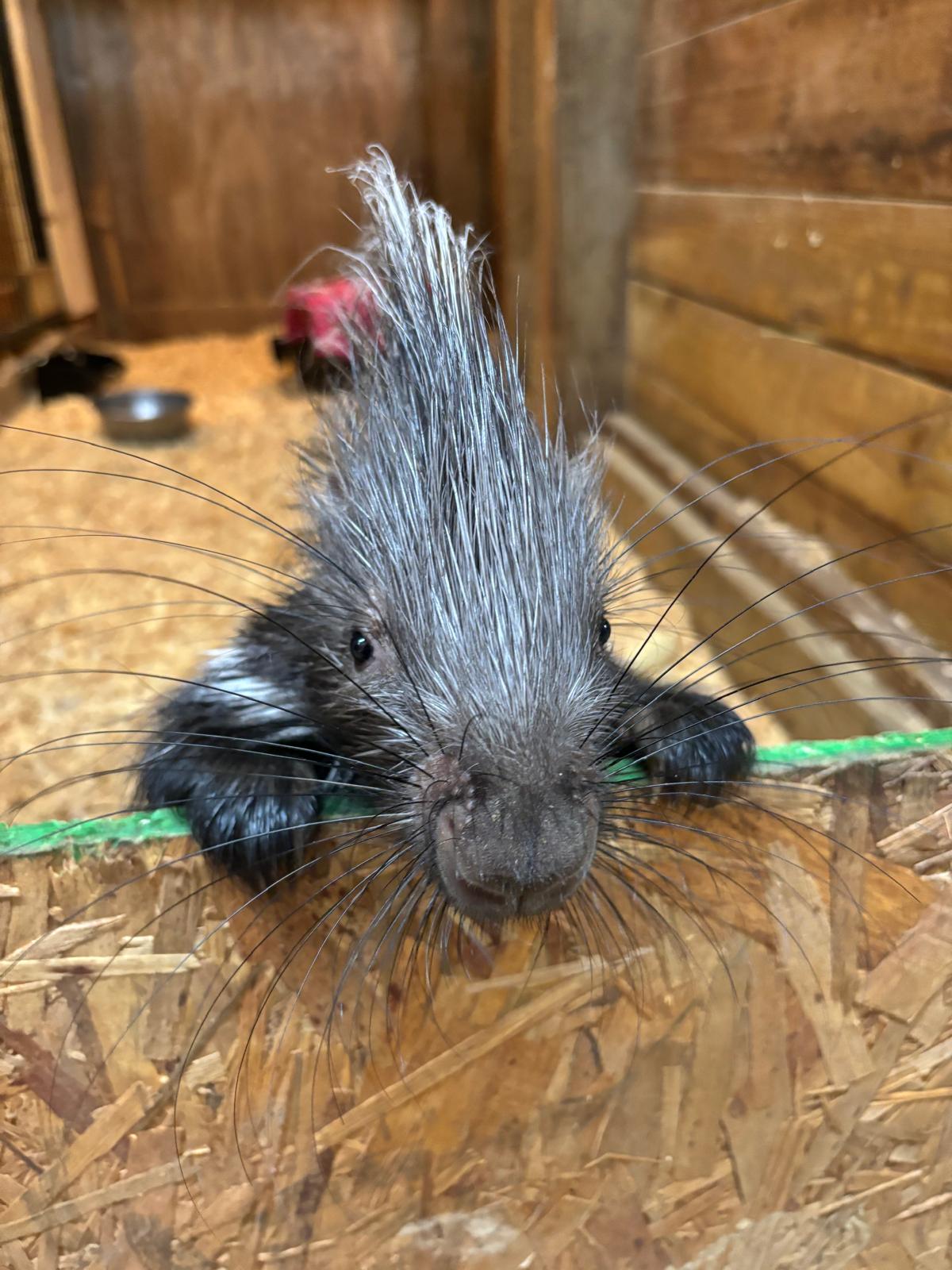
The photograph brings several details together: a small eye, long whiskers, dark bristles around the face and a pale, sweeping crest. Farther back, the contrasting quills create the striking pattern that gives this animal its unmistakable outline.
Use these features as an observation challenge during your visit. Can you distinguish the soft-looking hair around the face from the longer quills? Where does the crest begin? Looking for individual details makes this memorable mammal more than a silhouette covered in spines.
A face-on view of the crest, eyes and whiskers at Plumpton Park Zoo.
Family life
Growing up in a porcupine family
Adults and their young may share a burrow system. A baby porcupine is called a porcupette. Its quills begin soft and become firmer after birth, rather than arriving as a rigid coat of spikes.
The den provides a sheltered starting point while the young develop. This family life adds another side to an animal best known for its defense: a crested porcupine’s story also includes a home and the care of its young.
Hystrix cristata is an Old World porcupine with a prominent crest and banded quills.
Cape porcupine
Hystrix africaeaustralis is another crested species from sub-Saharan Africa. Similar common names can hide the distinction, so check the scientific name.
Prehensile-tailed porcupine
Coendou prehensilis lives in South American forests. Its grasping tail helps it climb through the trees.
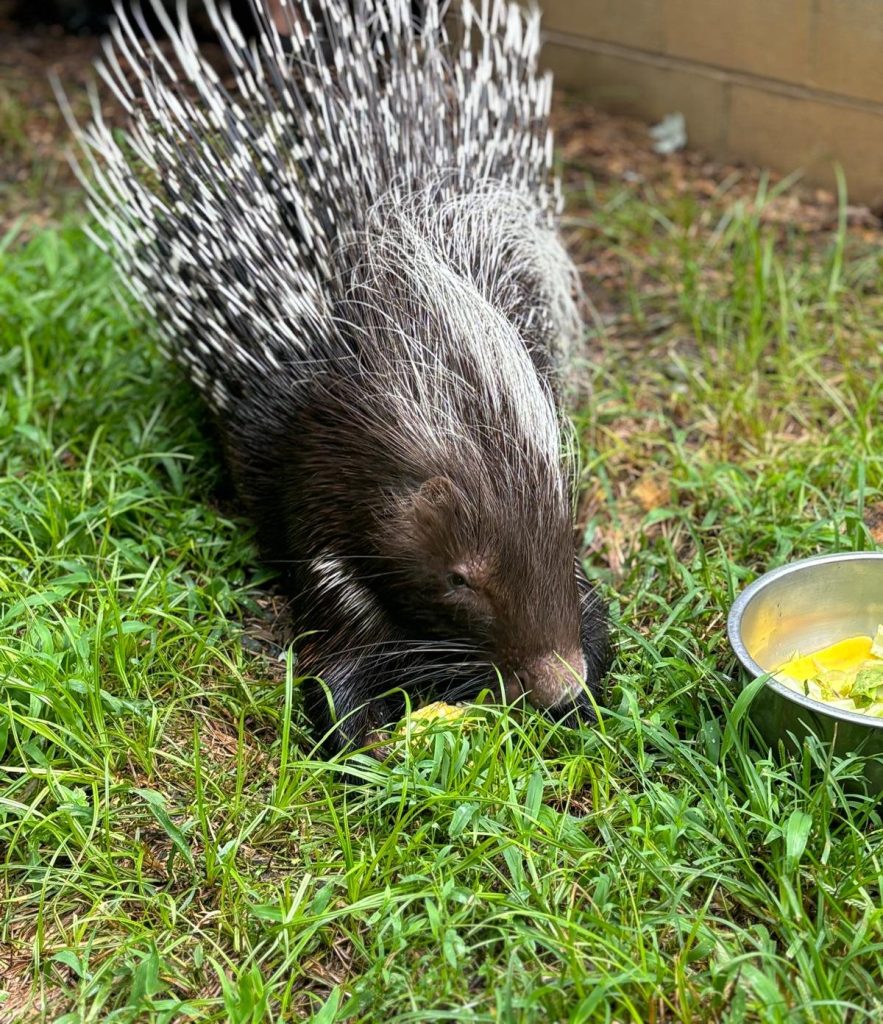
A crested porcupine eating corn beside a bowl of vegetables at Plumpton Park Zoo.
Conservation
African crested porcupine conservation
LEAST CONCERN
The IUCN Red List classifies Hystrix cristata as Least Concern in its 2023 assessment. That global category does not remove local pressures. Habitat loss, hunting and conflict over crops can still affect crested porcupines.
Learning the difference between defensive behavior and aggression helps replace a familiar myth with an accurate picture of this animal. Respecting wildlife, its shelter and its space is part of appreciating the species you meet at the zoo.
Help care for Penny, Potter, Presley & the animals of Plumpton Park
As a nonprofit zoo, Plumpton Park Zoo relies on admissions, memberships and the generosity of people who believe in what we do. Donations help support animal care, veterinary services, nutritious diets, enrichment, habitat improvements and the continued development of the zoo.
Plumpton Park Zoological Gardens, Inc. is a 501(c)(3) nonprofit organization. Donations support the zoo’s charitable mission and are tax-deductible to the extent permitted by law.
Frequently asked questions about African crested porcupines
Can African crested porcupines shoot their quills?
No. Quills can come loose on contact, but porcupines cannot fire them.
Is an African crested porcupine a rodent?
Yes. It belongs to the Old World porcupine family, Hystricidae.
What do African crested porcupines eat?
They mainly eat plant foods such as roots, bulbs, tubers, bark and fallen fruit. They also gnaw bones for minerals.
When are crested porcupines active?
They are mostly nocturnal, resting in sheltered places during the day.
What is a baby porcupine called?
A baby porcupine is a porcupette. Its quills begin soft and harden after birth.
How many porcupines live at Plumpton Park Zoo?
Three: Penny, Potter and Presley. All three are boys.
Where can I see an African crested porcupine in Maryland?
Visit Plumpton Park Zoo in Rising Sun, Maryland. Check Hours and Tickets before planning your trip.
See Penny, Potter and Presley at Plumpton Park Zoo
Make these distinctive mammals part of your visit to Plumpton Park Zoo in Rising Sun, Maryland. Explore our mammals, including the Binturong, learn more through the Animal Learning Center, and discover giraffe feeding.
Check current opening times and admission information before you travel. Bring your curiosity: the crest, whiskers and banded quills offer plenty to look for when you meet them.