Plumpton Park Zoo · Rising Sun, Maryland
Watusi
Bos taurus
Remarkable horns and a rich African heritage. Discover Watusi cattle at Plumpton Park Zoo in Rising Sun, Maryland.
Animal groupDomestic cattle
DietHerbivore
Distinctive featureLarge horns
YoungCalf
Field guide
Watusi at Plumpton Park Zoo
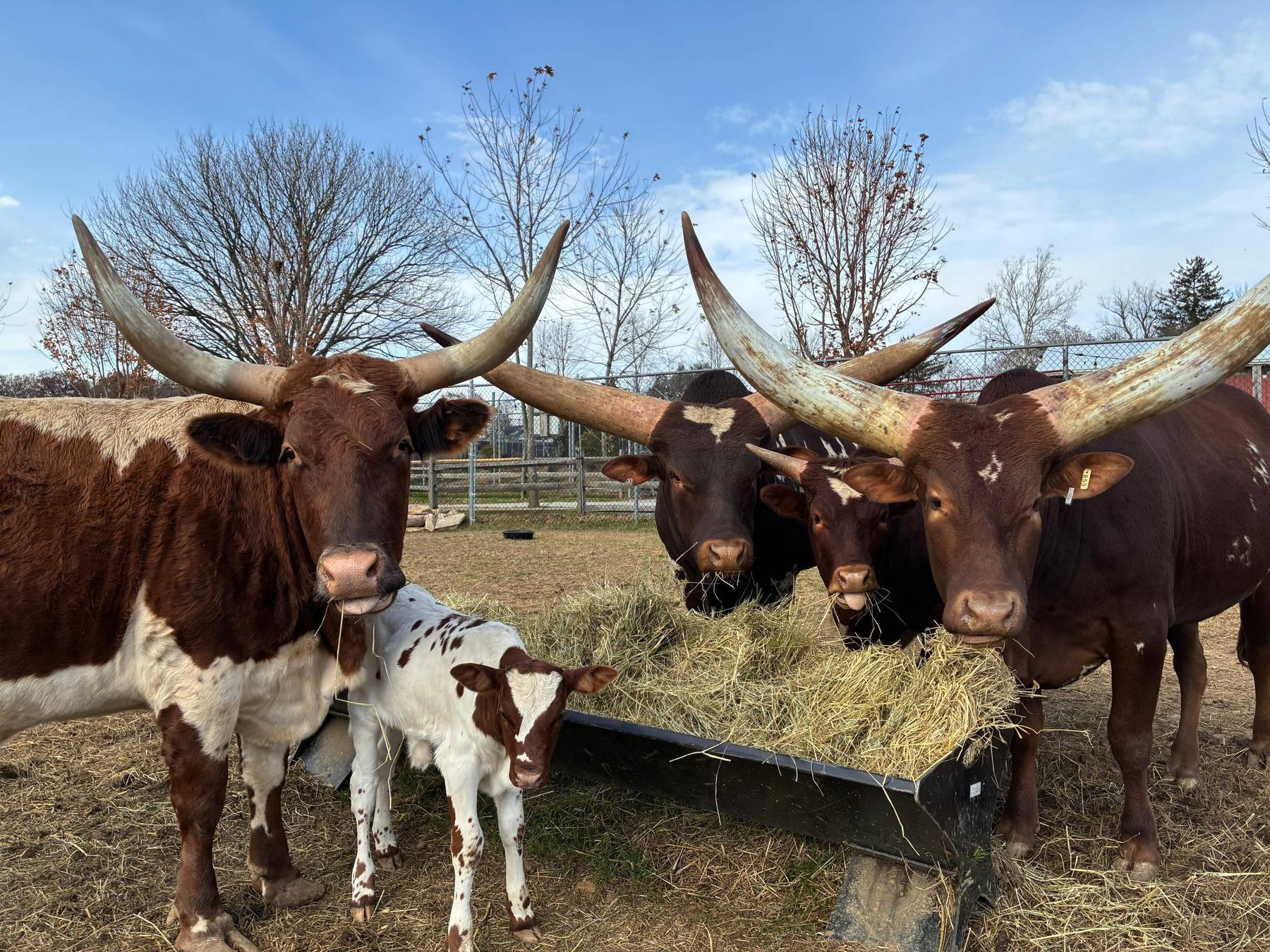
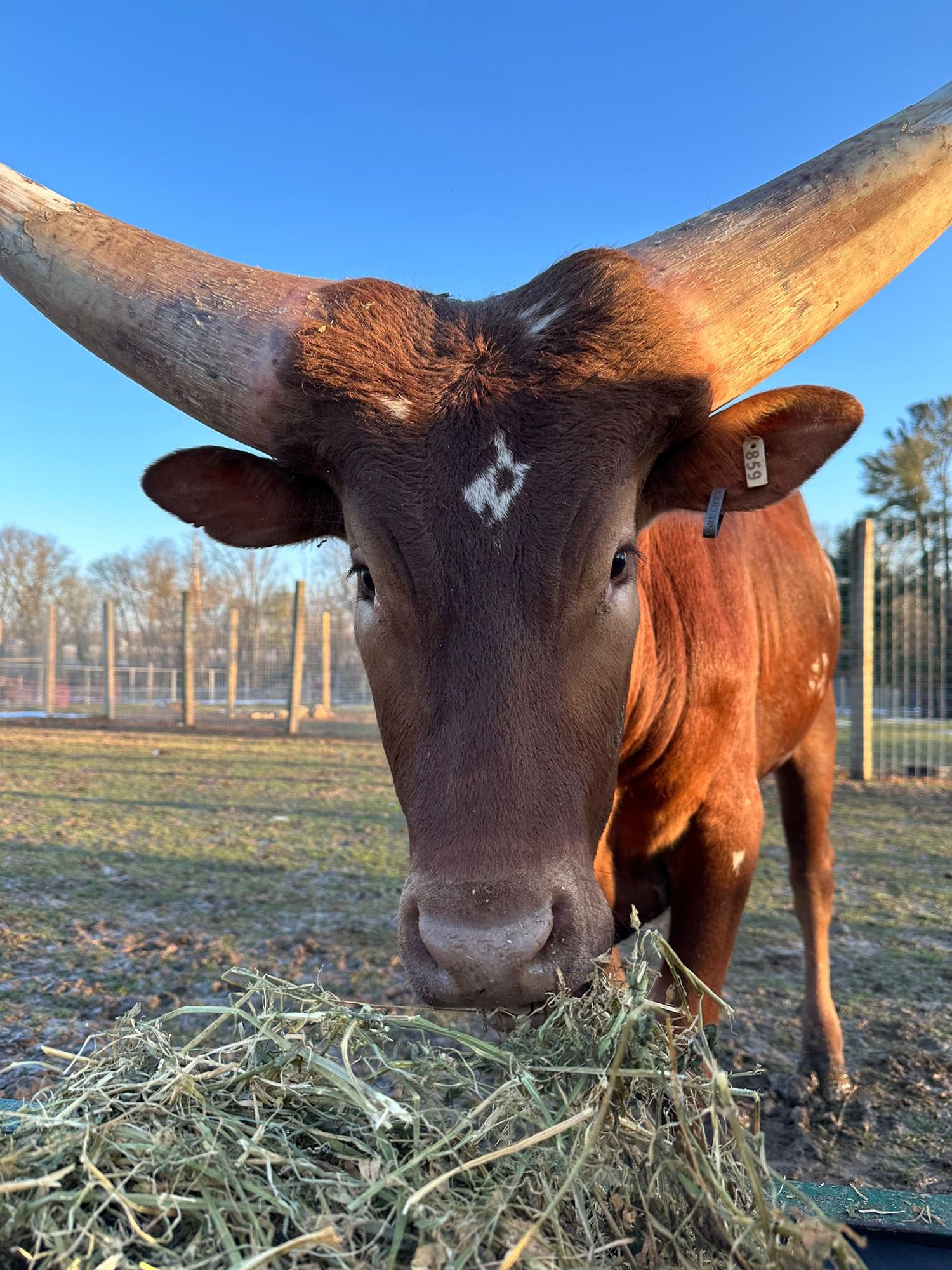
The Watusi is a breed of domestic cattle best known for its enormous horns, which can span up to 8 feet from tip to tip — among the largest horns of any cattle breed in the world. Originally developed in Central and East Africa, Watusi cattle were historically prized by local herders as a symbol of wealth and status. Beyond their striking appearance, those massive horns serve a practical purpose: they’re honeycombed with blood vessels, which act like a built-in radiator, helping the animal release excess body heat and stay cool in hot climates.
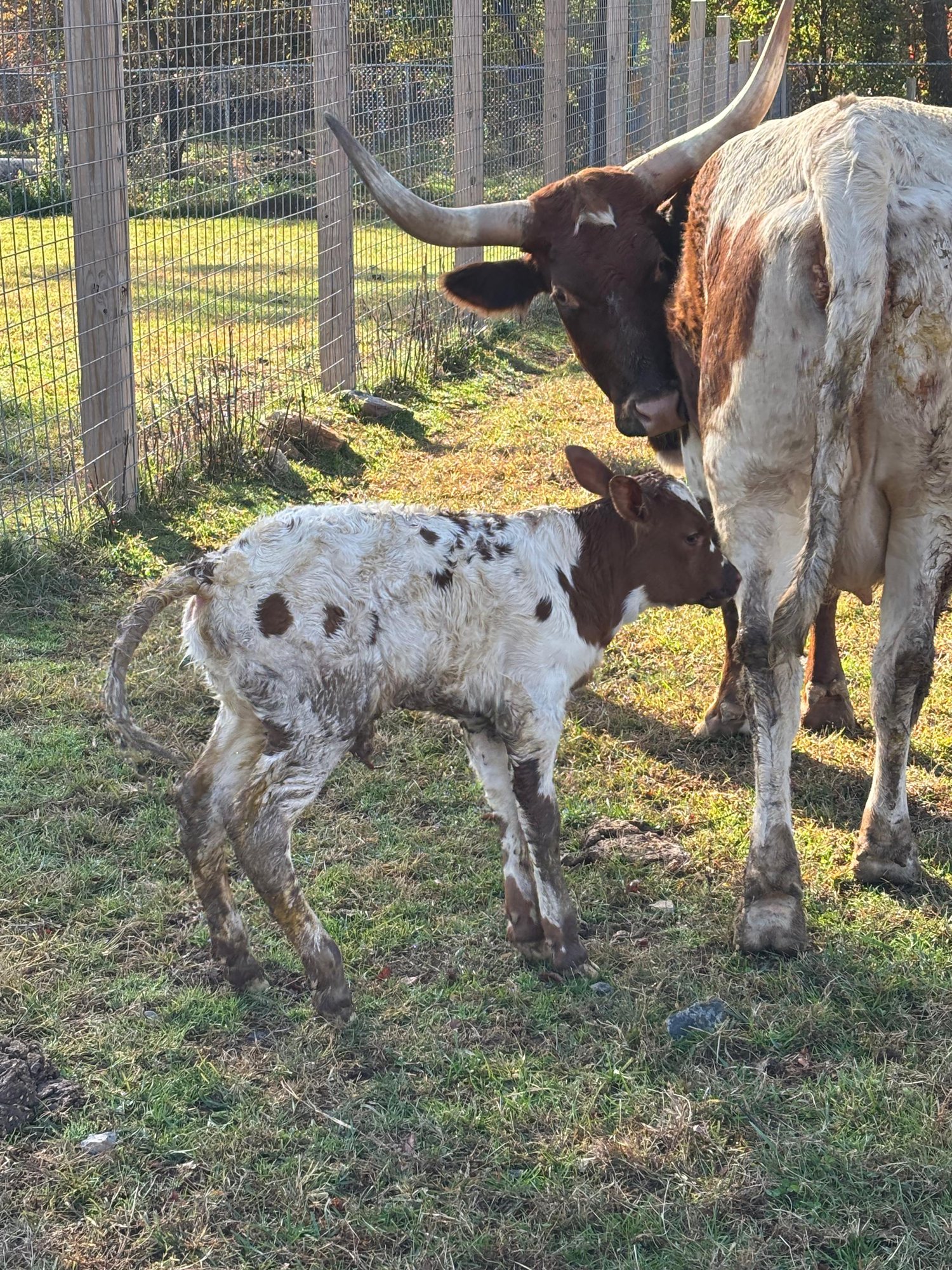
Watusi are highly social, energetic animals that live in structured herds with strong protective instincts. During the day, calves rest together in a group while an “auntie” cow — typically a female other than the calf’s mother — stands watch nearby. At night, the whole herd beds down together with calves protected in the center of the group, surrounded by adults whose formidable horns serve as a first line of defense.
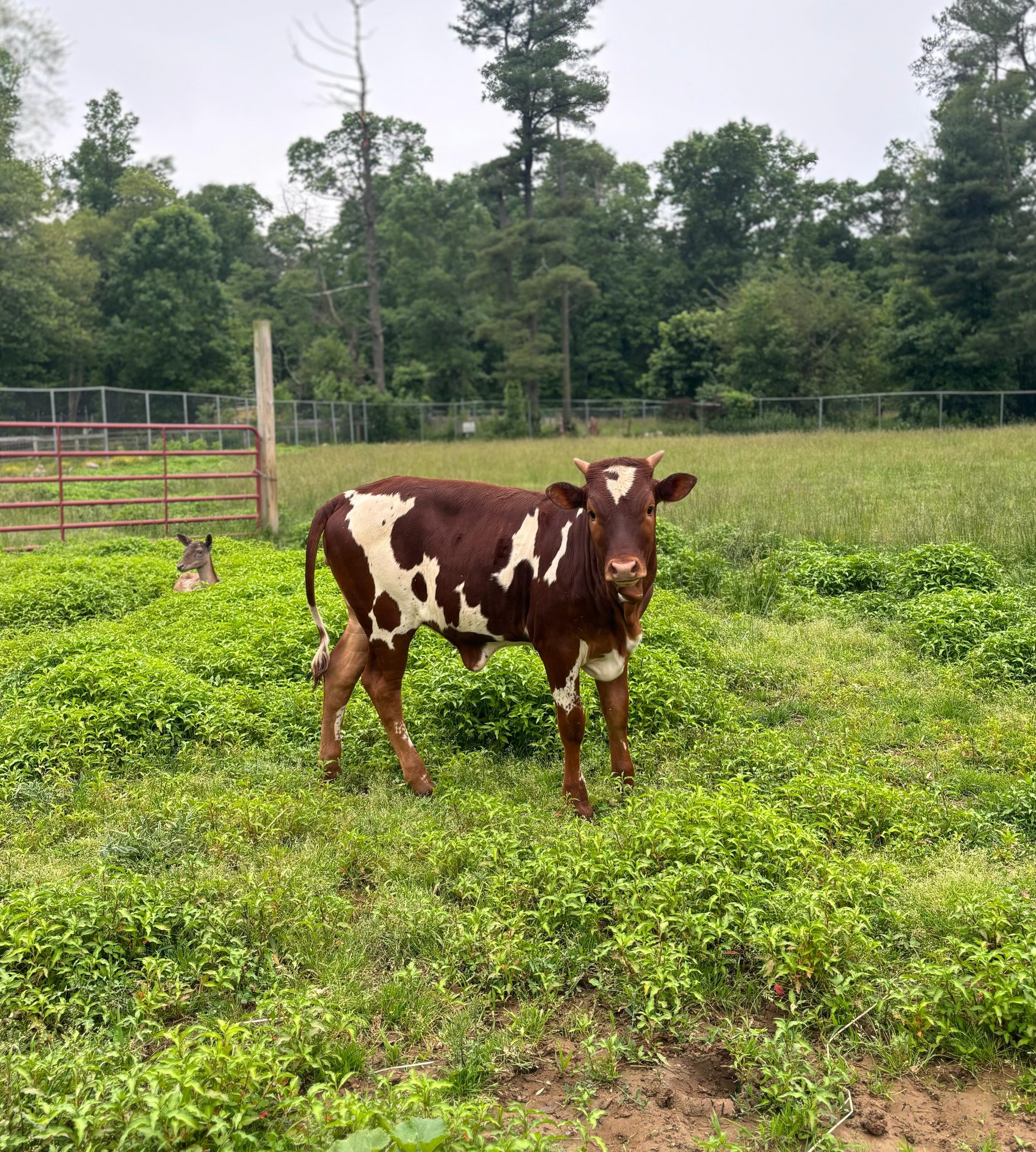
Meet Annie, Beau, Norma and Oliver, our Watusi cattle, at Plumpton Park Zoo — plan your visit.
Ankole-Watusi refers to a domestic cattle breed with African ancestry and a history of breeding outside Africa. Oklahoma State University describes how cattle associated with Uganda, Rwanda and Burundi became part of that wider history.
Watusi descend from Africa’s Ankole cattle, and in Rwanda a long-horned line of Ankole called Inyambo was kept by the royal court. These cows were for show, not milk or meat. Caretakers brushed them and sang poems praising each cow by name, and a herd still lives at the King’s Palace Museum in Nyanza.
Sources: Oklahoma State University, Breeds of Livestock; Associated Press (2026); Roger Williams Park Zoo; Animal Diversity Web (University of Michigan).
For teachers and homeschool families
Print our free two-page Watusi fact sheet: fast facts, words to know, discussion questions and a drawing activity. Teachers may copy and share it freely as long as they credit Plumpton Park Zoo.
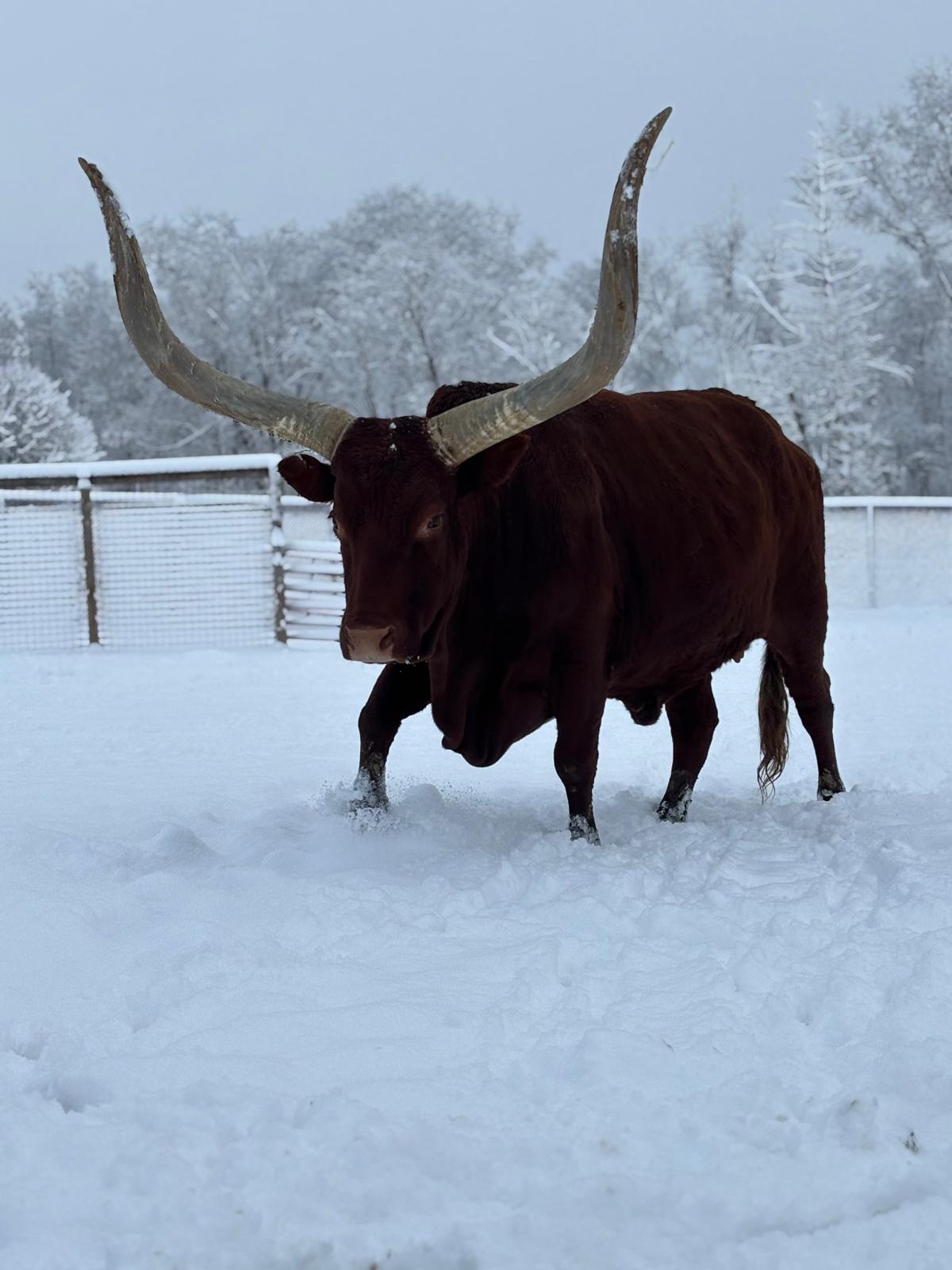
Watusi cattle at Plumpton Park Zoo.
At a glance
Watusi fast facts
Scientific nameBos taurus
Other nameAnkole-Watusi
GroupHerd
StatusDomestic breed
At a glance
Size: 4 – 6 feet height
Weight: 900 – 1600 lbs
Lifespan: 18 – 25 years
DOMESTIC BREED
Sources: Oklahoma State University, Breeds of Livestock; Roger Williams Park Zoo.
2
jobs described for those striking horns
Horns help with defense and heat loss
The large horn region has a blood supply that can help disperse body heat. Oklahoma State University’s breed account describes this cooling function. Horns also provide a physical means of defense. One structure can therefore contribute to more than one aspect of survival.
 Behavior
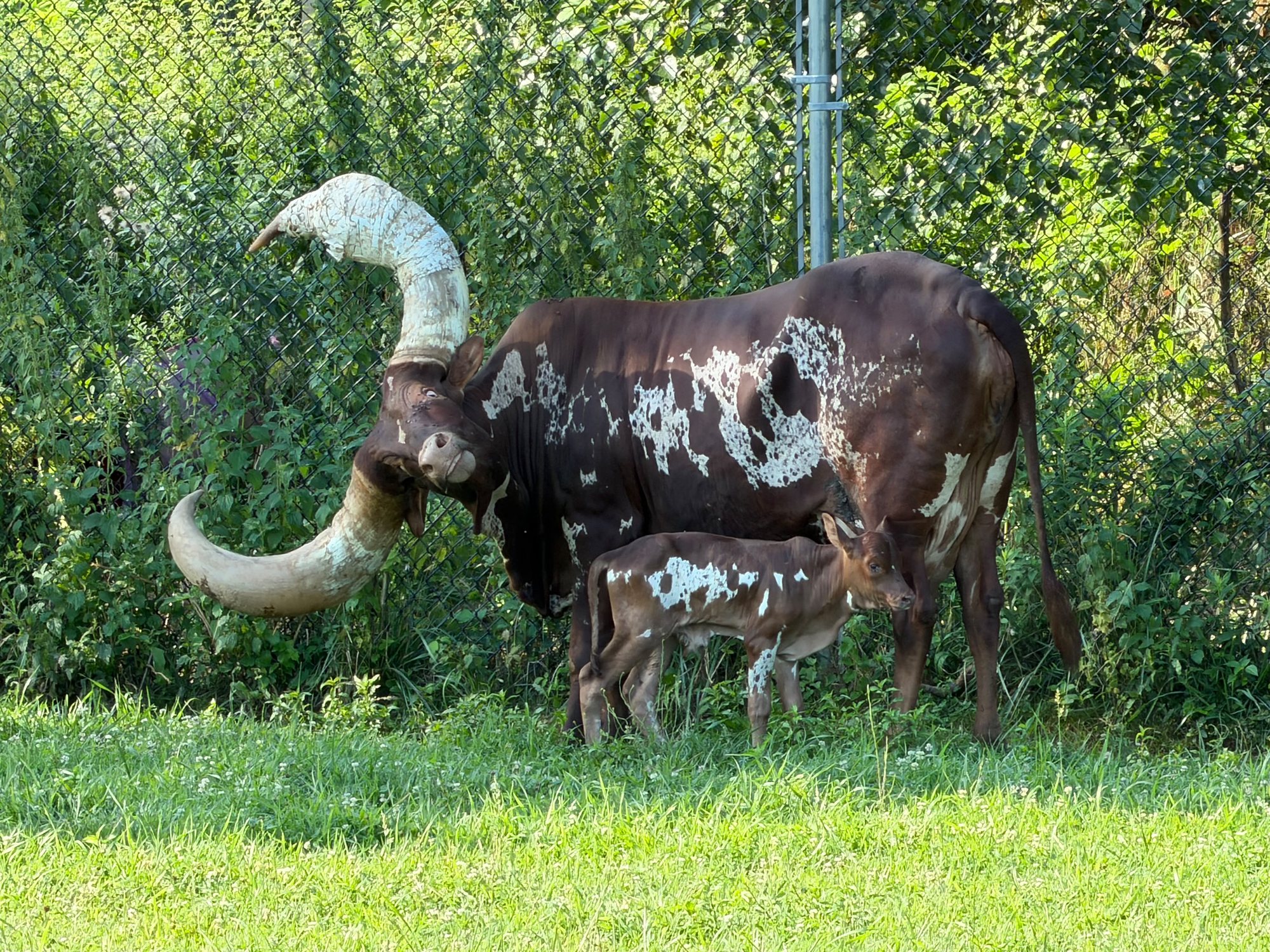
A herd includes more than one generation
Oklahoma State University describes calves resting together with an adult cow nearby and being sheltered within the herd at night. Actual grouping varies with the animals and their surroundings.
 On the menu
What Watusi cattle eat
Their diet consists of grass and leaves.
Cattle are ruminants. They use microbial fermentation to help break down fibrous plants and bring partly digested food back to the mouth as cud. Jaw movement while resting can therefore be part of digestion rather than a new feeding event.
Food category and digestive method are different ideas. Follow zoo guidance about feeding the animals.
Family life
Calves and maternal care
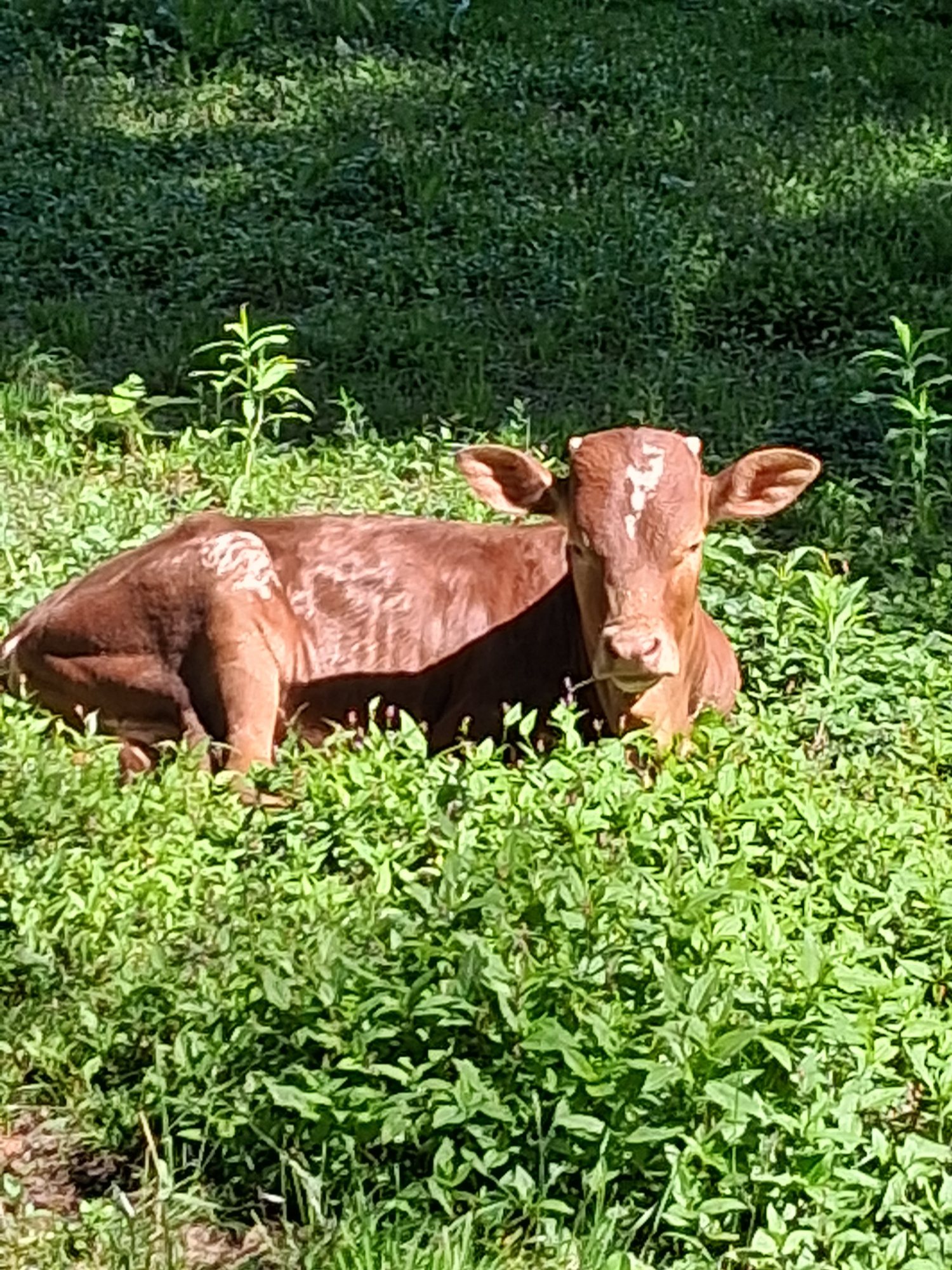
A young Watusi is a calf. Like other domestic cattle, it develops during a pregnancy of about nine months and nurses on its mother’s milk.
A calf’s early life connects movement, feeding and protection. Legs help it stand and move, milk supports growth, and the social environment can provide shelter.
Sources: Animal Diversity Web (University of Michigan); Oklahoma State University, Breeds of Livestock.
Compare animals
Two cattle breeds and one other grazer
Watusi
Large, broad horns and African ancestry.
Highland cattle
A shaggy double coat and Scottish origins.
Donkey
An equid that digests plants differently.
Shared diets can be compared alongside differences in body covering, horns, feet and digestive systems.
Sources: Animal Diversity Web (University of Michigan); Oklahoma State University, Breeds of Livestock.
Conservation
Watusi conservation
Domestic breed
Watusi cattle have agricultural and cultural significance, rather than a separate conservation category for a wild species. Breed records help document ancestry and preserve characteristics. Oklahoma State University describes the development of a registry in North America as part of that effort.
Understanding domestic diversity broadens a conservation discussion. People can preserve a breed’s history, care for individuals and protect wild habitats, but those are distinct activities.
Support
Help care for our Watusi cattle & the animals of Plumpton Park
As a nonprofit zoo, Plumpton Park Zoo relies on admissions, memberships and the generosity of people who believe in what we do. Donations help support animal care, veterinary services, nutritious diets, enrichment, habitat improvements and the continued development of the zoo.
Plumpton Park Zoological Gardens, Inc. is a 501(c)(3) nonprofit organization. Donations support the zoo’s charitable mission and are tax-deductible to the extent permitted by law.
Frequently asked questions about Watusi cattle
Why do Watusi cattle have such large horns?
Their horn region can help release body heat, and the horns also provide defense.
What is another name for Watusi cattle?
They are also called Ankole-Watusi cattle.
What is a baby Watusi called?
A young Watusi is a calf and nurses on its mother’s milk.
Do Watusi chew cud?
Yes. They are ruminant cattle that bring partly digested food back to chew.
Are Watusi wild cattle?
No. Watusi are a domestic cattle breed with African ancestry.
Where can I see Watusi cattle in Maryland?
Visit Plumpton Park Zoo in Rising Sun, Maryland. Check Hours and Tickets before your visit.
Sources: Oklahoma State University, Breeds of Livestock; Animal Diversity Web (University of Michigan).
See Watusi cattle at Plumpton Park Zoo
Plan your visit to Rising Sun, Maryland. Keep learning in the Animal Learning Center, and discover giraffe feeding.