
Animal Learning Center · Not currently at the zoo

Pixie Frog

Pyxicephalus adspersus

A powerful, burrowing African bullfrog built for life in seasonal grasslands, and one of the largest frogs in the world.

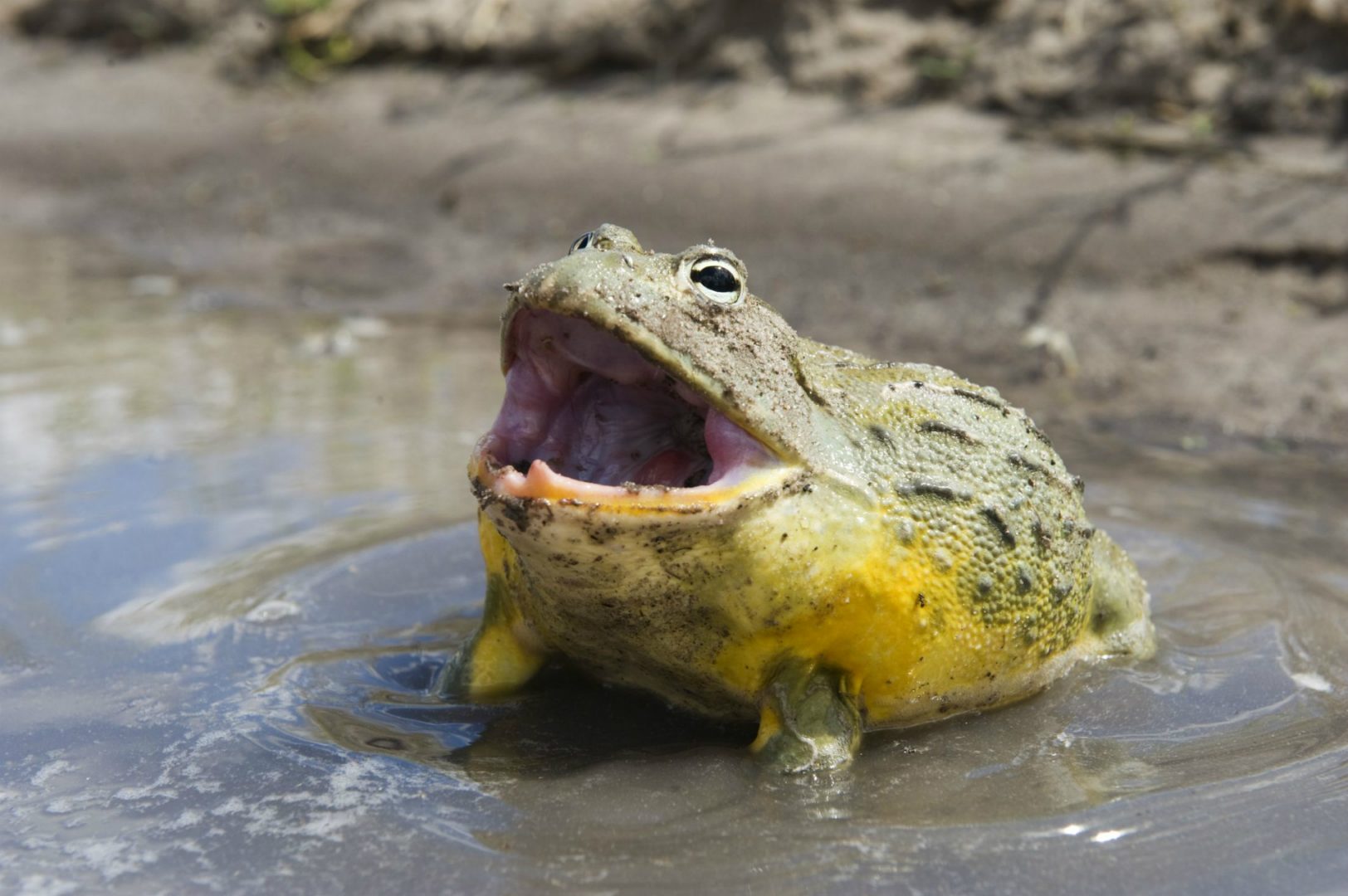
A Pixie frog, or African bullfrog, sitting in shallow water with its mouth open
Male lengthUp to 10 in
Male weight2–4 lb
Lifespan in the wildAbout 20 years
Conservation statusLeast Concern

Animal Learning Center

Learn About the Pixie Frog

The Pixie frog is also known as the African bullfrog.

AmphibianSub-Saharan AfricaNot currently at the zoo

The name may sound tiny, but the Pixie frog is one of the world’s largest frogs. Its nickname comes from the first part of its scientific name, Pyxicephalus, not from its size. Adult males are much larger than females and may have yellow or orange coloring on the throat and belly.

Pixie frogs spend much of their time on or below the ground. Their wide mouths, strong bodies and patient ambush strategy allow them to overpower an extraordinary variety of prey.

A note for visitors: the Pixie frog is not currently at Plumpton Park Zoo. This profile is part of our online Animal Learning Center, so you can keep learning about the species. When you visit, meet the animals in our reptiles and amphibians collection.

For teachers and homeschool families

A free two-page Pixie frog fact sheet with fast facts, words to know, discussion questions and a drawing activity. Teachers may copy and share it freely as long as they credit Plumpton Park Zoo.

Printable Fact Sheet (PDF)


Field guide

Where do Pixie frogs live?

Pixie frogs are native to parts of sub-Saharan Africa. They are associated with open grasslands, savannas and other seasonally dry landscapes where temporary pools form after heavy rain.

These habitats can shift between months of intense heat and dryness and short periods of abundant water. The frog’s life cycle is closely tied to those seasonal changes.

The species ranges from Somalia and Nigeria south to South Africa, including Angola, Botswana, Kenya, Malawi, Mozambique, Namibia, Tanzania, Zambia and Zimbabwe. It lives everywhere from the edges of the Kalahari Desert to high grasslands 4,000 to 5,000 feet above sea level, where ground temperatures can top 100°F in summer and drop below freezing in winter.

Did you know? A male Pixie frog can be more than twice the size of a female, the reverse of the size pattern seen in many frog species.

Sources: Animal Diversity Web (University of Michigan).

Pixie Frog African Bull Frog

A Pixie frog in a zoo habitat.


At a glance

Pixie frog fast facts

Scientific name Pyxicephalus adspersus
Other name African bullfrog
Animal group Amphibian — frog
Native region Sub-Saharan Africa
Habitat Grasslands and savannas
Diet Carnivore
Size Males roughly 8–10 in; females about half that
Weight Males can weigh more than 2 lb
Lifespan About 16 years on average in human care; wild lifespan not well documented
Conservation status Least Concern (IUCN)

Sources: Animal Diversity Web (University of Michigan).


4,000

eggs a female can lay at one time in a temporary rain pool.

Breeding and parental care

A father that digs canals

After heavy rains, Pixie frogs gather around temporary pools. Females can lay thousands of eggs in shallow water. The tadpoles develop quickly because these pools may not last long.

Male parental care is one of the species’ most remarkable behaviors. A male may guard eggs and tadpoles from predators and defend the nursery area. If shallow water begins drying, a guarding male may help open a channel toward deeper water.

The eggs hatch in about two days, and the tadpoles can turn into froglets within three weeks. Guarding males do not always make gentle fathers: while defending the nursery, they may eat some of the tadpoles themselves.

Pixie frog courtship is a contest. Big males gather in the middle of a breeding pool and fight, pushing, biting and sometimes even eating smaller males. A female listens for their calls, then swims underwater to the center and surfaces in a big male’s territory.

Sources: Animal Diversity Web (University of Michigan).


Surviving the dry season

How do Pixie frogs survive the dry season?

During prolonged dry weather, a Pixie frog burrows underground and enters a low-activity state called estivation. Layers of shed skin form a protective cocoon around the frog, helping it reduce water loss while it waits for rain.

Estivation is not the same as winter hibernation. It is a survival response to hot, dry conditions and can last for many months, and in a long drought a year or more. When seasonal rains return, the frog emerges to feed and breed.

  • Estivation cocoon: layers of shed skin help slow moisture loss underground.
  • Ambush feeding: the frog waits quietly and strikes when prey comes within reach.
  • Powerful jaws: tooth-like structures help grip struggling prey.
  • Rapid development: tadpoles grow quickly in temporary pools.
  • Parental defense: large males may protect developing offspring.
On the menu

What do Pixie frogs eat?

Pixie frogs are opportunistic carnivores. Depending on their size, they may eat insects, worms, fish, other frogs, reptiles, small birds and small mammals. They generally swallow prey whole, so the practical limit is whether the animal fits into the frog’s mouth.

Three bony points on the lower jaw, called odontodes, act like large teeth. Young frogs eat one another too: cannibalism starts as soon as the tadpoles turn into froglets.

Source: Animal Diversity Web, University of Michigan.


Spot the difference

Pixie frog or another big frog?

Pixie frog (African bullfrog)

Heavy and wide-mouthed, with yellow or orange on the throat of many males. Lives in seasonal African grasslands and waits out droughts underground.

American bullfrog

North America’s largest frog, common in Maryland ponds. It spends its life in or beside permanent water and does not seal itself in a skin cocoon.

Goliath frog

The largest frog in the world, from the rainforest rivers of Cameroon and Equatorial Guinea. Rivers, not dry grasslands, are its home.


Conservation

Conservation status

LEAST CONCERN

The African bullfrog is classified as Least Concern on the IUCN Red List. A Least Concern listing does not mean a species faces no threats. Healthy wetlands, temporary breeding pools and surrounding grasslands remain important to local populations.

The main pressures on wild Pixie frogs are harvesting for food and collection for the exotic pet trade.

Sources: Animal Diversity Web (University of Michigan).


Support

Help care for the animals of Plumpton Park

As a nonprofit zoo, Plumpton Park Zoo relies on admissions, memberships and the generosity of people who believe in what we do. Donations help support animal care, veterinary services, nutritious diets, enrichment, habitat improvements and the continued development of the zoo, including free learning resources like this one.

Support Our Animals

Plumpton Park Zoological Gardens, Inc. is a 501(c)(3) nonprofit organization. Donations support the zoo’s charitable mission and are tax-deductible to the extent permitted by law.


Questions

Common questions about Pixie frogs

Why is it called a Pixie frog?

The name is derived from Pyxicephalus, the frog’s genus. It is not a reference to being small.

Are Pixie frogs poisonous?

Pixie frogs are not known for poison or venom, but they have strong jaws and can deliver a painful defensive bite. Wild animals should be observed without handling.

Do Pixie frogs hibernate?

They estivate during dry conditions. Estivation reduces activity and water loss while the frog remains protected underground.

How big can a Pixie frog get?

Males are substantially larger than females and can grow to roughly 8–10 inches in body length. Size varies among individuals.

How long do Pixie frogs live?

About 16 years on average in human care; how long they live in the wild is not well documented.

Do Pixie frogs have teeth?

Yes, in a way. Bony points on the lower jaw, called odontodes, work like large teeth and help the frog grip struggling prey.

Can I see a Pixie frog at Plumpton Park Zoo?

The Pixie frog is not currently at Plumpton Park Zoo. This profile stays in our online Animal Learning Center. You can still meet our reptiles and amphibians when you visit.


Keep exploring with Plumpton Park Zoo

Continue learning about amphibians, animal adaptations and conservation in the Plumpton Park Zoo Animal Learning Center, or explore reptiles and amphibians.

When you visit Rising Sun, meet our Aldabra giant tortoises and red-footed tortoises, and feed a giraffe.