
Animal Learning Center · Not currently at the zoo

Platypus

Ornithorhynchus anatinus

Australia’s egg-laying mammal, with a duck-like bill that senses the tiny electric fields of its prey.

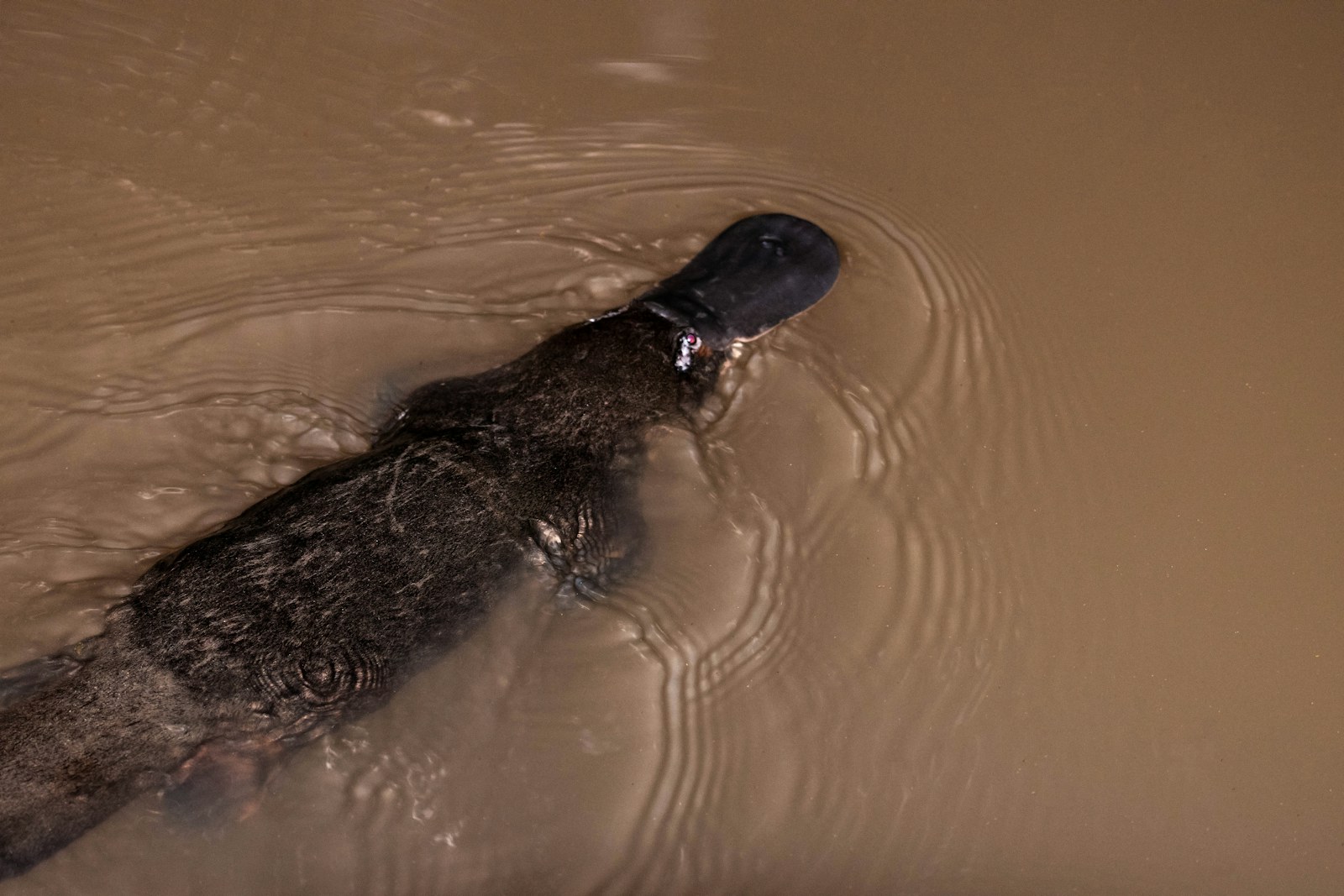
A platypus swimming at the surface of a brown creek
Male weight1.8–6.6 lb
Male length16–25 in
Eggs per clutch1–3
Conservation statusNear Threatened

Animal Learning Center

Learn About the Platypus

A mammal that lays eggs.

MammalEastern AustraliaNot currently at the zoo

The platypus is a monotreme, one of the few mammals that lay eggs. It lives in freshwater streams, lakes and pools in eastern Australia, Tasmania and King Island, and spends the day resting in a burrow dug into the stream bank.

It is mostly active at night. Underwater it shuts its eyes and ears and finds its food with its remarkable bill, which can sense the tiny electric fields given off by prey.

A note for visitors: the platypus is not currently at Plumpton Park Zoo. This profile is part of our online Animal Learning Center, so you can keep learning about the species. When you visit, meet some other unusual mammals: Toly and Xena, our armadillos, and Harley Quill and Poker, our lesser hedgehog tenrecs.

For teachers and homeschool families

A free two-page platypus fact sheet with fast facts, words to know, discussion questions and a drawing activity. Teachers may copy and share it freely as long as they credit Plumpton Park Zoo.
Fact Sheet, Grades K–2 (PDF)Fact Sheet, Grades 3–5 (PDF)


Field guide

Where do platypuses live?

Platypuses are native to eastern mainland Australia, Tasmania and King Island, and have been introduced to western Kangaroo Island. Their range runs from the lowlands of far northern Queensland south to Tasmania, and up into the high country of the Australian Alps. They live in freshwater streams, lakes and pools and along their banks.

Platypuses once lived in the Adelaide Hills and Mount Lofty Ranges of South Australia, but have disappeared from there. There is no evidence they ever lived naturally in Western Australia.

They dig burrows into earthen stream banks, with entrances at or just below the water line, and tunnels that lead to oval chambers. Males and non-breeding females use resting burrows; breeding females raise their young in nesting burrows.

A platypus typically uses about 0.3 to 9.3 miles of river, and males range farther than females.

Did you know? Platypus fur glows green or blue-green under ultraviolet light.

Sources: Australian Museum: Platypus; UNSW Platypus Conservation Initiative: distribution and numbers; UNSW Platypus Conservation Initiative: ecology; Anich et al., Mammalia (2020).

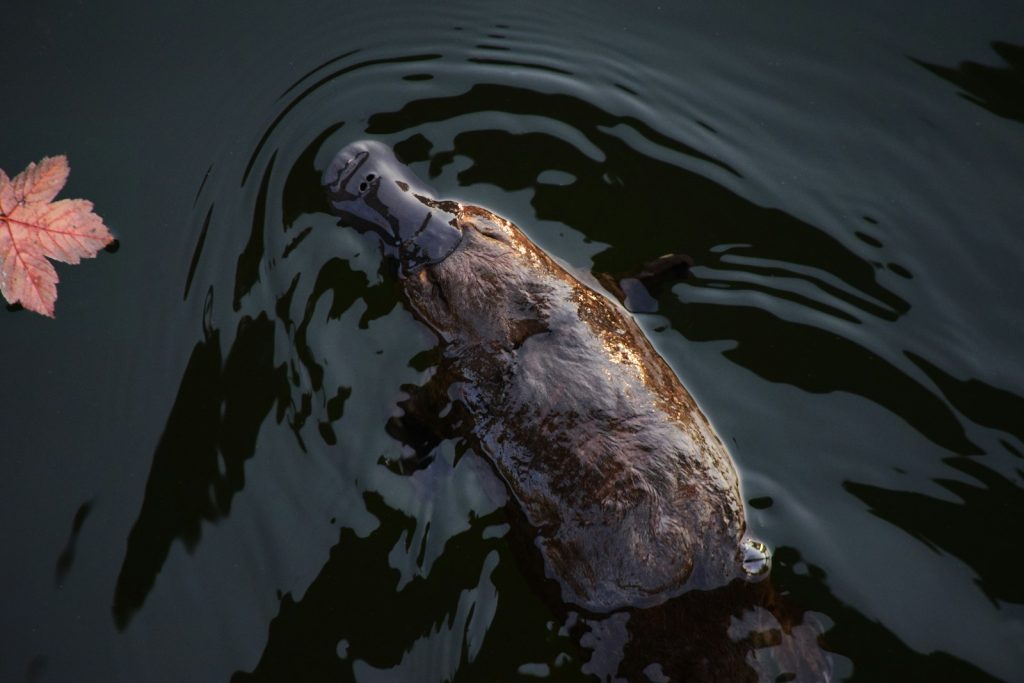
A platypus swimming in dark water in Tasmania

A platypus swimming in Tasmania. Photos on this page: Michael Jerrard and David Clode on Unsplash.


At a glance

Platypus fast facts

Scientific name Ornithorhynchus anatinus
Animal group Mammal — monotreme (egg-laying mammal)
Native region Eastern Australia, Tasmania and King Island
Habitat Freshwater streams, lakes, pools and their banks
Diet Carnivore — insect larvae, shrimp and crayfish
Length Males 16–25 in; females 15–22 in, bill to tail
Weight Males 1.8–6.6 lb; females 1.3–3.7 lb
Eggs 1–3 per season, usually 2
Lifespan Up to about 21 years in the wild
Conservation status Near Threatened (IUCN)

Sources: Australian Museum: Platypus; UNSW Platypus Conservation Initiative: ecology.


10

days a platypus egg takes to hatch.

Family life

Eggs, and milk without nipples

In New South Wales and Victoria, platypuses mate from August to October. The female builds her nest in a long burrow, then spends four to five days collecting wet nesting material. She lays one to three eggs, usually two, and they take about 10 days to hatch.

Platypus mothers have no nipples. Instead, milk seeps out through patches of skin. The milk may even help protect the babies from infections.

Young platypuses are weaned at about three to four months. They are physically mature at 2 years old, though many females do not breed until they are at least 4.

Healesville Sanctuary, run by Zoos Victoria, was the first place in the world to breed platypuses in human care.

Sources: Australian Museum: Platypus; CSIRO: platypus milk research (2018); Zoos Victoria, Healesville Sanctuary (its own breeding record).


A mammal like no other

How does a platypus find food without seeing it?

A platypus bill is packed with sensors: about 40,000 electroreceptors that pick up the electric fields of prey, and about 46,500 touch receptors that feel movement in the water. When it dives, a groove on each side of its head folds shut over its eyes and ears.

Its front feet are broadly webbed. Its back feet are only partly webbed and have sharp, curved claws that it uses like a comb to groom its fur. Dense fur, about 815 hairs in every square millimeter, more than twice as dense as a beaver’s, traps a layer of air that keeps its skin warm and dry. Adults have no teeth; tough pads grind their food instead.

Adult male platypuses have a venomous spur on each ankle, about half an inch long and connected by a duct to a venom gland. The venom is not deadly to people, but the pain can last for days or even months. Males make most of their venom during the breeding season.

  • Bill: about 40,000 electroreceptors
  • Eyes and ears: close while diving
  • Webbed front feet: for swimming
  • Tail: stores 30 to 60% of its body fat
  • Venomous spur: adult males only

Sources: Australian Museum: Platypus; Manger & Pettigrew, Brain, Behavior and Evolution (1996); Fish et al., Aquatic Mammals (2002); Australian Platypus Conservancy.

On the menu

What do platypuses eat?

Platypuses eat mainly insects that live on the stream bottom, especially larvae, along with shrimp, crayfish and swimming insects. They forage for about 10 to 12 hours a day, mostly at night, and are active all year round. A platypus stores what it catches in its cheek pouches and chews it at the surface.

While feeding, a platypus stays under for about 30 to 140 seconds at a time, closing its eyes, ears and nostrils as it goes down. It can stay underwater for up to 10 minutes.

Sources: Australian Museum: Platypus; Queensland Government: Platypus.


Spot the difference

Male, female or young?

Adult male

Larger, up to 6.6 pounds, with a venomous spur. Uses its venom mostly in fights with other males during the breeding season.

Adult female

Smaller, up to 3.7 pounds, with no working spur. Lays the eggs and feeds the young milk through her skin.

Young platypus

Both sexes start with a spur sheath. Males shed it at about 9 to 12 months; females lose theirs by adulthood.


Conservation

Conservation status

NEAR THREATENED

The platypus is listed as Near Threatened on the IUCN Red List (2014 assessment), but in Australia scientists say it is in more trouble than that. In 2020, researchers at UNSW Sydney estimated that platypus numbers have almost halved, with local populations lost across about 40 percent of the species’ range, and recommended listing it as threatened nationally. Because it is shy, nocturnal and aquatic, it is hard to count: estimates range from about 30,000 to 300,000. Numbers have fallen a great deal since the 1890s, and fur hunting caused major losses until about 1900.

Today’s threats include dams, drought and floods, habitat loss and erosion, pollution, roads and introduced predators such as foxes, dogs and cats. Platypuses drown in fishing nets, lines and enclosed yabby (crayfish) traps, and climate change is expected to bring longer, more severe droughts that dry out rivers.

The platypus is protected by law in every Australian state where it lives. It is listed as Endangered in South Australia and, since 2021, as Vulnerable in Victoria.

Sources: UNSW Sydney: Platypus on brink of extinction (2020); UNSW Sydney: Platypus should be listed as a threatened species (2020); UNSW Platypus Conservation Initiative; Victorian Government listing notice (2021); Australian Museum: Platypus.


Support

Help care for the animals of Plumpton Park

As a nonprofit zoo, Plumpton Park Zoo relies on admissions, memberships and the generosity of people who believe in what we do. Donations help support animal care, veterinary services, nutritious diets, enrichment, habitat improvements and the continued development of the zoo, including free learning resources like this one.

Support Our Animals

Plumpton Park Zoological Gardens, Inc. is a 501(c)(3) nonprofit organization. Donations support the zoo’s charitable mission and are tax-deductible to the extent permitted by law.


Questions

Common questions about platypuses

Is a platypus a mammal?

Yes. It is a monotreme, one of the few mammals that lay eggs. It has fur and feeds its young milk.

Do platypuses lay eggs?

Yes. A female lays one to three eggs a season, usually two, and they hatch in about 10 days.

Are platypuses venomous?

Adult males are. They have a venomous spur on each ankle and make most of their venom in the breeding season. The venom is not deadly to people, but it is very painful.

How does a platypus find food underwater?

It closes its eyes and ears and senses prey with its bill, which has about 40,000 electroreceptors.

How long can a platypus stay underwater?

A feeding dive lasts about 30 to 140 seconds, but it can stay underwater for up to 10 minutes.

Are platypuses endangered?

Worldwide they are listed as Near Threatened, but they are listed as Endangered in South Australia and Vulnerable in Victoria. Researchers estimate their numbers have almost halved.

Can I see a platypus at Plumpton Park Zoo?

Platypuses are not at Plumpton Park Zoo. This profile is part of our online Animal Learning Center.


Keep exploring with Plumpton Park Zoo

Continue learning about mammals, animal adaptations and conservation in the Plumpton Park Zoo Animal Learning Center, or explore our mammals.

When you visit Rising Sun, meet our binturongs, our two-toed sloths, and feed a giraffe.