
Animal Learning Center · Not currently at the zoo

Galápagos Giant Tortoise

Chelonoidis species

The giant tortoises of Ecuador’s Galápagos Islands, whose shells differ in shape from island to island.

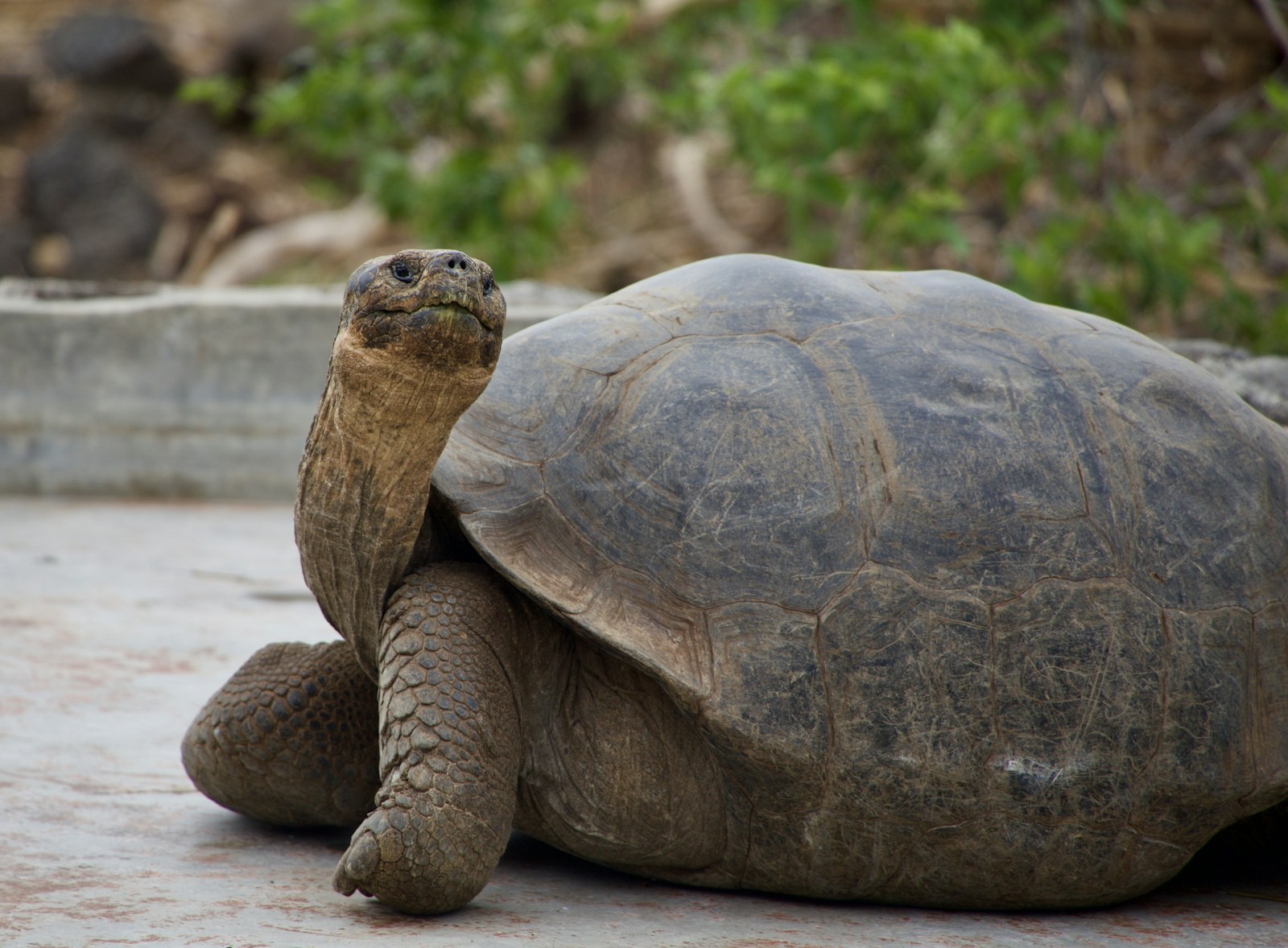
A Galápagos giant tortoise with a domed shell raising its long neck
SizeUp to about 4½ ft long
WeightCan exceed 550 lb
LifespanMore than 100 years
Conservation statusVulnerable to Critically Endangered

Animal Learning Center

Learn About the Galápagos Giant Tortoise

A single giant tortoise eats more than 500 pounds of plants a year.

ReptileGalápagos IslandsNot currently at the zoo

Galápagos giant tortoises live only on the Galápagos Islands, west of Ecuador. Scientists count 12 or 13 living species. A 2024 genetic study by Yale researchers, supported by Galápagos Conservancy, found at least 9, with most analyses supporting 13; the Charles Darwin Foundation and the Galapagos Conservation Trust count 12. Several species have gone extinct. The largest adults reach about 4½ feet long, and males are typically larger than females.

They are most active by day and rest an average of 16 hours a day. They cool off in watery or muddy pools, and as they walk and eat they carve paths through the vegetation and shape the plant life around them. Galápagos Conservancy calls them “ecosystem engineers.”

A note for visitors: the Galápagos giant tortoise is not currently at Plumpton Park Zoo. This profile is part of our online Animal Learning Center, so you can keep learning about the species. When you visit, meet Ally, Groot, Homer and Marge, our Aldabra giant tortoises, giants from the other side of the world in the Indian Ocean.

For teachers and homeschool families

A free two-page Galápagos giant tortoise fact sheet with fast facts, words to know, discussion questions and a drawing activity. Teachers may copy and share it freely as long as they credit Plumpton Park Zoo.
Printable Fact Sheet (PDF)


Field guide

Where do Galápagos tortoises live?

Galápagos giant tortoises are found only on the Galápagos Islands, west of Ecuador.

Tortoises with saddle-shaped shells live on small, dry, low islands where food is sparse. Tortoises with domed shells, and some saddlebacks, live on larger, wetter islands with highlands, more food and more kinds of habitat. Some tortoises migrate with the seasons.

Saddleback species still live on Española, San Cristóbal and Pinzón. Domed species live on Isabela and Santa Cruz. In 2023, Galápagos Conservancy and the Galápagos National Park Directorate carried out the first complete census of the tortoises of southern Isabela, finding 4,146 tortoises of one species and 461 of another.

Did you know? Galápagos tortoises float but are not good swimmers.

Sources: Charles Darwin Foundation: Giant tortoise conservation; Galapagos Conservation Trust: Galápagos giant tortoise; Galápagos Conservancy: Rewilding Giant Tortoises; Galápagos Conservancy: Giant tortoises (Biodiversity); Galápagos Conservancy: Southern Isabela census (in Spanish); Galápagos Conservancy: tortoise migration (in Spanish); Gaughran et al. 2024, Evolution: Whole-genome sequencing of Galápagos giant tortoises; Blake et al. 2024, Ecological Monographs: Reproduction and recruitment in Galápagos tortoises; Blake et al. 2013, Journal of Animal Ecology: Galápagos tortoise migration; Poulakakis et al. 2020, J. Zoological Systematics and Evolutionary Research: Galápagos tortoise colonization; IUCN Red List: Española giant tortoise; IUCN Red List: Cerro Azul giant tortoise; IUCN Red List: Western Santa Cruz giant tortoise; IUCN Red List: Pinzón giant tortoise; Swingland 1989, IUCN/SSC: Galápagos giant tortoise; Reptiles of Ecuador: San Cristóbal giant-tortoise.

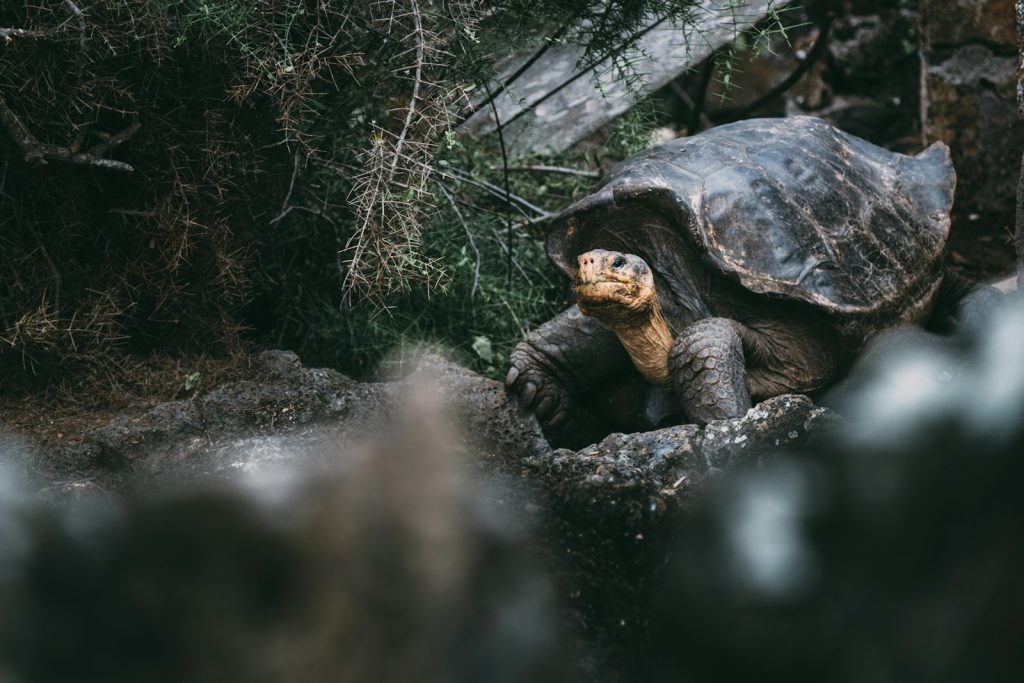
A Galápagos giant tortoise among dry shrubs

A Galápagos giant tortoise among dry shrubs. Photos on this page: Jose Aragones and Magdalena Kula Manchee on Unsplash.


At a glance

Galápagos giant tortoise fast facts

Scientific name Chelonoidis (12 or 13 living species)
Animal group Reptile — tortoise family (Testudinidae)
Native region Galápagos Islands, Ecuador
Habitat Dry lowlands to wetter highlands
Diet Herbivore — grasses, shrubs, fruit and prickly pear cactus
Length Up to about 4½ ft
Weight Can exceed 550 lb; males typically larger than females
Eggs Saddlebacks 2–7 per clutch; domed about 9–10 on average, sometimes over 20
Lifespan More than 100 years
Conservation status Vulnerable to Critically Endangered, by species (IUCN)

Sources: Gaughran et al. 2024, Evolution: Whole-genome sequencing of Galápagos giant tortoises; Galapagos Conservation Trust: Galápagos giant tortoise; Galápagos Conservancy: 2024 genetic study (in Spanish); Galápagos Conservancy: tortoise migration (weight, lifespan; in Spanish); Galápagos Conservancy: Giant tortoises (Biodiversity); Galápagos Conservancy: Giant Tortoise Restoration; Charles Darwin Foundation: Giant tortoise conservation; Blake et al. 2024, Ecological Monographs: Reproduction and recruitment in Galápagos tortoises; Gibbs et al. 2014, PLOS ONE: Española tortoise reintroduction; IUCN Red List: Española giant tortoise; IUCN Red List: Cerro Azul giant tortoise; IUCN Red List: Pinzón giant tortoise; Swingland 1989, IUCN/SSC: Galápagos giant tortoise; Animal Diversity Web: Chelonoidis nigra.


110–175

days for the eggs to hatch, depending on the month they were laid.

Family life

Nests, eggs and hatchlings

Galápagos tortoises usually start breeding at about 20 to 25 years old. Females nest from June to December and may lay one to four clutches in a season. Saddleback species lay 2 to 7 eggs at a time; domed species lay more, averaging 9 or 10 on Santa Cruz and sometimes topping 20.

The eggs are tennis ball-sized and weigh about 3 to 5½ ounces each, depending on the species. The hatchlings, only about 2 ounces, stay in the nest for a few weeks. On Santa Cruz, most come out between February and April.

Sources: Galápagos Conservancy: Giant tortoises (Biodiversity); Blake et al. 2024, Ecological Monographs: Reproduction and recruitment in Galápagos tortoises; IUCN Red List: Cerro Azul giant tortoise; Swingland 1989, IUCN/SSC: Galápagos giant tortoise; Galapagos Conservation Trust: giant tortoise fact sheet.


Shaped by islands

Why do some shells look like saddles?

Galápagos tortoises have two main shell shapes, with some in between. A domed shell is rounded. A saddleback shell angles upward at the front, raising the opening over the neck.

Scientists propose that the saddle shape helps tortoises in dry habitats reach plants growing high off the ground, and lets them raise their heads high when they compete for dominance. These tortoises have long, thin necks and elephant-like feet with short toes. Their shells are black, sometimes mottled by lichens.

  • Domed shell: rounded, on wetter islands
  • Saddleback shell: raised at the front, on drier islands
  • Long, thin neck: stretches up to feed
  • Elephant-like feet: short toes, no webbing
  • Stored water: held in the bladder for long periods

Sources: Galápagos Conservancy: Giant tortoises (Biodiversity); Gaughran et al. 2024, Evolution: Whole-genome sequencing of Galápagos giant tortoises; Swingland 1989, IUCN/SSC: Galápagos giant tortoise; Animal Diversity Web: Chelonoidis nigra.

On the menu

What do Galápagos tortoises eat?

Galápagos giant tortoises are herbivores. They eat grasses, shrubs, fruits and prickly pear cactus, and each tortoise eats more than 500 pounds of plants a year. Through their grazing and by spreading seeds, they help keep the islands’ plant life healthy.

They can survive without food or water for up to a year. When water is available, they drink large amounts of it and can store it in their bladders for long periods.

Sources: Galápagos Conservancy: Rewilding Giant Tortoises; Galápagos Conservancy: Giant tortoises (Biodiversity); Gibbs et al. 2014, PLOS ONE: Española tortoise reintroduction; IUCN Red List: Pinzón giant tortoise; Galapagos Conservation Trust: giant tortoise fact sheet.


Spot the difference

Galápagos, Aldabra or sulcata?

Galápagos giant tortoise

From Ecuador’s Galápagos Islands, with a domed or saddle-shaped shell. Its shell lacks the small scale at the front edge that most Aldabras have.

Aldabra giant tortoise

From Aldabra Atoll in the Seychelles, in the Indian Ocean, usually with a small scale (the nuchal scute) at the front edge of its shell. Meet Ally, Groot, Homer and Marge, our Aldabras.

Sulcata tortoise

From Africa’s Sahel and far smaller than either island giant. Meet our sulcatas.

Sources: Gerlach, Island Biodiversity: Seychelles giant tortoises.


Conservation

Conservation status

AT RISK OF EXTINCTION

The Charles Darwin Foundation, based in the Galápagos, says every species of giant tortoise there is of conservation concern. On the IUCN Red List, six are Critically Endangered, three are Endangered and three are Vulnerable; the Pinta and Floreana species are extinct.

An estimated 200,000 to 300,000 giant tortoises once lived on the islands; today they number only about 10 to 15 percent of that, and they live in only about 35 percent of the habitat open to them. In the 1700s and 1800s, sailors stored live tortoises in their ships’ holds as fresh meat. Today’s threats include feral pigs that eat eggs and hatchlings, rats, feral cattle and goats, aggressive fire ants, invasive plants such as blackberry and guava, new diseases and climate change.

There is good news too. Since 1965, breeding programs in the islands have raised and released more than 9,000 young tortoises. By the 1960s only 14 Española tortoises were left on the island. They became the parents of a breeding program, joined in 1977 by Diego, a male Española tortoise sent back from the San Diego Zoo. Their young have been released on Española since 1975; by 2020 more than 2,300 tortoises lived on the island, and the original 15 adults went home in June 2020. On Pinzón, black rats were wiped out in 2012, and hatchlings appeared in the wild again for the first time in more than 100 years.

In 2019, an expedition found a female Fernandina giant tortoise, nicknamed Fernanda, on Fernandina Island; that species had last been recorded in 1906. Lonesome George, the last Pinta tortoise, was found in 1971 and died on June 24, 2012.

Sources: Charles Darwin Foundation: Giant tortoise conservation; Galápagos Conservancy: Rewilding Giant Tortoises; Galápagos Conservancy: Giant Tortoise Restoration; Galápagos Conservancy: Giant tortoises (Biodiversity); Galápagos Conservancy: Southern Isabela census (in Spanish); Galápagos Conservancy: Española tortoises return home (2020); Galápagos Conservancy: Fernandina tortoise rediscovery; Galápagos Conservancy: Lonesome George; IUCN Red List: Española giant tortoise; Gibbs et al. 2014, PLOS ONE: Española tortoise reintroduction.


Support

Help care for the animals of Plumpton Park

As a nonprofit zoo, Plumpton Park Zoo relies on admissions, memberships and the generosity of people who believe in what we do. Donations help support animal care, veterinary services, nutritious diets, enrichment, habitat improvements and the continued development of the zoo, including free learning resources like this one.

Support Our Animals

Plumpton Park Zoological Gardens, Inc. is a 501(c)(3) nonprofit organization. Donations support the zoo’s charitable mission and are tax-deductible to the extent permitted by law.


Questions

Common questions about Galápagos giant tortoises

How many kinds of Galápagos tortoise are there?

Scientists count 12 or 13 living species. A 2024 genetic study found at least 9, with most analyses supporting 13; the Charles Darwin Foundation and the Galapagos Conservation Trust count 12. Several species, including the Pinta and Floreana tortoises, are extinct.

How big do Galápagos tortoises get?

The largest adults reach about 4½ feet long and can weigh more than 550 pounds. Males are typically larger than females.

Why do some Galápagos tortoises have saddle-shaped shells?

Scientists propose the raised front helps tortoises on dry islands reach high-growing plants and raise their heads when competing for dominance.

How long can a Galápagos tortoise go without food or water?

Up to a year. It can also store water in its bladder for long periods.

Who was Lonesome George?

The last Pinta Island tortoise. He was found in 1971, was thought to be more than 100 years old, and died on June 24, 2012. No pure Pinta tortoises have been found since.

Are Galápagos tortoises endangered?

Every species is of conservation concern, and six are Critically Endangered. They number only about 10 to 15 percent of the 200,000 to 300,000 that once lived on the islands.

Can I see a Galápagos tortoise at Plumpton Park Zoo?

Galápagos tortoises are not at Plumpton Park Zoo. This profile is part of our online Animal Learning Center. When you visit, you can meet our Aldabra giant tortoises.


Keep exploring with Plumpton Park Zoo

Continue learning about reptiles, animal adaptations and conservation in the Plumpton Park Zoo Animal Learning Center, or explore our reptiles and amphibians.

When you visit Rising Sun, meet Ally, Groot, Homer and Marge, our Aldabra giant tortoises, our sulcata tortoises, and feed a giraffe.