Animal Learning Center · Not currently at the zoo

Giant Panda

Ailuropoda melanoleuca

A black-and-white bear from the misty mountain forests of central China that lives almost entirely on bamboo.

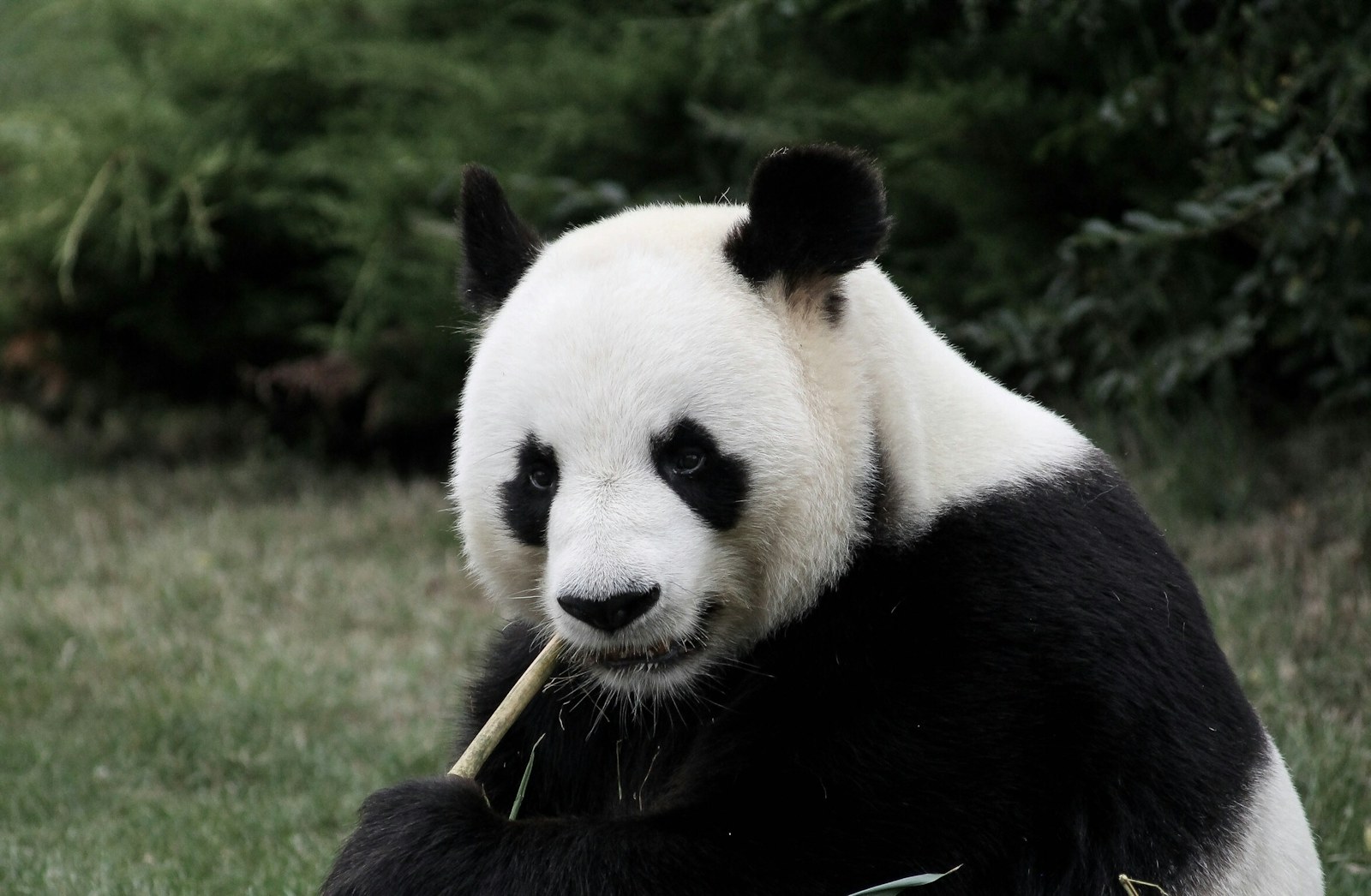
A giant panda chewing on a bamboo stalk
Size4–6 ft long
WeightUp to 250 lb
Lifespan10–15 years
Conservation statusVulnerable

Animal Learning Center

Learn About the Giant Panda

The giant panda is a true bear.

MammalCentral ChinaNot currently at the zoo

The giant panda is one of the most recognizable animals on Earth, and it is a true bear, a member of the bear family, Ursidae. Unlike its relatives, it lives almost entirely on bamboo, which makes up more than 98 percent of its diet.

Eating bamboo is close to a full-time job. A giant panda spends 10 to 16 hours a day finding and eating it, napping for two to four hours between meals. Pandas live mostly alone and keep in touch by leaving scent marks on trees, rocks and paths.

A note for visitors: the giant panda is not currently at Plumpton Park Zoo. This profile is part of our online Animal Learning Center, so you can keep learning about the species. When you visit, meet Louie, our American black bear, and Frankie and Hope, our European brown bears.

For teachers and homeschool families

A free two-page giant panda fact sheet with fast facts, words to know, discussion questions and a drawing activity. Teachers may copy and share it freely as long as they credit Plumpton Park Zoo.
Printable Fact Sheet (PDF)


Field guide

Where do giant pandas live?

Wild giant pandas live only in China, in six remote mountain ranges in Sichuan, Shaanxi and Gansu provinces in the south-central part of the country.

They live in broadleaf and coniferous forests with a dense understory of bamboo, at elevations of 5,000 to 10,000 feet. These forests are often soaked by heavy rain or wrapped in dense mist and thick clouds. Pandas prefer old-growth forest and shelter in tree hollows, rock crevices and caves.

Giant pandas once lived in lowland areas too, but farming, logging and development have pushed them up into the mountains.

Did you know? A panda’s short, dense coat suits its cool, damp home. The coarse outer hairs are slightly oily and shed water, while the woolly underfur keeps the bear warm.

Sources: Animal Diversity Web (University of Michigan); WWF giant panda fact sheet; IUCN Red List (2016 assessment).

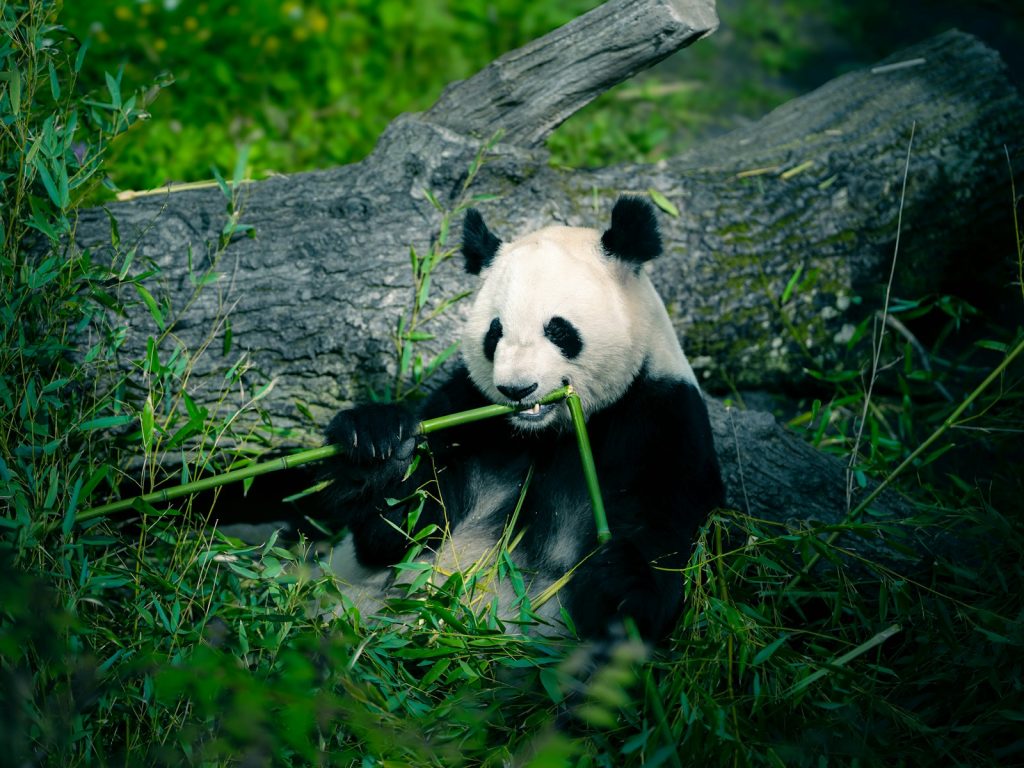
A giant panda holding bamboo in its paws and eating among green plants

A giant panda eating bamboo. Photos on this page: Valentin and Mélody P on Unsplash.


At a glance

Giant panda fast facts

Scientific name Ailuropoda melanoleuca
Animal group Mammal — bear family (Ursidae)
Native region South-central China: Sichuan, Shaanxi and Gansu
Habitat Mountain forests with a bamboo understory, 5,000–10,000 ft
Diet More than 98% bamboo
Shoulder height 2–3 ft
Length 4–6 ft
Weight Males up to 250 lb; females rarely reach 220 lb
Lifespan About 10–15 years in the wild; up to about 30 in human care
Conservation status Vulnerable (IUCN)

Sources: Animal Diversity Web (University of Michigan); WWF giant panda fact sheet; IUCN Red List (2016 assessment).


1/900

of its mother’s size: a newborn giant panda. Only marsupials are born smaller compared with their mothers.

Family life

A cub the size of a stick of butter

A female giant panda can become pregnant only once a year, during a fertile window of just two to three days in the spring. Pregnancy usually lasts about 112 to 163 days, because the fertilized egg can float freely for a time before it implants and begins to grow.

Mothers give birth in dens in hollow logs or trees, or in caves. A newborn cub is pink, hairless and blind and weighs only 3 to 5 ounces, about the size of a stick of butter. Twins are possible, but usually only one survives.

Cubs open their eyes at 6 to 8 weeks and start moving around at about 3 months. They may stay with their mothers for up to three years, so a wild female can raise a cub at best every other year. Fathers play no part in raising cubs.

Sources: Animal Diversity Web (University of Michigan); WWF giant panda fact sheet.


Built for bamboo

How is a giant panda built to eat bamboo?

A panda’s front paw has a “pseudo-thumb,” an enlarged wrist bone covered by a fleshy pad. The panda uses it like a thumb to grip and hold bamboo stems.

Strong jaw bones and chewing muscles, large flat molars and short, sturdy canines let it crush tough stems. Together they give the giant panda a stronger bite than any other bear.

  • Pseudo-thumb: an enlarged wrist bone that grips bamboo stems
  • Flat molars: grind tough bamboo
  • Oily outer coat: sheds rain and mist
  • Scent marking: messages left on trees, rocks and paths
  • Mostly solitary: adults live largely alone

Sources: Animal Diversity Web (University of Michigan).

On the menu

What do giant pandas eat?

More than 98 percent of a giant panda’s diet is bamboo, and pandas are known to eat more than 40 kinds of it. They eat fresh shoots in spring, mostly leaves in summer and fall, and stems and older leaves in winter.

A panda’s digestive system works more like a carnivore’s than a plant-eater’s, so much of the bamboo passes through undigested. To get enough nourishment, a panda eats 70 to 100 pounds of bamboo a day. Once in a while pandas eat other plants, or scavenge small animals and carrion.

Sources: Animal Diversity Web (University of Michigan).


Spot the difference

Giant panda or another bear?

Giant panda

A black-and-white bear of China’s mountain forests that eats almost nothing but bamboo.

Red panda

It shares the name, but it is not a bear. It belongs to a family of its own, Ailuridae.

American black bear

One of the bears you can meet at Plumpton Park Zoo. Meet Louie, our American black bear.

European brown bear

Another bear you can meet here. Meet Frankie and Hope, our European brown bears.


Conservation

Conservation status

VULNERABLE

The giant panda is listed as Vulnerable on the IUCN Red List (2016 assessment). It is no longer considered endangered, thanks in part to decades of research, but it still needs help.

About 1,864 giant pandas live in the wild, and about 600 live in zoos and breeding centers around the world.

Habitat loss is the biggest threat. Clearing land for farming and timber has broken panda forests into isolated patches, and small, separated groups are more at risk from drought, inbreeding and disease. In 2021 China established Giant Panda National Park, uniting more than 60 existing reserves.

Sources: IUCN Red List (2016 assessment); WWF: China’s fourth national giant panda survey; WWF giant panda fact sheet.


Support

Help care for the animals of Plumpton Park

As a nonprofit zoo, Plumpton Park Zoo relies on admissions, memberships and the generosity of people who believe in what we do. Donations help support animal care, veterinary services, nutritious diets, enrichment, habitat improvements and the continued development of the zoo, including free learning resources like this one.

Support Our Animals

Plumpton Park Zoological Gardens, Inc. is a 501(c)(3) nonprofit organization. Donations support the zoo’s charitable mission and are tax-deductible to the extent permitted by law.


Questions

Common questions about giant pandas

Is the giant panda a bear?

Yes. The giant panda belongs to the bear family, Ursidae.

Is a red panda a small giant panda?

No. The red panda is not a bear. It belongs to a family of its own, Ailuridae.

How much bamboo does a giant panda eat?

About 70 to 100 pounds a day. A panda spends 10 to 16 hours a day foraging and eating.

How big is a baby panda?

A newborn weighs only 3 to 5 ounces, about the size of a stick of butter and about 1/900th of its mother’s size.

How long do giant pandas live?

About 10 to 15 years in the wild and up to about 30 years in human care.

Are giant pandas endangered?

Not anymore. The giant panda is listed as Vulnerable on the IUCN Red List. About 1,864 live in the wild.

Can I see a giant panda at Plumpton Park Zoo?

The giant panda is not at Plumpton Park Zoo. This profile is part of our online Animal Learning Center. When you visit, you can meet our American black bear and European brown bears.


Keep exploring with Plumpton Park Zoo

Continue learning about bears, animal adaptations and conservation in the Plumpton Park Zoo Animal Learning Center, or explore our mammals.

When you visit Rising Sun, meet Louie, our American black bear, Frankie and Hope, our European brown bears, and feed a giraffe.