
Plumpton Park Zoo · Rising Sun, Maryland
Peafowl
Pavo cristatus
A metallic-blue neck, an iridescent fan and a call that carries. Discover Indian peafowl at Plumpton Park Zoo in Rising Sun, Maryland.
Weight6–13 lb
Male’s trainUp to 5 ft
Wild lifespan15–20 years
At Plumpton ParkPeafowl
Field guide
Indian peafowl at Plumpton Park Zoo
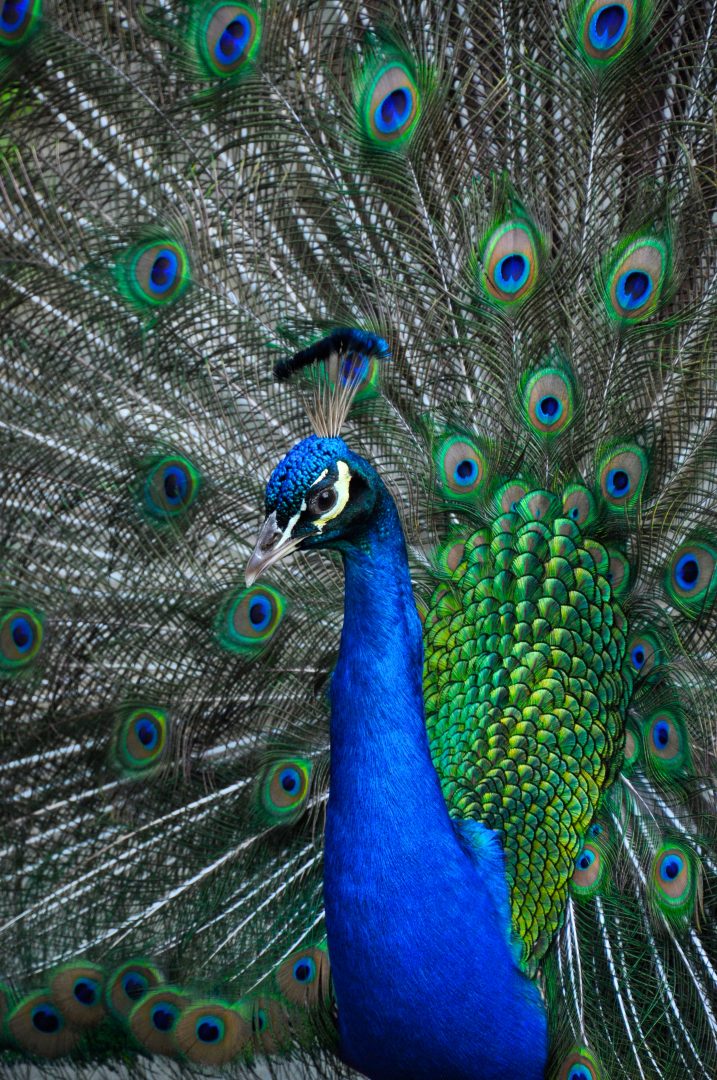
The Indian peafowl is native to the forests and farmland of the Indian subcontinent, and it is the male — the peacock — that most people picture: a metallic blue neck and a train of long upper-tail feathers, each tipped with an eyespot, that he raises and rattles into a fan to court the hens. The train averages about four feet and is shed every year after the breeding season, then grown back by spring. Peahens are a mottled brown and gray, which keeps them hidden while they sit on a nest.
For all that plumage, peafowl fly well enough to reach a tree branch, and in the wild they roost high off the ground at night to stay clear of predators. They are loud birds — the far-carrying call is often the first thing visitors notice — and they spend most of the day walking, scratching and picking through the ground for food.
Come see our peafowl at Plumpton Park Zoo — plan your visit.
Sources: Animal Diversity Web (University of Michigan).
For teachers and homeschool families
A free one-page peafowl fact sheet with fast facts, words to know, discussion questions and a drawing activity. Teachers may copy and share it freely as long as they credit Plumpton Park Zoo.
The existing Plumpton Park Zoo page photograph: a peacock’s blue head and eyespotted train.
At a glance
Peafowl fast facts
Scientific namePavo cristatus
FamilyPhasianidae
DietOmnivore
Native rangeIndian subcontinent
Size3 – 4 feet, plus a train averaging about 4 feet on males
Weight6 – 13 lbs
Lifespan15 – 20 years in the wild, up to about 23 in human care
Conservation statusLEAST CONCERN
Sources: Animal Diversity Web (University of Michigan); IUCN Red List (BirdLife International).
4 ft
A male’s train averages about four feet.
The fan is a train
The long display feathers are upper-tail coverts rather than the true tail. Shorter tail feathers help support the fan during courtship.
Daily life
From ground to roost
Peafowl spend much of their day foraging on foot. Trees provide nighttime roosts, and flight helps them reach those branches.
On the menu
What peafowl eat
Peafowl are omnivores. In the wild they eat seeds, grain, berries and plant shoots along with insects, worms, small reptiles and amphibians.
Family life
Peahens and peachicks
The female makes a shallow nest on the ground. Chicks hatch ready to walk and follow their mother, who provides protection while they learn to forage.
Spot the difference
Peacock, peahen or green peafowl?
Indian peacock
The male has a blue head and neck and a long eyespotted train.
Indian peahen
The female is more muted in color and lacks the male’s elaborate train.
Green peafowl
A different species from Southeast Asia, with a green head and neck. Both sexes are colorful.
Conservation
Indian peafowl conservation
LEAST CONCERN
The IUCN Red List lists the Indian peafowl as Least Concern. Conservation status is species-specific: the green peafowl faces a different level of threat.
Sources: IUCN Red List (BirdLife International); Animal Diversity Web (University of Michigan).
Support
Help care for our peafowl & the animals of Plumpton Park
As a nonprofit zoo, Plumpton Park Zoo relies on admissions, memberships and the generosity of people who believe in what we do. Donations help support animal care, veterinary services, nutritious diets, enrichment, habitat improvements and the continued development of the zoo.
Plumpton Park Zoological Gardens, Inc. is a 501(c)(3) nonprofit organization. Donations support the zoo’s charitable mission and are tax-deductible to the extent permitted by law.
Frequently asked questions about peafowl
Is every peafowl a peacock?
No. Peacock means a male peafowl; a female is a peahen and a young bird is a peachick.
Is the fan its tail?
The display consists mainly of elongated upper-tail coverts, known as the train.
Can peafowl fly?
Yes. They can fly up into trees, where they roost at night.
What do peafowl eat?
They are omnivores, eating plant foods and small animals such as insects.
Does a peacock keep its train all year?
The long train feathers are shed each year and grow back.
Where can I see peafowl in Maryland?
At Plumpton Park Zoo in Rising Sun, Cecil County, Maryland. See Hours and Tickets for times and admission.
See peafowl at Plumpton Park Zoo
Make these remarkable birds part of your visit to Rising Sun, Maryland.
Explore our birds, including our silver pheasants, the Animal Learning Center, and giraffe feeding.