Forest pheasant · Asia
♥ Rescued at Plumpton Park Zoo

Silver
Pheasant

Lophura nycthemera

Meet Hades and Persephone, Plumpton Park Zoo’s silver pheasants, in Rising Sun, Maryland. Discover the silver-and-black pheasant of the forests of Southeast Asia and southern China.

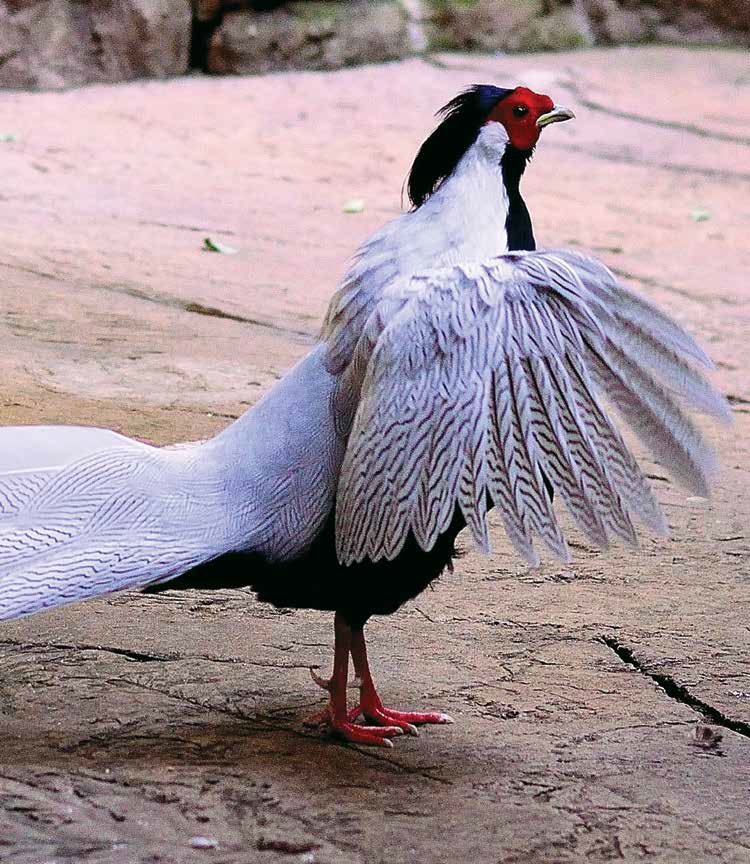
A silver pheasant with silver-white plumage, black crest and red face at Plumpton Park Zoo
FamilyPhasianidae
Native rangeSE Asia & China
DietOmnivore
Meet our pheasantsHades & Persephone

Our silver pheasants

Hades and Persephone

Silver, black and red: a pheasant that is hard to miss.

HadesPersephone

Hades and Persephone are Plumpton Park Zoo’s silver pheasants.

Look for the bare red face and red legs that both sexes share, and compare the silver-white, long-tailed plumage of a male with the shorter-tailed brown of a female. Like every animal at Plumpton Park, our pheasants are cared for daily by our animal-care team.

Resident names from the zoo’s animal records.

For teachers and homeschool families

A free one-page silver pheasant fact sheet with fast facts, words to know, discussion questions and a drawing activity. Teachers may copy and share it freely as long as they credit Plumpton Park Zoo.

Printable Fact Sheet (PDF)

Field guide

The silver pheasant

The silver pheasant is known for its dramatic courtship display during breeding season — the male’s fluttering wings produce a distinctive drumming sound that can be heard from a considerable distance. The species has long been celebrated in Chinese culture: the Tang-dynasty poet Li Bai wrote a poem asking a friend for silver pheasants, a Song-dynasty official who kept one called it his “leisurely guest,” and in the Qing dynasty it became the badge of fifth-rank civil officials.Male silver pheasants have a reputation for being territorial and can behave aggressively toward hens and keepers alike, especially during breeding season.

Native to the forests of Southeast Asia and southern China, silver pheasants show striking differences between males and females: males have brilliant silver-white plumage set off by a glossy black crest and crimson facial skin, while females are a duller brown, providing camouflage while nesting on the forest floor. Like most pheasants, they’re primarily ground-dwelling birds that forage by day and roost up in trees at night to avoid predators. Their striking appearance has also made them a popular ornamental bird in aviaries and parks outside their native range.

Come see our silver pheasants at Plumpton Park Zoo — plan your visit.

Sources: Plumpton Park Zoo species guide; Chinese Wikipedia; Penn Museum.

At a glance

Silver pheasant fast facts

Scientific nameLophura nycthemera
FamilyPhasianidae (pheasants)
Length, tail includedMales 47–49 in; females about 28 in
WeightMales 2.5–4.4 lb; females 2.5–2.9 lb
Clutch6–12 eggs
At Plumpton ParkHades & Persephone

Lifespan: 8–10 years in the wild; 15–20 years in human care.

Sources: Oiseaux-Birds (after Handbook of the Birds of the World); BirdLife International (IUCN Red List authority, 2025); Alexandria Zoo (lifespan).

15

Recognized subspecies

One bird, many forms

From mountain forests to imperial robes

Silver pheasants range across mainland Southeast Asia and eastern and southern China, mostly in mountain forests. Scientists recognize 15 subspecies. The species as a whole is still common, though some subspecies are rare. Small introduced populations live on Vancouver Island in Canada and on Victoria Island in Argentina.

In imperial China the silver pheasant was an emblem of rank. Embroidered on a square badge worn on the front of an official’s robe, it marked a civil official of the fifth rank.

Sources: BirdLife International (IUCN Red List authority, 2025); Oiseaux-Birds (after Handbook of the Birds of the World); Penn Museum.

Behavior

Whirring wings

A male courts by beating his wings rapidly while standing on the ground, making a whirring sound. Males use the same display as a warning to rivals and defend territory with loud whistles. Females whirr their wings too, as a contact call that gathers their family group.

Silver pheasants do not pair off for life. A dominant male may mate with several females, and the hens scrape shallow nests on the ground. They feed mostly in the morning and evening.

Sources: Oiseaux-Birds (after Handbook of the Birds of the World).

On the menu

What silver pheasants eat

They are omnivorous and eat grain, leaves and invertebrates.

In the wild they scratch the ground with their feet, and sometimes dig with their bills, for seeds, fruits and other plant matter, adding insects, worms and other invertebrates as the seasons allow.

Sources: Oiseaux-Birds (after Handbook of the Birds of the World); Plumpton Park Zoo species guide.

Family life

From egg to silver

6–12eggs in a clutch
25–26days of incubation
2years to full adult plumage in males

Chicks hatch covered in brown down that camouflages them on the forest floor, and they can feed themselves soon after hatching. They stay with their mother for a short time before fending for themselves. Young males look brownish at first and take about two years to grow their full silver-and-black plumage.

Sources: Oiseaux-Birds (after Handbook of the Birds of the World); Cowell, AFA Watchbird (2000).

Spot the difference

Pheasants and their relatives

Silver pheasant

Lophura nycthemera. Silver-white back, black underparts, red face. Hades and Persephone belong to this species.

Red golden pheasant

Chrysolophus pictus. A smaller pheasant in brilliant red and gold. See our red golden pheasant page.

Peafowl

The largest member of the pheasant family on our grounds, famous for the male’s train. Visit our peafowl page.

Chicken

The domestic chicken belongs to the same family, Phasianidae, as every pheasant on this list.

Sources: Oiseaux-Birds (after Handbook of the Birds of the World); BirdLife International (IUCN Red List authority, 2025).

Conservation

Common in the wild, for now

Least Concern

The IUCN lists the silver pheasant as Least Concern. The species remains common across much of its range, but some of its 15 subspecies are rare and threatened.

Sources: BirdLife International (IUCN Red List authority, 2025); Oiseaux-Birds (after Handbook of the Birds of the World).

Support

Help care for Hades, Persephone & the animals of Plumpton Park

As a nonprofit zoo, Plumpton Park Zoo relies on admissions, memberships and the generosity of people who believe in what we do. Donations help support animal care, veterinary services, nutritious diets, enrichment, habitat improvements and the continued development of the zoo.

Support Our Animals

Plumpton Park Zoological Gardens, Inc. is a 501(c)(3) nonprofit organization. Donations support the zoo’s charitable mission and are tax-deductible to the extent permitted by law.

Questions

Frequently asked questions about silver pheasants

Where do silver pheasants come from?

Silver pheasants are native to mainland Southeast Asia and eastern and southern China, where they live mainly in mountain forests.

How can you tell a male silver pheasant from a female?

Both have a bare red face and red legs. Males have silver-white upperparts, a black crest and black underparts, and a long tail. Females are mainly brown with a much shorter tail. Males take about two years to reach full adult plumage.

Can silver pheasants fly?

Yes. They spend most of their time on the ground, but they take off and head for cover when disturbed, and they roost up in trees at night.

What do silver pheasants eat?

They are omnivores. They scratch the ground for seeds, fruits, leaves and grain, and they also eat insects and other invertebrates.

How many eggs does a silver pheasant lay?

A clutch is usually 6 to 12 eggs in a shallow scrape on the ground. Incubation takes about 25 to 26 days.

Where can I see silver pheasants in Maryland?

At Plumpton Park Zoo in Rising Sun, Cecil County, Maryland. See Hours and Tickets for times and admission.

Sources: BirdLife International (IUCN Red List authority, 2025); Oiseaux-Birds (after Handbook of the Birds of the World).

See Hades and Persephone at Plumpton Park Zoo

Meet our silver pheasants and discover more than 200 animals in Rising Sun, Maryland.

The zoo is in Cecil County, an easy drive from Delaware and southern Pennsylvania. Explore our red golden pheasant, peafowl, barred owl and Animal Learning Center, and feed a giraffe.