
Animal Learning Center · Not currently at the zoo

Cheetah

Acinonyx jubatus

A slim, spotted sprinter of Africa’s open country, built to chase down prey at top speeds of 65 to 70 miles an hour.

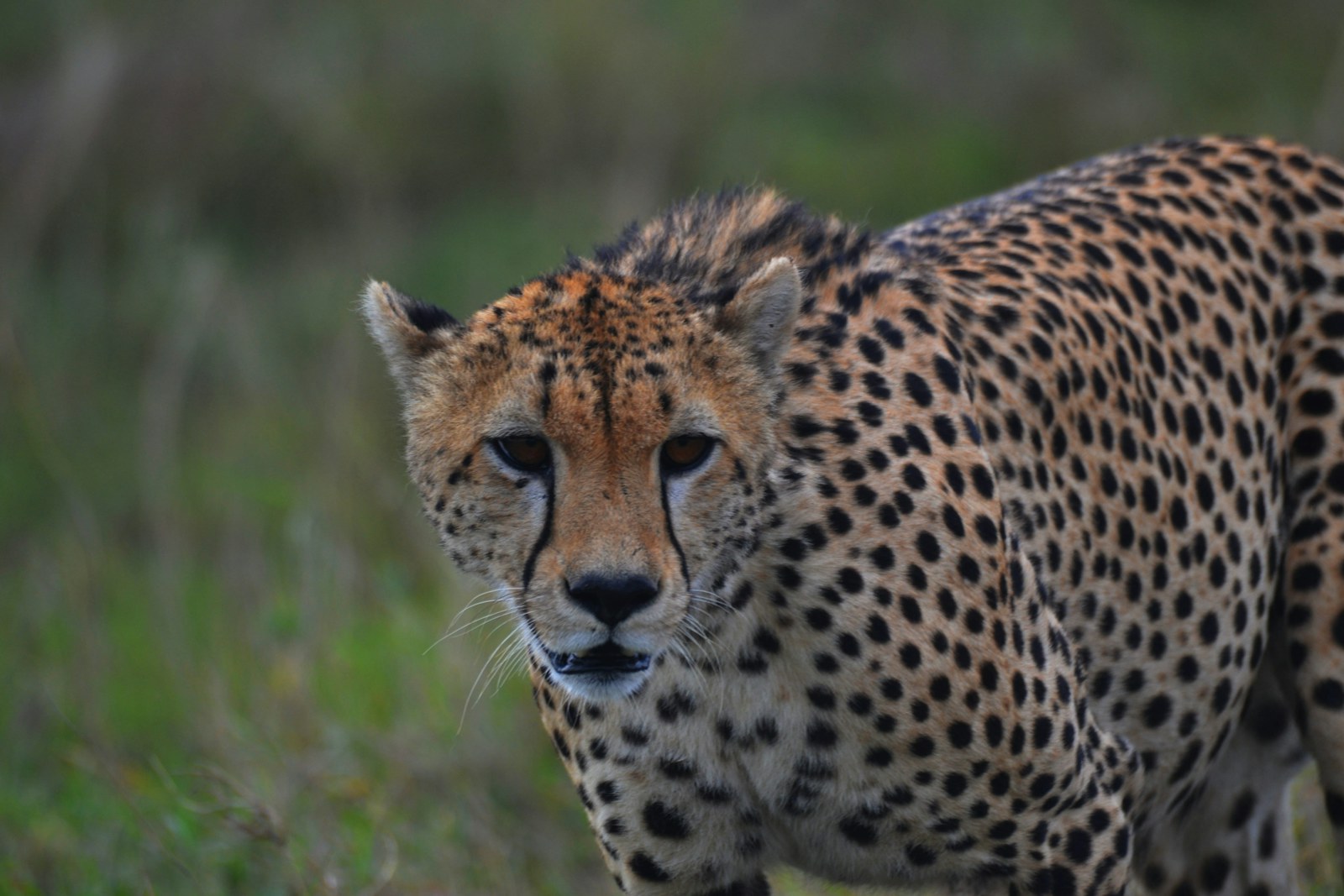
A cheetah in Tanzania looking toward the camera, showing the black tear marks on its face
Size41–60 in long
Weight57–141 lb
Lifespan6–8 years
Conservation statusVulnerable

Animal Learning Center

Learn About the Cheetah

A cheetah has about 30 seconds to catch its prey.

MammalAfrica and IranNot currently at the zoo

The cheetah is a lightly built cat of semi-open country, mainly in southern and eastern Africa, and a small population still survives in Iran. It hunts mostly by day, especially around dawn and dusk, and sometimes at night.

Female cheetahs live alone except when they are raising cubs. Males may team up in groups called coalitions, often brothers from the same litter, and mark their territories with scent.

A note for visitors: the cheetah is not currently at Plumpton Park Zoo. This profile is part of our online Animal Learning Center, so you can keep learning about the species. When you visit, meet Jasira and Santiago, our North African servals, along with the other cats of Plumpton Park Zoo: our tigers, white lions, cougars and clouded leopards.

For teachers and homeschool families

A free two-page cheetah fact sheet with fast facts, words to know, discussion questions and a drawing activity. Teachers may copy and share it freely as long as they credit Plumpton Park Zoo.
Fact Sheet, Grades K–2 (PDF)Fact Sheet, Grades 3–5 (PDF)


Field guide

Where do cheetahs live?

Cheetahs live mainly in southern and eastern Africa; small populations survive in western, central and northern Africa and in Iran. They live in semi-open country that offers some cover, in both dry and semi-dry habitats, and tolerate air temperatures from about 28°F to 102°F in Namibia.

Cheetahs can roam huge areas. In Tanzania’s Serengeti, a female’s home range covers about 322 square miles, while a territorial male holds a much smaller territory of about 14 square miles.

Did you know? Cheetahs chirp to communicate with one another and purr when content. Their yelp, a contact call, can be heard up to about 1.2 miles away.

Sources: IUCN Red List: Cheetah (assessed 2021); American Society of Mammalogists: Mammalian Species 771, Acinonyx jubatus; Mills et al. 2004, Wildlife Biology: Cheetah feeding ecology, Kruger; Hetem et al. 2019, Integrative Zoology: Activity and hunting, Namibia; Marker 2002, University of Oxford: Cheetahs on Namibian farmlands; Durant et al. 2017, PNAS: The global decline of cheetah; Cheetah Conservation Fund: Cheetah fact sheet 2023; Animal Diversity Web (University of Michigan): Cheetah.

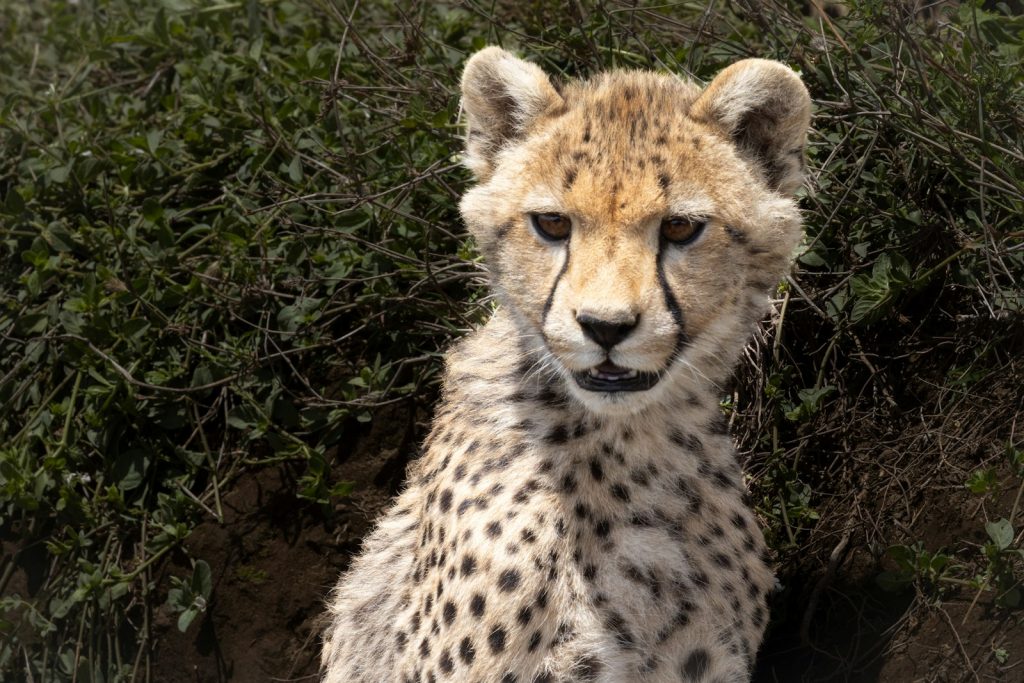
A young cheetah cub with fluffy pale fur on its head and shoulders

A young cheetah with its fluffy cub fur. Photos on this page: Mike Sturgess and ian hoff on Unsplash.


At a glance

Cheetah fast facts

Scientific name Acinonyx jubatus
Animal group Mammal — cat family (Felidae)
Native region Mainly southern and eastern Africa; small populations elsewhere in Africa and in Iran
Habitat Semi-open country with cover, in dry and semi-dry areas
Diet Carnivore — mainly gazelles, impala and springbok
Length 41–60 in, plus a 20–34 in tail
Weight 57–141 lb
Top speed 65 to 70 mph; average chase peaks near 33 mph
Lifespan About 6–8 years in the wild; about 10–12 on average in human care
Conservation status Vulnerable (IUCN)

Sources: IUCN Red List: Cheetah (assessed 2021); Marker 2002, University of Oxford: Cheetahs on Namibian farmlands; American Society of Mammalogists: Mammalian Species 771, Acinonyx jubatus; Wilson et al. 2013, Nature: Hunting runs of wild cheetahs, Botswana; Hayward et al. 2006, Journal of Zoology: Cheetah prey preferences; Mills et al. 2004, Wildlife Biology: Cheetah feeding ecology, Kruger; Animal Diversity Web (University of Michigan): Cheetah; Cheetah Conservation Fund: Teacher’s resource guide.


3–4

cubs in a typical cheetah litter, though a mother can have as many as eight.

Family life

Cubs in a fluffy gray cape

A cheetah mother carries her cubs for 90 to 95 days. Litters usually have three or four cubs, and each newborn weighs only about 9 to 11 ounces. Their eyes open at 4 to 11 days old, and they stay in the den until they are about 6 to 8 weeks old.

Young cubs wear a mantle of long, gray hair over the back, neck and top of the head. It disappears after about 3 months, but a short mane stays into adolescence. Cubs start eating meat at about 4 to 6 weeks and are weaned at about 3 to 6 months.

At about 18 months, cubs leave their mother and travel together as a sibling group for about six months; the females usually leave first. Young cheetahs face many dangers, since lions, hyenas, leopards and smaller predators such as jackals prey on them.

Sources: American Society of Mammalogists: Mammalian Species 771, Acinonyx jubatus; IUCN Red List: Cheetah (assessed 2021); Marker 2002, University of Oxford: Cheetahs on Namibian farmlands; Cheetah Conservation Fund: Cheetah fact sheet 2023; Cheetah Conservation Fund: Teacher’s resource guide; Animal Diversity Web (University of Michigan): Cheetah.


Built for speed

How is a cheetah built for speed?

A cheetah has a slight build, a deep chest, a narrow waist, a flexible swayback spine and long, thin legs. Its lungs, airways, heart and nasal openings are all enlarged, and its long tail helps it steer during a high-speed chase. Its blunt claws only partly pull back, and its paw pads are very hard.

A cheetah stalks its prey, then charges from about 230 to 980 feet away, but seldom succeeds from more than about 660. Wild cheetahs in Botswana peaked at about 33 miles per hour in an average chase and 58 at most; top speeds reported for the species are 65 to 70. A chase typically covers less than about 980 feet; the cheetah has about 30 seconds to catch its prey, and the longest of 41 chases tracked in southern Africa lasted 59 seconds. About 25 to 38 percent of hunts succeeded in field studies in Botswana and Namibia.

  • Flexible spine: a bendy swayback backbone
  • Long tail: helps steer at speed
  • Claws that do not fully retract: blunt, with a grip like cleats
  • Big lungs and heart: enlarged for sprinting
  • Tear marks: a dark streak from each eye to the lip

Sources: IUCN Red List: Cheetah (assessed 2021); American Society of Mammalogists: Mammalian Species 771, Acinonyx jubatus; Wilson et al. 2013, Nature: Hunting runs of wild cheetahs, Botswana; Wilson et al. 2013, Biology Letters: Cheetah chases, Kgalagadi; Hetem et al. 2013, Biology Letters: Hunting cheetahs, Namibia; Hetem et al. 2019, Integrative Zoology: Activity and hunting, Namibia; Marker 2002, University of Oxford: Cheetahs on Namibian farmlands; Cheetah Conservation Fund: Cheetah fact sheet 2023; Cheetah Conservation Fund: About cheetahs; Animal Diversity Web (University of Michigan): Cheetah.

On the menu

What do cheetahs eat?

Cheetahs are carnivores. They prefer hoofed mammals that weigh about 50 to 125 pounds. Which prey depends on where they live: Thomson’s gazelles are the most common prey in the Serengeti, springbok in the Kalahari and impala in Kruger National Park.

They have to eat quickly, because in the Serengeti up to about 13 percent of their kills are stolen, mostly by hyenas and lions; leopards sometimes take kills too, and jackals and vultures can scare them off a kill.

Sources: Hayward et al. 2006, Journal of Zoology: Cheetah prey preferences; Mills et al. 2004, Wildlife Biology: Cheetah feeding ecology, Kruger; Mara Cheetah Project: Broekhuis & Irungu 2016, kills stolen from cheetahs; Illing 2018, Conservation Physiology: Cheetahs cannot fool biologgers; Cheetah Conservation Fund: Teacher’s resource guide.


Spot the difference

Cheetah or another cat?

Cheetah

A slim, long-legged sprinter with solid black spots, black tear marks and claws that do not fully retract.

Serval

Another African cat, and one you can meet at Plumpton Park Zoo. Meet Jasira and Santiago, our North African servals.

Lion

In the wild, lions steal cheetahs’ kills and prey on young cheetahs. Meet our white lions.


Conservation

Conservation status

VULNERABLE

The cheetah is listed as Vulnerable on the IUCN Red List (2021 assessment), and the northeastern African subspecies is listed as Endangered (2022). A 2017 study estimated about 7,100 adult and adolescent cheetahs in the wild, compared with an estimated 100,000 in Africa and Asia in 1900.

Farming and other land use changes destroy and break up cheetah habitat, and overhunting removes their wild prey. Ranchers remove or kill cheetahs over conflicts with livestock; in Namibia, over 90 percent of cheetahs live on farms outside protected areas (2023 figure). Wire snares set for other animals also catch them, and larger predators compete with them for food and kill their cubs.

Sources: IUCN Red List: Cheetah (assessed 2021); IUCN Red List: Northeastern Africa cheetah (assessed 2022); Durant et al. 2017, PNAS: The global decline of cheetah; U.S. Fish & Wildlife Service: Cheetah advice memo, 1996; Cheetah Conservation Fund: Fact sheets 2023, Namibia farmlands; Marker 2002, University of Oxford: Cheetahs on Namibian farmlands.


Support

Help care for the animals of Plumpton Park

As a nonprofit zoo, Plumpton Park Zoo relies on admissions, memberships and the generosity of people who believe in what we do. Donations help support animal care, veterinary services, nutritious diets, enrichment, habitat improvements and the continued development of the zoo, including free learning resources like this one.

Support Our Animals

Plumpton Park Zoological Gardens, Inc. is a 501(c)(3) nonprofit organization. Donations support the zoo’s charitable mission and are tax-deductible to the extent permitted by law.


Questions

Common questions about cheetahs

How fast can a cheetah run?

Top speeds reported for the species are 65 to 70 miles per hour. In an average chase, wild cheetahs in Botswana peaked at about 33 miles per hour, and a cheetah has about 30 seconds to catch its prey.

Do cheetahs catch most of the prey they chase?

No. About 25 to 38 percent of hunts succeeded in field studies in Botswana and Namibia.

Can cheetahs pull in their claws?

Only partly. A cheetah’s claws are blunt and do not fully retract.

What are the black lines on a cheetah’s face?

They are tear marks, a dark streak that runs from the corner of each eye down to the upper lip.

Do cheetahs live in groups?

Females live alone except when raising cubs. Males may live in small groups called coalitions, often brothers.

How many cheetahs are left?

A 2017 study estimated about 7,100 adults and adolescents in the wild. The species is listed as Vulnerable.

Can I see a cheetah at Plumpton Park Zoo?

Cheetahs are not at Plumpton Park Zoo. This profile is part of our online Animal Learning Center. When you visit, you can meet our servals, tigers, white lions, cougars and clouded leopards.


Keep exploring with Plumpton Park Zoo

Continue learning about wild cats, animal adaptations and conservation in the Plumpton Park Zoo Animal Learning Center, or explore our mammals.

When you visit Rising Sun, meet Jasira and Santiago, our servals, our white lions, our clouded leopards, and feed a giraffe.