♥ Rescued · African wild cat
♥ Rescued at Plumpton Park Zoo

Serval

Leptailurus serval

Meet Jasira and Santiago, Plumpton Park Zoo’s servals, in Rising Sun, Maryland. Discover the African cat with the biggest ears and the longest legs, for its size, of any cat.

A serval with tall ears looking straight at the camera at Plumpton Park Zoo in Rising Sun, Maryland
FamilyFelidae (cats)
Native rangeAfrica
DietCarnivore
Meet our catsJasira & Santiago

Our servals

Jasira & Santiago

Watch the ears. They miss nothing.
JasiraSantiago

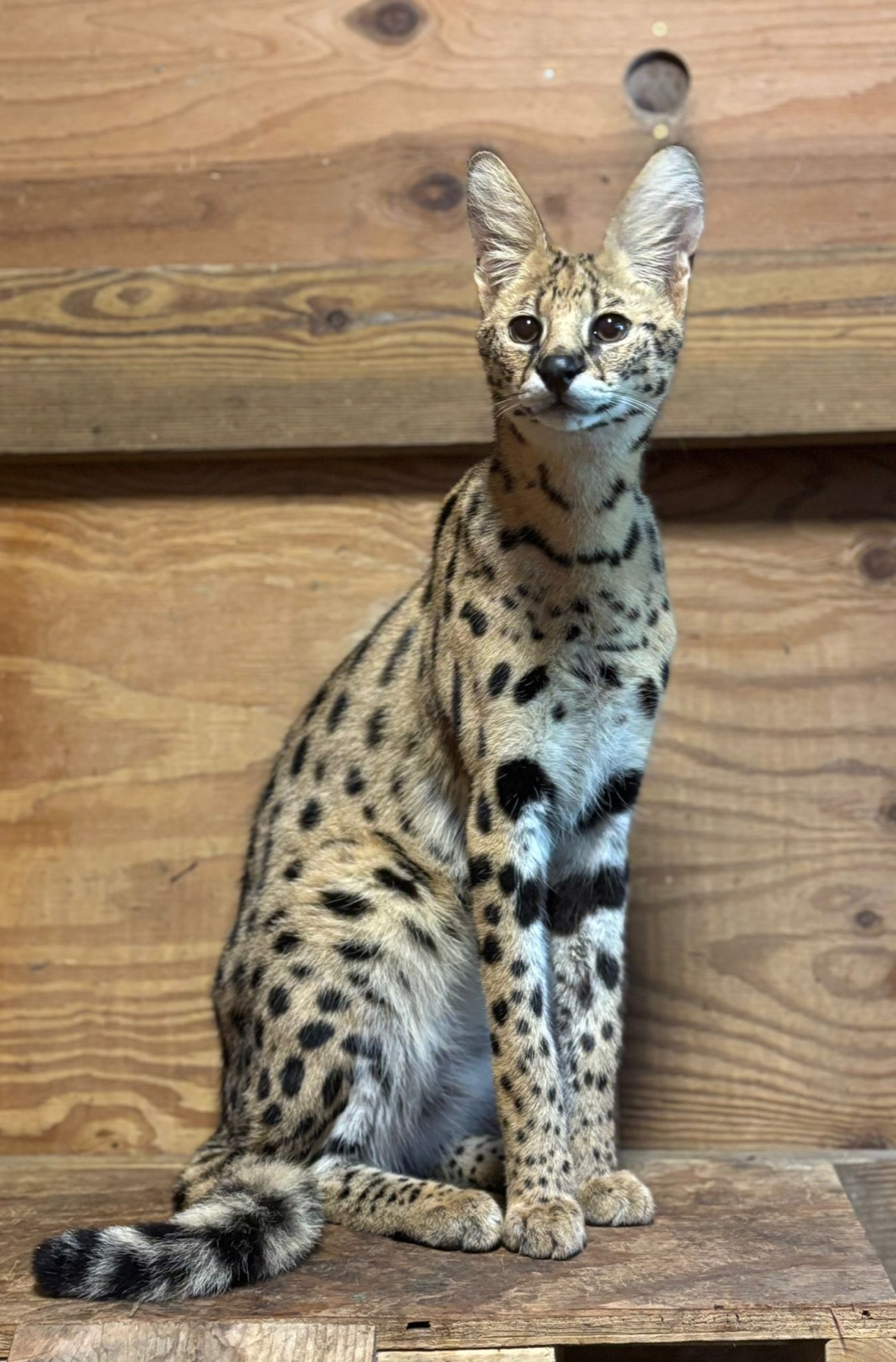
Serval sitting tall showing its long legs and spotted coat at Plumpton Park Zoo

One of our servals at Plumpton Park Zoo.

Jasira and Santiago are Plumpton Park Zoo’s servals, and the serval exhibit is one of the zoo’s rescued exhibits.

About half of our animals are rescued, taken in from people and places that could no longer care for them. Like every animal at Plumpton Park, our servals are cared for daily by our trained animal-care team.

The Serval is a medium-sized African wild cat. They have the longest legs of any cat, relative to their body size. See our serval at Plumpton Park Zoo — plan your visit.

Resident names from the zoo’s animal records.

For teachers and homeschool families

A free two-page serval fact sheet with fast facts, words to know, discussion questions and a drawing activity. Teachers may copy and share it freely as long as they credit Plumpton Park Zoo.
Printable Fact Sheet (PDF)


Field guide

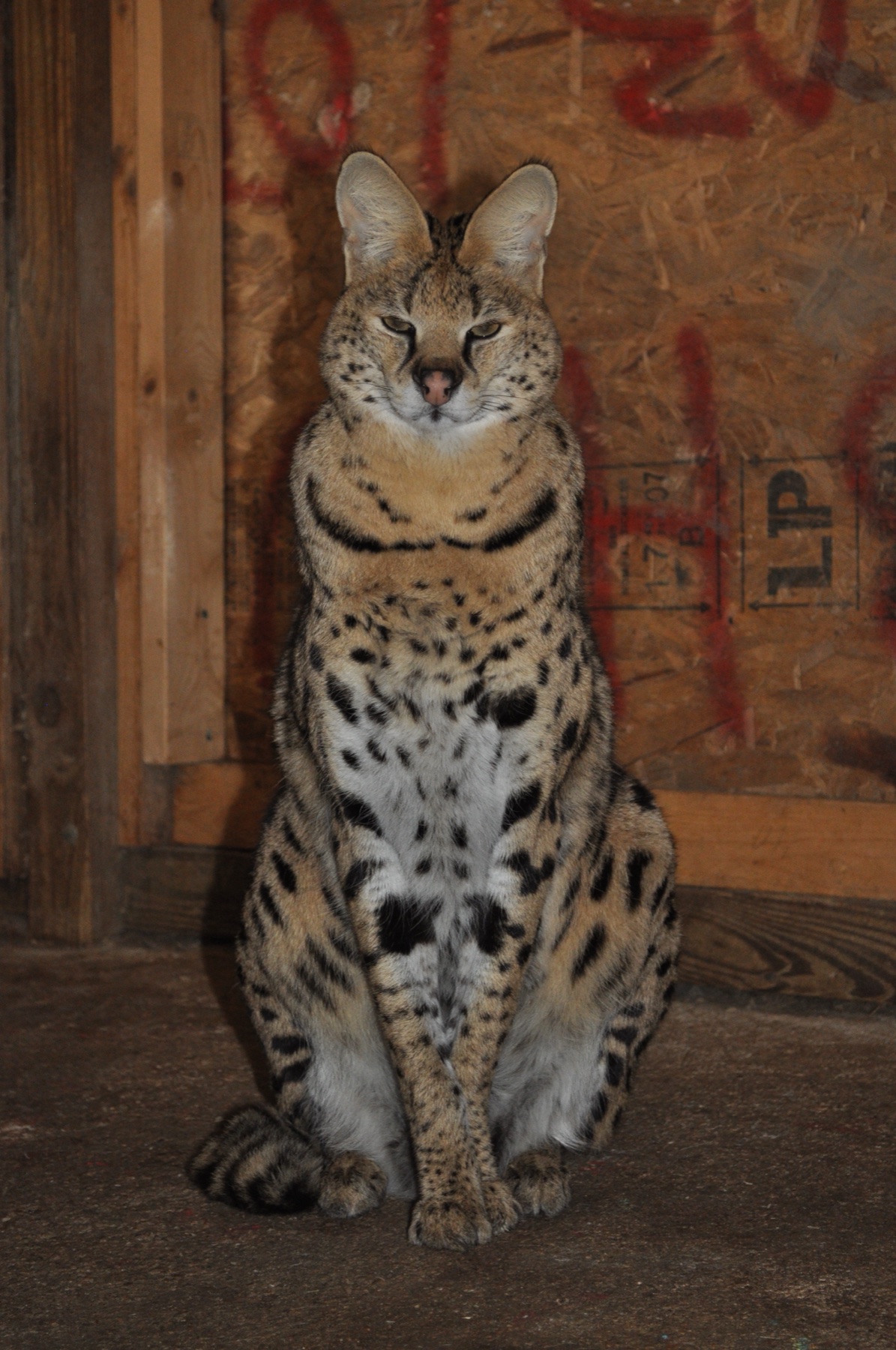
Serval sitting upright facing the camera in its indoor den at Plumpton Park Zoo
A serval at Plumpton Park Zoo. Big ears help it hear prey moving in tall grass.

Where servals live

Servals are common on savannas where there is plenty of water. They prefer areas of bush, tall grass, and dry reed beds near streams, but they are also found in marshes and bamboo thickets.

Today servals live mainly in the savannas of central and southern Africa, typically near thickly vegetated streams and rivers. In Tanzania’s Ngorongoro Crater they live at elevations of roughly 4,600 to 7,200 feet. Servals are generally solitary and territorial. A male’s home range may overlap those of several females, but females’ ranges do not overlap one another.

Relative to their head size, servals have the largest ears of any cat species — an adaptation that gives them extraordinarily sharp hearing, which they use to pinpoint rodents moving through grass or even underground before pouncing.

Some servals are black. Black servals were long thought to live mainly in the highlands of Kenya and Ethiopia. Then researchers in Kenya’s lowland Tsavo region found that 47% of the servals they recorded from 2011 to 2016 were black. Why there are so many there is still a mystery.

Sources: Sheldrick Wildlife Trust; Animal Diversity Web: Leptailurus serval; IUCN SSC Cat Specialist Group: Serval.


At a glance

Serval fast facts

Scientific nameLeptailurus serval
FamilyFelidae (cats)
Length23–39 in, males larger
Hunting successAbout half of pounces
Weight15–40 lb
LitterUsually 2–3 kittens
LifespanAbout 10 years in the wild; about 22 in human care
Conservation statusLeast Concern
At Plumpton ParkJasira & Santiago

Servals have very large ears, a small head, long legs, a short tail and a gold coat marked with black spots and stripes.

Sources: IUCN SSC Cat Specialist Group: Serval; Animal Diversity Web: Leptailurus serval.


9 ft

How high a serval can leap straight up to catch a bird

Air strike

A cat that hunts the sky

This cat also has the ability to leap vertically and catch prey such as birds, right out of the air.

From a standstill, a serval can spring more than 9 feet straight up. On the ground it listens, then pounces as far as 13 feet and pins its prey with its front paws.

Sources: IUCN SSC Cat Specialist Group: Serval; Animal Diversity Web: Leptailurus serval.


The listening hunter

One of the best hunters in the cat family

That hunting method makes servals remarkably successful predators, with one of the highest hunting success rates of any wild cat. One field study found that about half of their pounces end in a catch, a higher rate than recorded for other wild cats.

They are solitary animals, coming together only to mate. Servals hunt mostly in the early morning and late afternoon, and a hunting serval may cover about a mile and a half in a day.

  • Ears: the largest of any cat for its head size
  • Legs: the longest of any cat for its body size
  • Leap: more than 9 ft straight up
  • Coat: gold with black spots and stripes

Sources: Animal Diversity Web: Leptailurus serval; IUCN SSC Cat Specialist Group: Serval.

On the menu

What servals eat

The Serval preys mostly on rodents, plus birds, frogs, lizards and insects.

Small rodents make up most of a wild serval’s diet, more than 90 percent in one study. Birds, frogs, lizards and large insects fill out the rest.

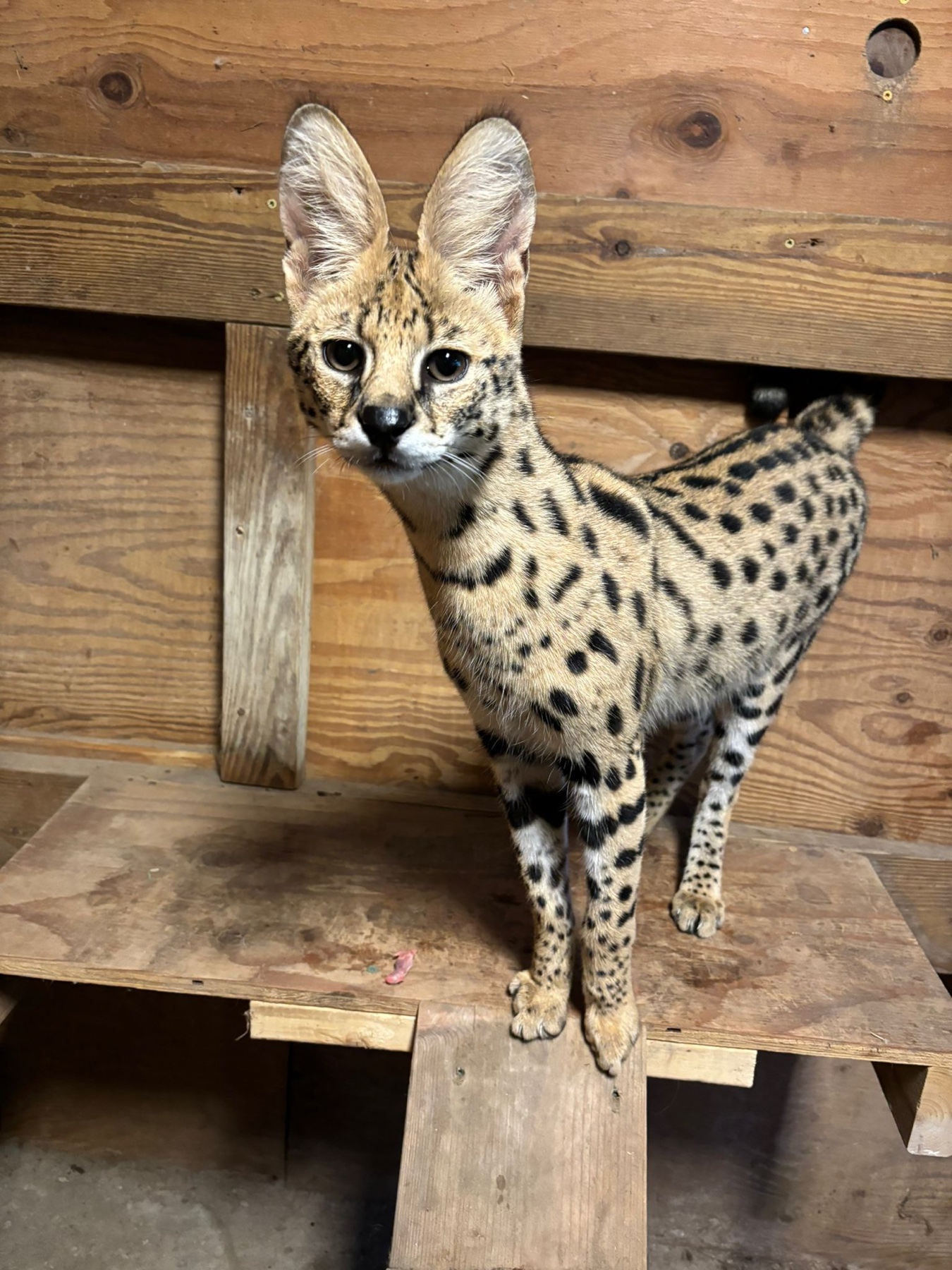
Serval standing on a wooden platform with ears raised at Plumpton Park Zoo

Ears up and alert on a platform at Plumpton Park Zoo.

Sources: Animal Diversity Web: Leptailurus serval; IUCN SSC Cat Specialist Group: Serval.


Family life

Raising serval kittens

65–75days of pregnancy
2–3kittens in a usual litter
18–24months to adulthood
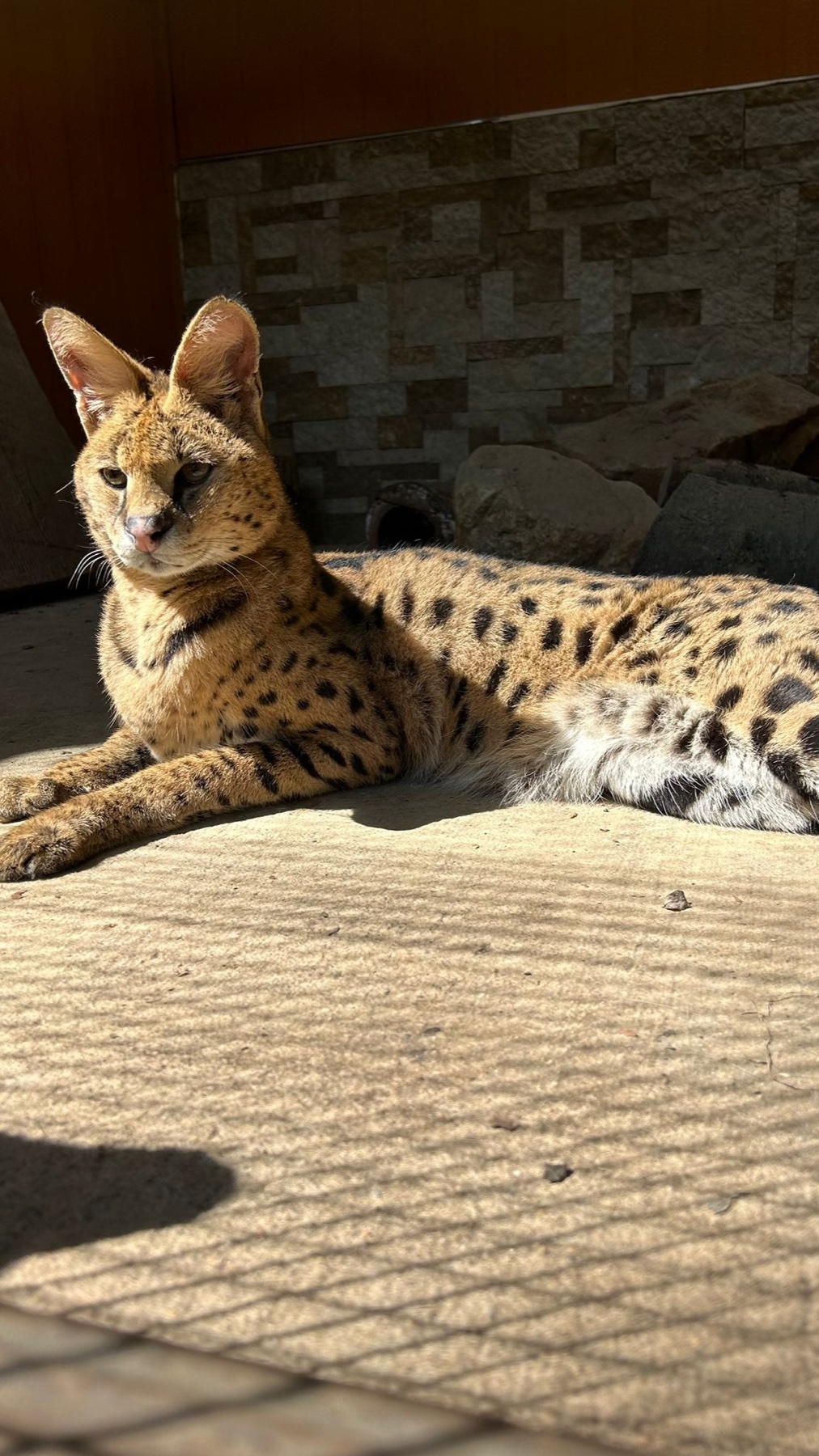
Serval lying in a patch of sunlight at Plumpton Park Zoo
A serval resting in the sun at Plumpton Park Zoo.

The mother raises her kittens alone. Kittens weigh about half a pound at birth and double in size in their first 11 days. They are weaned at three to five months and stay with their mother until they are about a year to a year and a half old.

Sources: Animal Diversity Web: Leptailurus serval; IUCN SSC Cat Specialist Group: Serval.


Spot the difference

Serval or another spotted cat?

Serval

Leptailurus serval. Very long legs, huge ears, a short tail and black spots and stripes. Jasira and Santiago belong to this species.

Cheetah

Also long-legged and spotted, but far larger, with solid round spots and black “tear lines”. Learn about cheetahs in our Animal Learning Center.

Clouded leopard

A forest cat of Asia with cloud-shaped blotches. Meet ours on the clouded leopard page.

Our other cats

Meet our cougars, white lions and tigers.


Conservation

Servals in the wild

Least Concern

The serval is listed as Least Concern because it remains widespread, but wild populations have declined. Farming and growing towns take over the grasslands and wetlands it needs, and servals are hunted for their fur and shot by farmers when they take poultry. The small, isolated North African population is regionally Critically Endangered.

Sources: IUCN SSC Cat Specialist Group: Serval; Animal Diversity Web: Leptailurus serval.


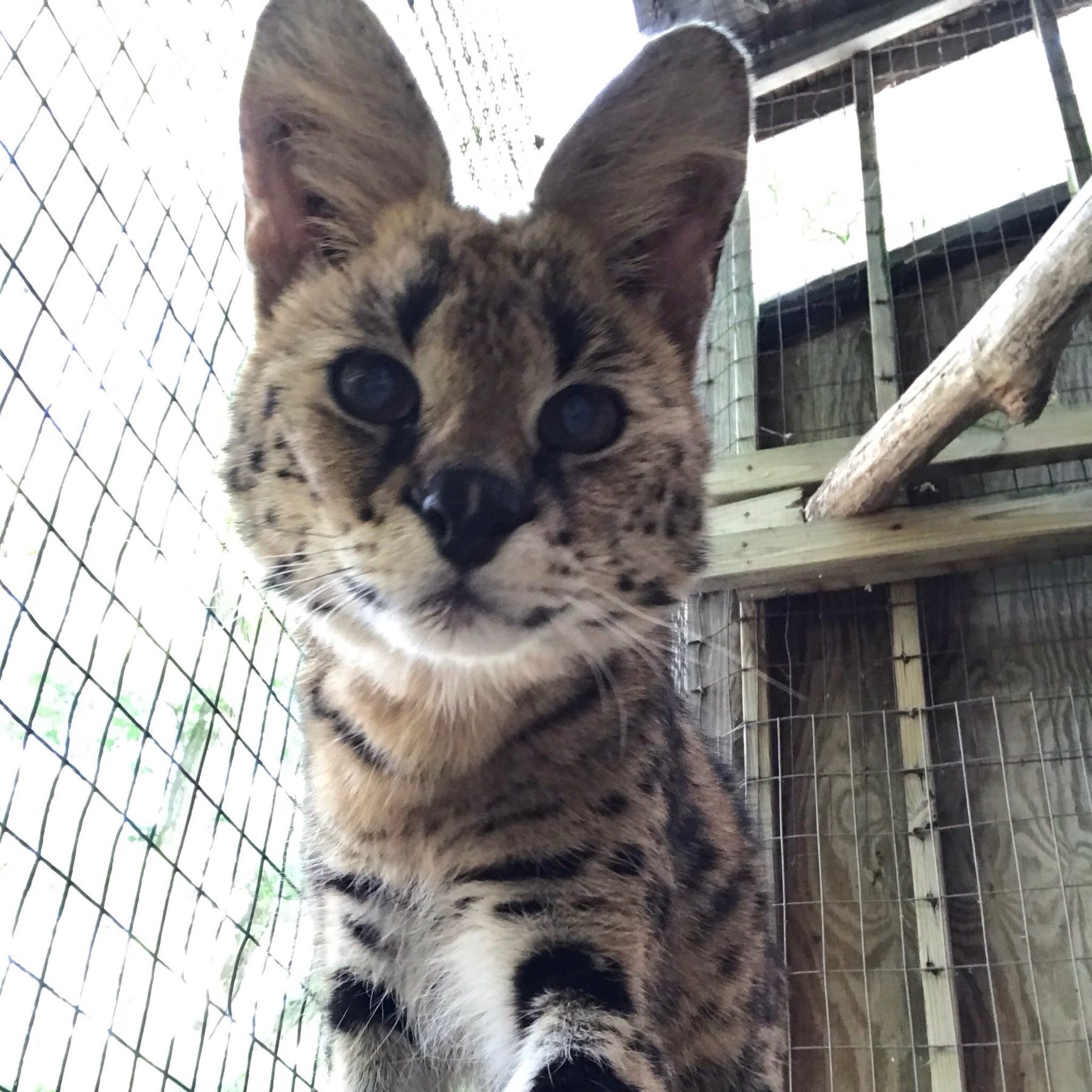
Close-up of a serval's face and large ears at Plumpton Park Zoo
Up close with one of our servals.

Support

Help care for Jasira, Santiago & the animals of Plumpton Park

As a nonprofit zoo, Plumpton Park Zoo relies on admissions, memberships and the generosity of people who believe in what we do. Donations help support animal care, veterinary services, nutritious diets, enrichment, habitat improvements and the continued development of the zoo.

Support Our Animals

Plumpton Park Zoological Gardens, Inc. is a 501(c)(3) nonprofit organization. Donations support the zoo’s charitable mission and are tax-deductible to the extent permitted by law.


Questions

Frequently asked questions about servals

Where do servals live in the wild?

In Africa, mainly the savannas of central and southern Africa, near water, tall grass and reed beds.

Why do servals have such big ears?

Relative to their head size, servals have the largest ears of any cat. They use them to hear rodents moving in tall grass, or even underground, before they pounce.

How high can a serval jump?

A serval can leap more than 9 feet straight up to catch a bird in flight.

What do servals eat?

Mostly small rodents, plus birds, frogs, lizards and insects.

How long do servals live?

About 10 years in the wild and about 22 years in human care.

Where can I see servals in Maryland?

At Plumpton Park Zoo in Rising Sun, Cecil County, Maryland, home to Jasira and Santiago. See Hours and Tickets for times and admission.

Sources: IUCN SSC Cat Specialist Group: Serval; Animal Diversity Web: Leptailurus serval.


See our servals at Plumpton Park Zoo

Meet Jasira and Santiago and discover more than 200 animals in Rising Sun, Maryland.

The zoo is in Cecil County, an easy drive from Delaware and southern Pennsylvania. Explore our clouded leopards, cougars, tigers and Animal Learning Center, and feed a giraffe.