♥ Rescued · Domestic pig · Vietnam
♥ Rescued at Plumpton Park Zoo

Pot-Bellied
Pig

Sus scrofa domesticus

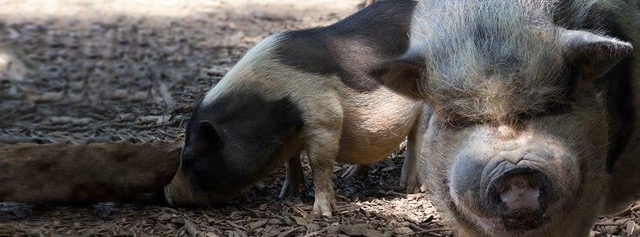
Meet the pot-bellied pigs of Plumpton Park Zoo in Rising Sun, Maryland: the small Vietnamese breed that became America’s favorite pet pig.

Pot-bellied pigs at Plumpton Park Zoo in Rising Sun, Maryland
FamilySuidae (pigs)
Developed inVietnam
DietOmnivore
At Plumpton ParkRescued pigs

Black pot-bellied pig walking on grass at Plumpton Park Zoo

Photo: © Plumpton Park Zoo.

Our pot-bellied pigs

Round, rooting and very smart

Most did not stay small. That is how many of them came to us.

The pot-bellied pig is a small domestic pig breed from Vietnam, developed in the Red River Delta. Domestic means kept and bred by people.

Our pig exhibits are among the zoo’s rescued exhibits. About half of our animals are rescued, taken in from people and places that could no longer care for them.

Pot-bellied pigs became a popular house pet in the United States in the late 1980s, sold on the promise that they would stay small. Most did not. A fully grown pot-bellied pig commonly reaches 100 to 250 pounds, far more than many owners expected, and pigs are still given up for that reason today. It is a familiar story here: about half the animals at Plumpton Park Zoo came to us from owners who could no longer care for them. Come and meet ours — plan your visit today.

For teachers and homeschool families

A free one-page pot-bellied pig fact sheet with fast facts, vocabulary, five reading questions and a drawing activity. Explain how the snout and skin support survival (NGSS 4-LS1-1), then design a digging tool inspired by the snout (1-LS1-1). Teachers may copy and share it freely as long as they credit Plumpton Park Zoo.

Printable Fact Sheet (PDF)


Field guide

A pig from Vietnam

It is instantly recognizable from the low, swayed back and rounded belly that give the breed its name, along with short legs, upright ears and a straight tail. Pot-bellied pigs are among the most intelligent domestic animals: they learn routines quickly, can be trained and even housebroken, and use their flat, muscular snouts to root through soil for food.

The first pot-bellied pigs in North America were imported by a Canadian, Keith Connell, who originally meant to supply zoos. The first were sold in the United States in 1986, when prices reached into the thousands of dollars. Colors range from solid black to solid white, with a variety of spots in between.

They are social by nature and prefer company to living alone.

Sources: Oklahoma State University, Breeds of Livestock: Vietnamese Potbelly.


At a glance

Pot-bellied pig fast facts

Scientific nameSus scrofa domesticus
Breed originVietnam (Red River Delta)
Size14–20 in at shoulder
Weight100–250 lb
Lifespan15–20 years
Full grownAt about 5 years old
StatusDomesticated
At Plumpton ParkRescued pigs

Oklahoma State University gives the breed’s average full-grown weight as 70 to 150 pounds, with some reaching 200 pounds or more; the original Canadian imports averaged about 250 pounds. The size and lifespan figures above preserve the zoo’s original guide. Individuals vary: plan for an adult pig, rather than assuming that a small piglet will stay small.

Sources: Oklahoma State University, Breeds of Livestock: Vietnamese Potbelly.


1986

The year the first pot-bellied pigs were sold in the U.S.

From zoo animal to house pet

The pet pig boom

Keith Connell’s pigs were meant for zoos, but a private buyer who wanted them as pets helped start a craze. As breeders caught up with demand, prices fell to about those of pedigreed dogs and cats.

Pot-bellied pigs reach their full size at about five years old, and they do not necessarily stay small or cuddly; most dislike being picked up or held.

Sources: Oklahoma State University, Breeds of Livestock: Vietnamese Potbelly.


Black pot-bellied pig walking across its yard at Plumpton Park ZooMud matters

Why pigs wallow

Pigs have very few working sweat glands, so on warm days they cool off by wallowing in mud or water and lying in the shade.

A coat of mud also protects a pig’s skin from sunburn, flies and external parasites, and pigs wallow more as the temperature rises. To root means to dig with the snout. Rooting is a natural behavior that gives pigs opportunities to search and explore. To wallow means to roll or lie in mud or water.

  • Snout: a flat, muscular digging tool
  • Back: low and swayed
  • Belly: round, the source of the name
  • Ears and tail: upright ears, straight tail

Sources: RSPCA Knowledgebase: Why is wallowing important for pig welfare?; RSPCA Knowledgebase: Rooting and enrichment.

Two dark pot-bellied pigs eating vegetables from a wooden trough at Plumpton Park ZooOn the menu

What pot-bellied pigs eat

Pot-bellied pigs are omnivores. They eat grasses, roots, vegetables, fruit and grain, along with the insects and grubs they turn up while rooting. An omnivore eats both plants and animals.

Sources: RSPCA Knowledgebase: Rooting and enrichment.


Spot the difference

Pot-bellied or Juliana pig?

Pot-bellied pig

Low and round-bellied, with a swayed back, short legs, upright ears and a straight tail.

Juliana pig

Lean, long-legged and spotted, with a straight back. Meet ours on the Juliana pig page.

Farm pig

The same species, bred for size; full-size domestic pigs can weigh 600 to 1,500 lb.

Our barnyard friends

Meet our pygmy goats, sheep and zebu.

Sources: Oklahoma State University, Breeds of Livestock: Vietnamese Potbelly.


Conservation

A domestic animal

Domesticated

Black pot-bellied pig walking across its yard at Plumpton Park Zoo
A pot-bellied pig in its yard at Plumpton Park Zoo.

Pot-bellied pigs are a domestic breed, so they are not assessed on the IUCN Red List. Their challenge is finding homes ready for a 100-plus-pound animal that can live 15 to 20 years.

Sources: Oklahoma State University, Breeds of Livestock: Vietnamese Potbelly.


Pot-bellied pig standing over a pumpkin treat at Plumpton Park Zoo
A pumpkin treat at Plumpton Park Zoo.

Support

Help care for our pigs & the animals of Plumpton Park

As a nonprofit zoo, Plumpton Park Zoo relies on admissions, memberships and the generosity of people who believe in what we do. Donations help support animal care, veterinary services, nutritious diets, enrichment, habitat improvements and the continued development of the zoo.

Support Our Animals

Plumpton Park Zoological Gardens, Inc. is a 501(c)(3) nonprofit organization. Donations support the zoo’s charitable mission and are tax-deductible to the extent permitted by law.


Questions

Frequently asked questions about pot-bellied pigs

Where do pot-bellied pigs come from?

Vietnam. The breed was developed in the Red River Delta.

How big do pot-bellied pigs get?

Much bigger than many owners expect. A fully grown pot-bellied pig commonly reaches 100 to 250 pounds and 14 to 20 inches at the shoulder.

When did pot-bellied pigs come to the United States?

The first were sold in the U.S. in 1986, and they became a popular house pet in the late 1980s.

Why do pigs roll in mud?

Pigs have very few working sweat glands, so mud cools them. It also protects their skin from sunburn, flies and parasites.

Are pot-bellied pigs smart?

Yes. They learn routines quickly and can be trained and even housebroken.

Where can I see pot-bellied pigs in Maryland?

At Plumpton Park Zoo in Rising Sun, Cecil County, Maryland. See Hours and Tickets for times and admission.

Sources: Oklahoma State University, Breeds of Livestock: Vietnamese Potbelly; RSPCA Knowledgebase: Why is wallowing important for pig welfare?.


See our pot-bellied pigs at Plumpton Park Zoo

Meet our rescued pigs and discover more than 200 animals in Rising Sun, Maryland.

The zoo is in Cecil County, an easy drive from Delaware and southern Pennsylvania. Explore our Juliana pigs, pygmy goats, sheep and Animal Learning Center, and feed a giraffe.