♥ Rescued · Domestic pig
♥ Rescued at Plumpton Park Zoo

Juliana
Pig

Sus scrofa domesticus

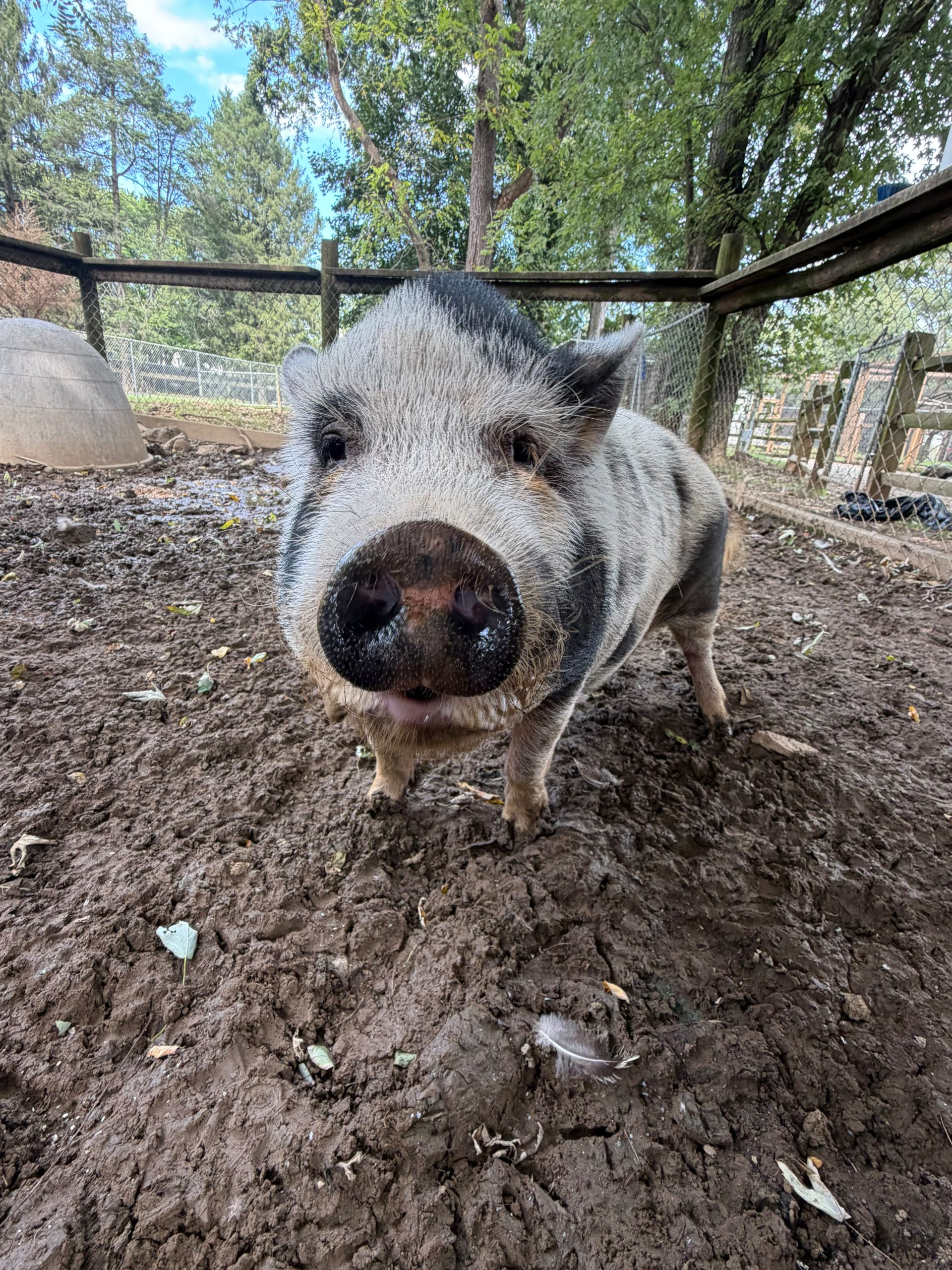
Meet the Juliana pigs of Plumpton Park Zoo in Rising Sun, Maryland: small, spotted, clever pigs, sometimes called miniature painted pigs.

A spotted Juliana pig looking at the camera at Plumpton Park Zoo in Rising Sun, Maryland
Size10–16 in tall
Weight30–65 lb
Lifespan15–20 years
Conservation statusDomesticated

Spotted Juliana pig at Plumpton Park Zoo

Small, spotted and curious. Photo: © Plumpton Park Zoo.

Our Juliana pigs

Small, spotted and smart

A good mud hole is not a mess. It is a necessity.

The Juliana pig is a small, spotted domestic pig, sometimes called the miniature painted pig.

Our pig exhibits are among the zoo’s rescued exhibits. About half of our animals are rescued, taken in from people and places that could no longer care for them.

Julianas are sold as pets on the promise that they stay small, and many do stay under about 60 pounds. Even so, a pig is a strong, curious animal that needs outdoor space, a wallow and something to root in, and a lot of them are given up when that becomes clear. It is a familiar story here: about half the animals at Plumpton Park Zoo came to us from owners who could no longer care for them. Come and meet ours — plan your visit today.

For teachers and homeschool families

A free one-page Juliana pig fact sheet with fast facts, words to know, five discussion questions and a drawing activity. Explain how the snout and skin support survival (NGSS 4-LS1-1), then design a digging tool inspired by the snout (1-LS1-1). Teachers may copy and share it freely as long as they credit Plumpton Park Zoo.

Printable Fact Sheet (PDF)


Field guide

What makes a Juliana a Juliana

The breed was developed in Europe by selecting for small size and a spotted coat, and a true Juliana is a lean, long-legged pig with a straight back and a slightly dished face — quite different from the low, round-bellied build of the pot-bellied pig. Coats come in silver, red, cream and black, always with dark spots, and the hair is coarse and bristly.

Like all pigs, Julianas are clever. They learn routines quickly, recognize the people who feed them, and use their flat, muscular snouts to root through soil for grubs, roots and anything else worth eating.

Juliana pigs are a domestic breed of Sus scrofa domesticus, the same species as farm pigs, kept for their small size and painted coats. A breed is a group of domestic animals selected for shared traits.

The size, coat and lifespan figures on this page preserve the zoo’s original Juliana pig guide. Individual pigs vary; a small piglet is not a guarantee of a small adult. View a pig’s parents and plan for its full adult care needs.

Care guidance: RSPCA Knowledgebase: Keeping pigs as pets.

Sources: RSPCA Knowledgebase: Rooting and enrichment.


At a glance

Juliana pig fast facts

Scientific nameSus scrofa domesticus
Also calledMiniature painted pig
Size10–16 in at shoulder
Weight30–65 lb
Lifespan15–20 years
CoatSilver, red, cream or black, always spotted
StatusDomesticated
At Plumpton ParkRescued pigs

Sources: RSPCA Knowledgebase: Rooting and enrichment.


60 lb

The weight many Julianas stay under

Small, but still a pig

Not a lap dog

Juliana pigs are omnivores. They eat grasses, roots, vegetables, fruit and a measured ration of pig pellets, along with the insects and grubs they turn up while rooting.

They are social and do best with company. Julianas are sold as pets on the promise that they stay small, and many do stay under about 60 pounds, but a pig still needs outdoor space, a wallow and something to root in.

Sources: RSPCA Knowledgebase: Rooting and enrichment; RSPCA Knowledgebase: Why is wallowing important for pig welfare?.


Mud matters

Why pigs wallow

Pigs have very few working sweat glands, so on warm days they cool off by wallowing in mud and lying in the shade; a good mud hole is not a mess, it is a necessity.

A coat of mud does more than cool a pig down. It also protects the skin from sunburn, flies and external parasites, and pigs wallow more as the temperature rises.

  • Snout: a flat, muscular digging tool
  • Sweat glands: very few, so mud does the cooling
  • Mud: cooling, sunscreen and bug protection
  • Brain: quick to learn routines and people

Sources: RSPCA Knowledgebase: Why is wallowing important for pig welfare?; RSPCA Knowledgebase: Rooting and enrichment.

On the menu

What Juliana pigs eat

Juliana pigs are omnivores. They eat grasses, roots, vegetables, fruit and a measured ration of pig pellets, along with the insects and grubs they turn up while rooting.

An omnivore eats both plants and animals. To root means to dig with the snout; rooting is a natural behavior that gives pigs opportunities to search and explore. To wallow means to roll or lie in mud or water.

Sources: RSPCA Knowledgebase: Rooting and enrichment.


Spot the difference

Juliana or pot-bellied pig?

Juliana pig

Lean and long-legged, with a straight back, a slightly dished face and a spotted coat.

Pot-bellied pig

Low and round-bellied, with a swayed back, short legs and upright ears. Meet ours on the pot-bellied pig page.

Farm pig

The same species, bred for size; full-size domestic pigs can weigh 600 to 1,500 lb.

Our barnyard friends

Meet our pygmy goats, sheep and zebu.

Sources: Oklahoma State University, Breeds of Livestock: Vietnamese Potbelly.


Family life

From piglet to adult

A young pig is called a piglet, and a mother pig is a sow. Domestic pigs, including miniature pigs, are mammals: mothers produce milk for their young. Pregnancy averages about 114 days. Before giving birth, sows are motivated to gather and arrange nesting materials, and after birth they nurse their piglets.

As young pigs grow, opportunities to explore, root, play and socialize help them express their natural behaviors. These are species-level facts, rather than a breeding history for the zoo’s individual Juliana pigs.

Sources: Penn State Extension: Pig gestation; RSPCA Knowledgebase: Sows and piglets.


Conservation

A domestic animal

Domesticated

Juliana pigs are a domestic breed, so they are not assessed on the IUCN Red List. The challenge for them is not survival in the wild but finding homes that can meet a pig’s needs for space, company, a wallow and soil to root in.

Sources: RSPCA Knowledgebase: Why is wallowing important for pig welfare?; RSPCA Knowledgebase: Rooting and enrichment.


Support

Help care for our pigs & the animals of Plumpton Park

As a nonprofit zoo, Plumpton Park Zoo relies on admissions, memberships and the generosity of people who believe in what we do. Donations help support animal care, veterinary services, nutritious diets, enrichment, habitat improvements and the continued development of the zoo.

Support Our Animals

Plumpton Park Zoological Gardens, Inc. is a 501(c)(3) nonprofit organization. Donations support the zoo’s charitable mission and are tax-deductible to the extent permitted by law.


Questions

Frequently asked questions about Juliana pigs

What is a Juliana pig?

A small, spotted domestic pig, sometimes called the miniature painted pig, developed in Europe for small size and a spotted coat.

How big do Juliana pigs get?

The zoo’s original guide lists 10 to 16 inches at the shoulder and 30 to 65 pounds, with many under about 60 pounds. These are guide figures, not a guarantee of adult size.

How is a Juliana different from a pot-bellied pig?

A Juliana is lean and long-legged with a straight back; a pot-bellied pig is low, with a swayed back and a round belly.

Why do pigs roll in mud?

Pigs have very few working sweat glands, so mud cools them. It also protects their skin from sunburn, flies and parasites.

How long do Juliana pigs live?

About 15 to 20 years.

Where can I see Juliana pigs in Maryland?

At Plumpton Park Zoo in Rising Sun, Cecil County, Maryland. See Hours and Tickets for times and admission.

Sources: RSPCA Knowledgebase: Why is wallowing important for pig welfare?; RSPCA Knowledgebase: Rooting and enrichment.


See our Juliana pigs at Plumpton Park Zoo

Meet our rescued pigs and discover more than 200 animals in Rising Sun, Maryland.

The zoo is in Cecil County, an easy drive from Delaware and southern Pennsylvania. Explore our pot-bellied pigs, pygmy goats, sheep and Animal Learning Center, and feed a giraffe.