
Humped cattle · South Asia
♥ Rescued at Plumpton Park Zoo

Zebu

Bos taurus indicus

Meet Grace, Loki and ZeeZee, Plumpton Park Zoo’s miniature zebu, in Rising Sun, Maryland. Discover the humped cattle built for the heat of the tropics.

A gray zebu with drooping ears at Plumpton Park Zoo in Rising Sun, Maryland
SizeVaries by breed
Weight300–2,200 lb
LifespanAround 20 years
Conservation statusDomesticated

Our zebu

Grace, Loki & ZeeZee

Look for the hump, the dewlap and those floppy ears.

GraceLokiZeeZee

We have three miniature zebu at Plumpton Park Zoo, Grace, Loki and ZeeZee, and they are a favorite stop for younger visitors.

Come and meet them. Plan your visit today.

Like every animal at Plumpton Park, our zebu are cared for daily by our trained animal-care team.
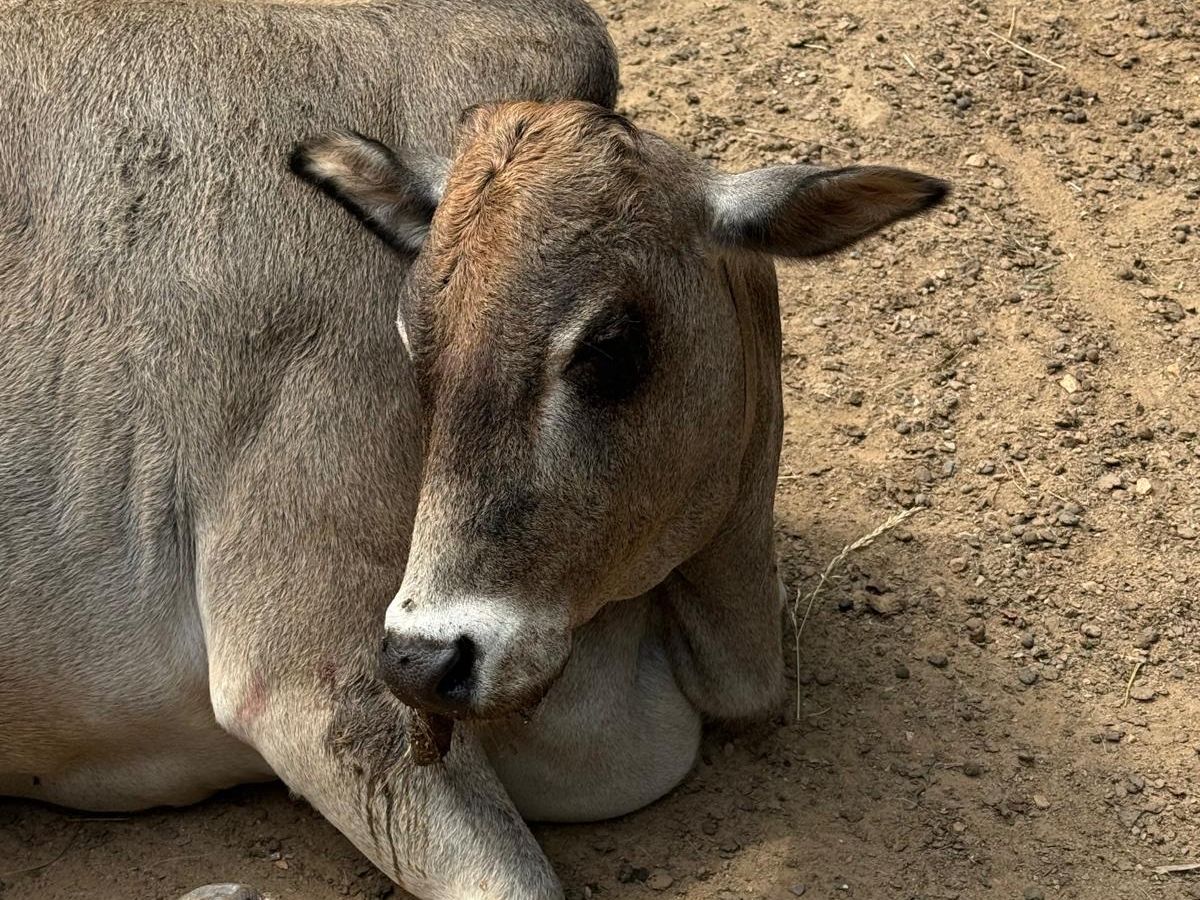
A zebu lying down and resting at Plumpton Park Zoo

A zebu resting at Plumpton Park Zoo.

For teachers and homeschool families

A free two-page zebu fact sheet with fast facts, words to know, discussion questions and a drawing activity. Teachers may copy and share it freely as long as they credit Plumpton Park Zoo.

Printable Fact Sheet (PDF)


Field guide

Cattle from South Asia

Zebu are humped cattle domesticated in South Asia thousands of years ago, and today they are found across Asia, Africa and South America in dozens of regional breeds. The muscular hump over the shoulders is their signature feature, paired with a long hanging dewlap at the throat and loose, drooping ears.

Archaeologists trace zebu to Mehrgarh, in Balochistan, Pakistan, where they were domesticated more than 8,000 years ago from the Indian aurochs, a wild ox that is now extinct. Zebu come in dozens of breeds; India alone has registered at least 55 indigenous cattle breeds.

Zebu are one of the two main kinds of domestic cattle. The other is taurine cattle; both descend from wild aurochs.

Sources: Pérez-Pardal et al. 2018, Scientific Reports; Gangal et al. 2014, PLOS ONE; Indian Council of Agricultural Research (ICAR-NBAGR): breed registration; Animal Diversity Web: Bos taurus; Colorado State University AgNext: Bos indicus adaptations for heat tolerance.


At a glance

Zebu fast facts

Scientific nameBos taurus indicus
FamilyBovidae (cattle)
SizeVaries by breed; miniature zebu about 36–42 in at the shoulder
Weight300–600 lb (miniature) to 1,000–2,200 lb (Brahman)
LifespanAround 20 years
BreedsDozens
StatusDomesticated
At Plumpton ParkGrace, Loki & ZeeZee

Sources: Oklahoma State University, Breeds of Livestock: Miniature Zebu; Oklahoma State University, Breeds of Livestock: Brahman; Animal Diversity Web: Bos taurus.


8,000

Years since zebu were first domesticated, at least

An ancient partnership

Working cattle of the tropics

People have kept zebu for thousands of years. They pull plows and carts, and zebu breeds such as the Brahman are raised for beef. In India, about 65.7 million cattle were used for draft work in 1987, nearly all of them native breeds.

Their heat tolerance is why they are the working cattle of choice across much of the tropics, and why zebu bloodlines have been crossed into heat-tolerant breeds worldwide.

Sources: Phaniraja & Panchasara 2009, Veterinary World; Oklahoma State University: Brahman; Utsunomiya et al. 2019.


Built for heat

How a zebu keeps cool

Almost everything about a zebu is built for heat. The loose skin and large dewlap give the body more surface area to shed warmth, the coat is short and sleek, and zebu have more sweat glands than European cattle along with a natural resistance to ticks and other parasites.

Scientists at Colorado State University note that zebu sweat glands are larger, more numerous and closer to the skin’s surface than those of European cattle, and that zebu store fat in a few localized spots instead of insulating the whole body.

  • Hump: mostly muscle, over the shoulders
  • Dewlap: a fold of skin that helps shed heat
  • Ears: large and drooping, more surface to cool
  • Coat: short, sleek and light

Sources: Colorado State University AgNext: Bos indicus adaptations for heat tolerance; Heath 1979, zebu hump anatomy (PubMed); Utsunomiya et al. 2019, Scientific Reports.

On the menu

What zebu eat

Zebu are grazers. They feed on grass and hay, and zebu breeds are known for doing well on a wide range of feed. Ours are fed hay and grain along with pasture.

Sources: Oklahoma State University, Breeds of Livestock: Brahman; Animal Diversity Web: Bos taurus.


Spot the difference

Zebu or another kind of cattle?

Zebu

Bos taurus indicus. A shoulder hump, a long dewlap and drooping ears.

Watusi

African cattle famous for their enormous horns. Meet our Watusi.

Scottish Highland cattle

Shaggy, long-haired cattle with long horns. See our Highland cattle.

American bison

A wild relative with a hump, not a domestic cow. Meet our bison.

Sources: Oklahoma State University: Ankole-Watusi; Oklahoma State University: Highland; National Park Service, Yellowstone: Bison.


Conservation

A domestic animal

Domestic animal

Zebu are domestic animals, so they are not assessed on the IUCN Red List. Their wild ancestor, the Indian aurochs, is extinct.

Sources: IUCN Red List Guidelines: domesticated taxa are not listed; Pérez-Pardal et al. 2018, Scientific Reports.


Support

Help care for Grace, Loki, ZeeZee & the animals of Plumpton Park

As a nonprofit zoo, Plumpton Park Zoo relies on admissions, memberships and the generosity of people who believe in what we do. Donations help support animal care, veterinary services, nutritious diets, enrichment, habitat improvements and the continued development of the zoo.

Support Our Animals

Plumpton Park Zoological Gardens, Inc. is a 501(c)(3) nonprofit organization. Donations support the zoo’s charitable mission and are tax-deductible to the extent permitted by law.


Questions

Frequently asked questions about zebu

What is the hump on a zebu?

A hump of muscle over the shoulders that also holds some fat. Keeping fat there, instead of all over the body, helps a zebu shed heat.

Where do zebu come from?

South Asia. They were first domesticated more than 8,000 years ago at Mehrgarh, in what is now Pakistan.

Why do zebu handle heat so well?

Loose skin, a large dewlap, big ears, a sleek coat and more numerous, larger sweat glands than European cattle all help them shed heat.

What do zebu eat?

Grass and hay. Ours are fed hay and grain along with pasture.

Are zebu endangered?

No. Zebu are a domestic animal. Their wild ancestor, the Indian aurochs, is extinct.

Where can I see zebu in Maryland?

At Plumpton Park Zoo in Rising Sun, Cecil County, Maryland, home to Grace, Loki and ZeeZee. See Hours and Tickets for times and admission.

Sources: Pérez-Pardal et al. 2018, Scientific Reports; Heath 1979, zebu hump anatomy (PubMed); Colorado State University AgNext; Oklahoma State University, Breeds of Livestock: Brahman.


See our zebu at Plumpton Park Zoo

Meet Grace, Loki and ZeeZee and discover more than 200 animals in Rising Sun, Maryland.

The zoo is in Cecil County, an easy drive from Delaware and southern Pennsylvania. Explore our Watusi, alpacas, Bactrian camel and Animal Learning Center, and feed a giraffe.