Three live here

Ring-tailed Lemur

Lemur catta

Instantly recognizable by its black-and-white ringed tail, the ring-tailed lemur lives in female-led troops in southern Madagascar. Meet Catherine, Jessica and Phil, the ring-tailed lemurs of Plumpton Park Zoo in Rising Sun, Maryland.

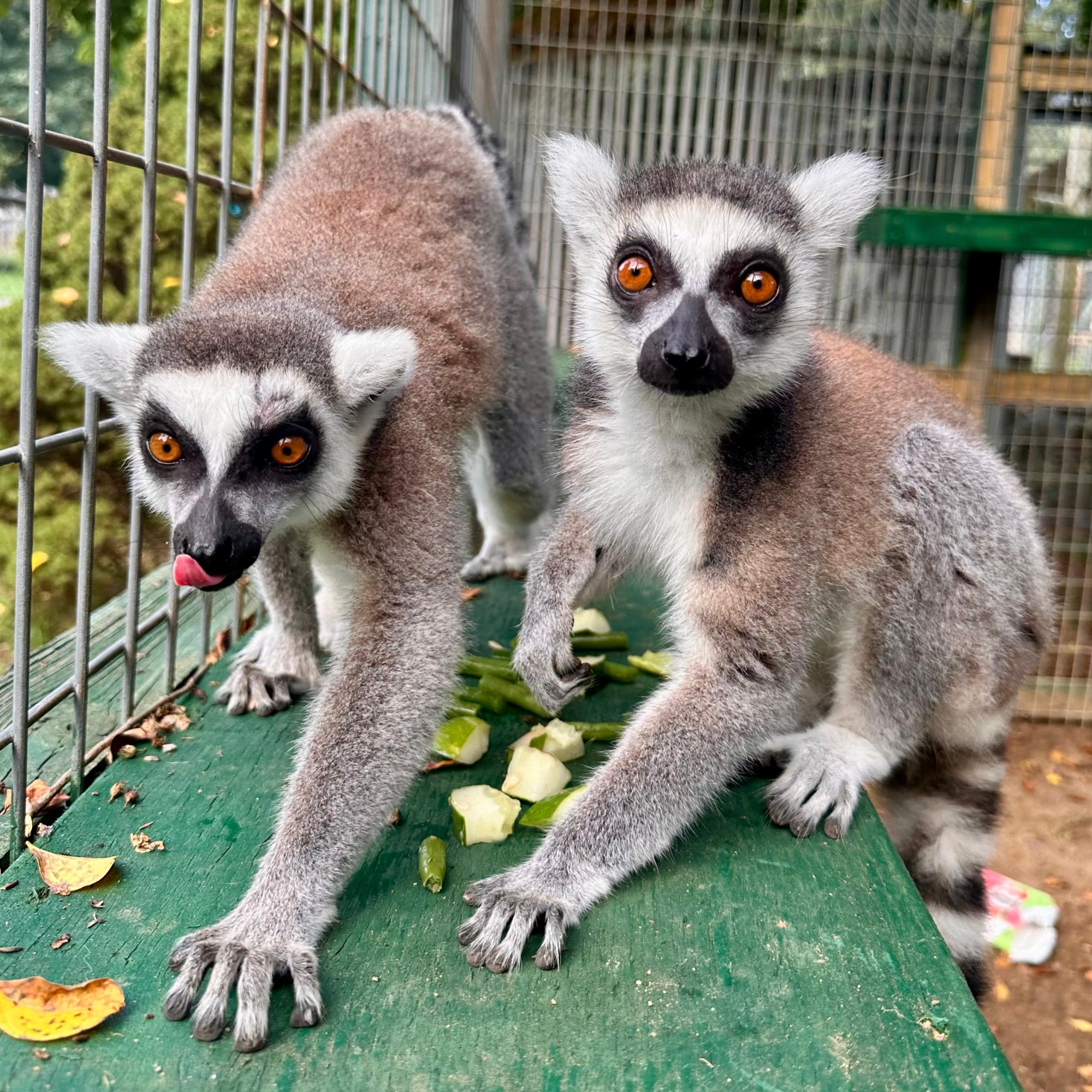
Two ring-tailed lemurs eating chopped produce at Plumpton Park Zoo in Rising Sun, Maryland
Body length15–18 in
Tail length22–25 in
WeightAbout 5 lb
Conservation statusEndangered

Our lemurs

Meet Catherine, Jessica and Phil

Three ring-tailed lemurs, and plenty of sunbathing.

Catherine (Cat)JessicaPhil

Three ring-tailed lemurs live at Plumpton Park Zoo: Catherine, known as Cat, Jessica and Phil.

The ring-tailed lemur is instantly recognizable by its long, bushy tail ringed in alternating black and white bands — used more for balance and communication between troop members than for warmth. Native to the forests and scrubland of southern Madagascar, ring-tailed lemurs live in matriarchal troops of up to 30 animals, led by dominant females who outrank every male in the group. One of their most charming behaviors is “sunning” — sitting upright with legs spread and arms out, exposing their pale bellies to the morning sun, often as a group.

Ring-tailed lemurs relaxing on the grass in their outdoor exhibit at Plumpton Park Zoo

Our lemurs soaking up the sun on the grass.

For teachers and homeschool families

A free one-page ring-tailed lemur fact sheet with fast facts, words to know, discussion questions and a drawing activity. Teachers may copy and share it freely as long as they credit Plumpton Park Zoo.

Printable Fact Sheet (PDF)


Field guide

A lemur that lives on the ground

Ring-tailed lemurs spend more time on the ground than any other lemur species, up to half of their day. Troops stay in near-constant contact using a wide range of purrs, moans, and clicks; researchers have counted at least 28 different calls. Walking on the ground, a lemur holds its tail high like a flag so the rest of the troop can see it through the brush.

The species lives only on Madagascar, in the south and southwest of the island, from the area around Fort-Dauphin west to Morondava.

Sources: Duke Lemur Center; San Diego Zoo Wildlife Alliance.

A ring-tailed lemur holding its black-and-white ringed tail high at Plumpton Park Zoo

The black-and-white ringed tail, held high like a flag. At Plumpton Park Zoo.


At a glance

Ring-tailed lemur fast facts

Scientific name Lemur catta
Animal group Mammal — primate (lemur)
Native region Southern and southwestern Madagascar
Habitat Forest and scrubland
Diet Omnivore: fruit, leaves, flowers, bark, sap
Size 15 to 18 inches (body); tail 22 to 25 inches
Weight About 5 lb
Lifespan Up to 16 years in the wild, up to 27 in human care
Conservation status Endangered (IUCN)

Sources: Duke Lemur Center; San Diego Zoo Wildlife Alliance.


30

lemurs can live together in one troop.

Girls in charge

Troops led by females

Ring-tailed lemur troops are matriarchal. Dominant females lead the group and outrank every male in it.

Living in a group keeps them safe: troop members watch for predators and give loud alarm calls when one is spotted.

Sources: Duke Lemur Center; San Diego Zoo Wildlife Alliance.


Behavior

Stink fights and sunbathing

Males settle rank disputes through “stink fights,” wafting their scent-marked tails at rivals rather than fighting physically. They rub their tails against scent glands on their wrists and chest, then wave them at each other.

  • Ringed tail: longer than the body, used for balance and for signaling to the troop
  • Scent glands: on the wrists and chest of males, used for marking and stink fights
  • Sunning posture: arms out and belly to the sun to warm up in the morning
  • Many voices: purrs, moans, clicks and loud alarm calls
On the menu

What ring-tailed lemurs eat

Ring-tailed lemurs are omnivores, eating fruit, leaves, flowers, bark, and sap, along with the occasional insect or small vertebrate.

A ring-tailed lemur sitting behind a log in its exhibit at Plumpton Park Zoo

Keeping watch from a log at Plumpton Park Zoo.

Sources: Duke Lemur Center; San Diego Zoo Wildlife Alliance.


Family life

Raising baby lemurs

135 dayspregnancy
1–3babies a season; one is most common
3 yrsto reach adulthood

In Madagascar, babies are born in August and September. For the first three to four weeks a newborn clings to its mother’s belly, then it starts riding on her back.

Sources: Duke Lemur Center; San Diego Zoo Wildlife Alliance.


Spot the difference

Ring-tailed lemur or another lemur?

Ring-tailed lemur

Gray body, white face with a black mask, and a black-and-white ringed tail. Spends much of its time on the ground.

Black-and-white ruffed lemur

A larger, fluffier lemur with a black-and-white coat and no rings on its tail. We have two at Plumpton Park.

Brown lemur

A brown lemur with a plain, unringed tail. We have two of them, too.

Raccoon

Also has a ringed tail and a masked face, but it is a carnivore from the Americas, not a primate.


Conservation

Why they matter

ENDANGERED

Ring-tailed lemurs are listed as Endangered. Wild populations have crashed to an estimated 2,000 individuals due to habitat loss and hunting, making this one of the most endangered primates in the world. That estimate comes from two studies published in 2016 and 2017, which counted 2,000 to 2,400 lemurs; other researchers argued the surveys missed some populations, but agree the species has declined.

More than 1,000 ring-tailed lemurs live in about 140 zoos, which is why many people assume the species is safe. In the wild, the forests and scrub they depend on keep shrinking.

Sources: Lemur Conservation Network; Mongabay; Duke Lemur Center.


Support

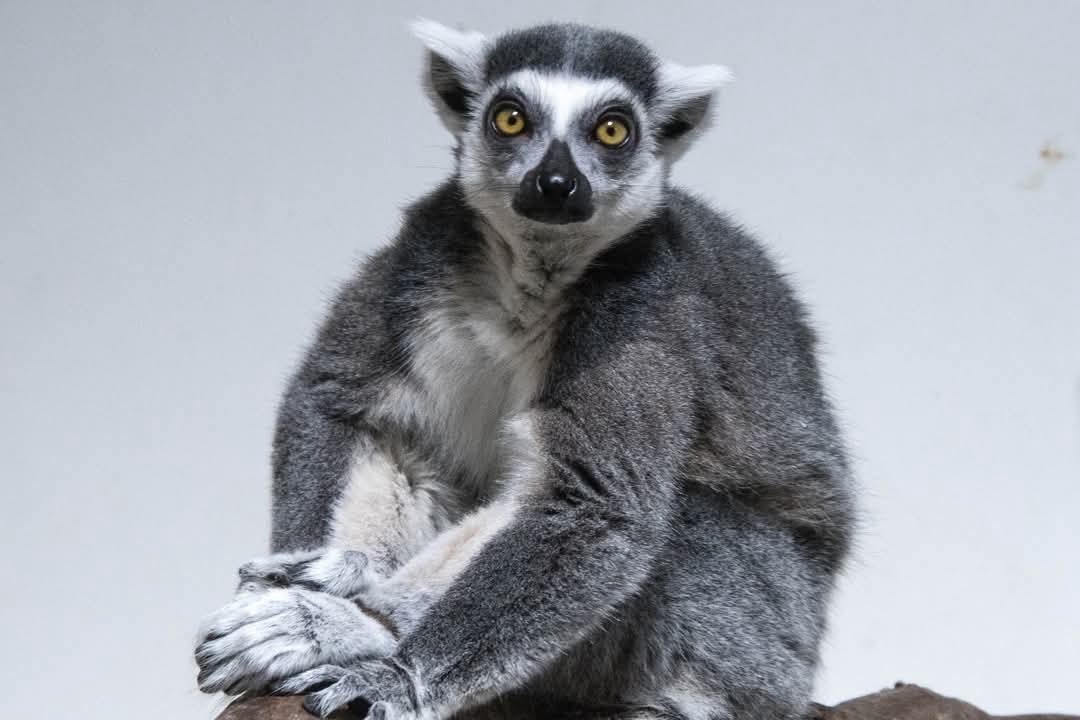
Portrait of a ring-tailed lemur with amber eyes at Plumpton Park Zoo
One of our ring-tailed lemurs at Plumpton Park Zoo.

Help care for our lemurs & the animals of Plumpton Park

As a nonprofit zoo, Plumpton Park Zoo relies on admissions, memberships and the generosity of people who believe in what we do. Donations help support animal care, veterinary services, nutritious diets, enrichment, habitat improvements and the continued development of the zoo.

Support Our Animals

Plumpton Park Zoological Gardens, Inc. is a 501(c)(3) nonprofit organization. Donations support the zoo’s charitable mission and are tax-deductible to the extent permitted by law.


Questions

Questions visitors ask about ring-tailed lemurs

What is the ringed tail for?

Balance and communication between troop members, more than warmth. A lemur holds its tail up like a flag so the troop can see it.

Who leads a ring-tailed lemur troop?

Females. Troops are matriarchal, and dominant females outrank every male in the group.

Why do lemurs sit with their arms out?

It is called sunning. They sit upright with arms out and bellies to the morning sun to warm up, often as a group.

How many ring-tailed lemurs live at Plumpton Park Zoo?

Three: Catherine (Cat), Jessica and Phil.

Are ring-tailed lemurs endangered?

Yes. They are listed as Endangered because of habitat loss and hunting in Madagascar.

Where can I see ring-tailed lemurs in Maryland?

At Plumpton Park Zoo in Rising Sun, Cecil County, Maryland. See Hours and Tickets for times and admission.


Meet Catherine, Jessica and Phil at Plumpton Park Zoo

Our ring-tailed lemurs are part of a visit to Plumpton Park Zoo in Rising Sun, Maryland.

The zoo is in Cecil County, an easy drive from Delaware and southern Pennsylvania. While you are here, meet our siamangs, our two-toed sloths and our binturongs.