
Plumpton Park Zoo · Rising Sun, Maryland
♥ Rescued at Plumpton Park Zoo
♥ Rescued at Plumpton Park Zoo
Scottish Highland Cow
Bos taurus
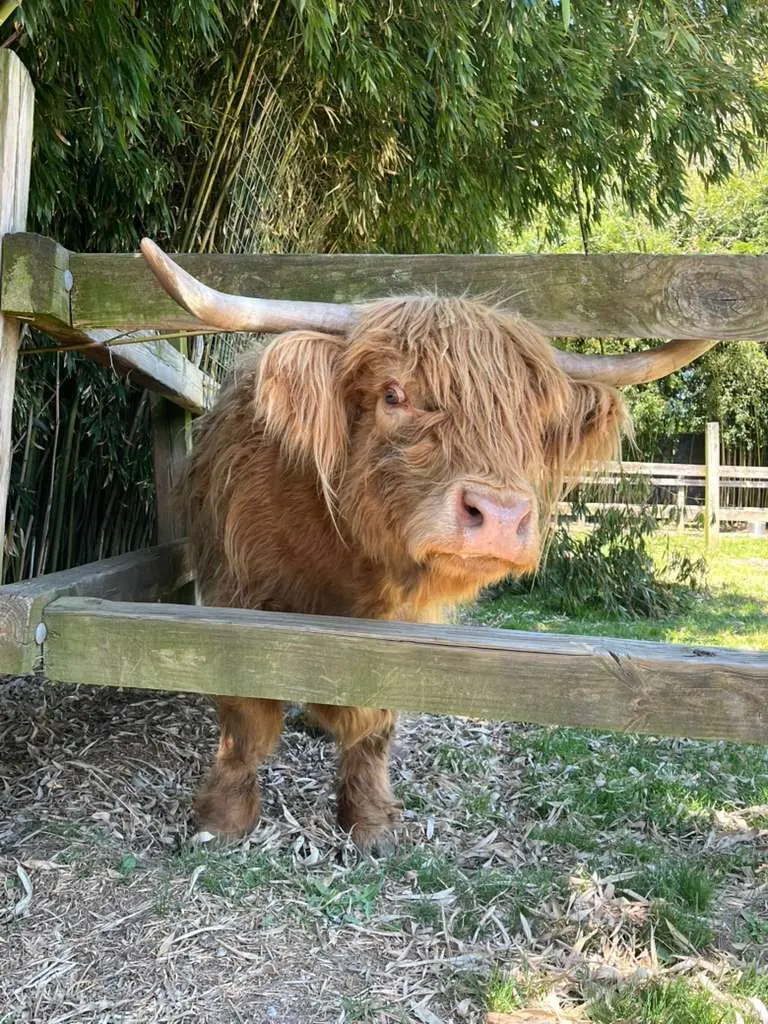
A shaggy coat, sweeping horns and a Scottish heritage. Discover Highland cattle at Plumpton Park Zoo in Rising Sun, Maryland.
Animal groupDomestic cattle
DietHerbivore
OriginScotland
YoungCalf
Field guide
Scottish Highland Cow at Plumpton Park Zoo
The Highland is one of the oldest registered cattle breeds in the world, with a herd book opened in 1884, and it comes from the mountains and islands of northwest Scotland. Centuries of cold, wet, windy weather shaped an animal built to shrug it off. What looks like one shaggy coat is really two: a long, oily outer layer that sheds rain, over a soft downy undercoat that traps warmth. It is the longest hair of any cattle breed, and it means Highlands carry far less back fat than other cattle because they do not need it for insulation.
Both cows and bulls grow the long sweeping horns, and the breed has a reputation for a calm, unhurried temperament to go with them. About six in ten Highlands are the familiar reddish-brown, but the breed also comes in black, yellow, dun, white and brindle. They are long-lived for cattle, and a cow may still be raising calves at fifteen. Come meet our Highland cow at Plumpton Park Zoo. Plan your visit today.
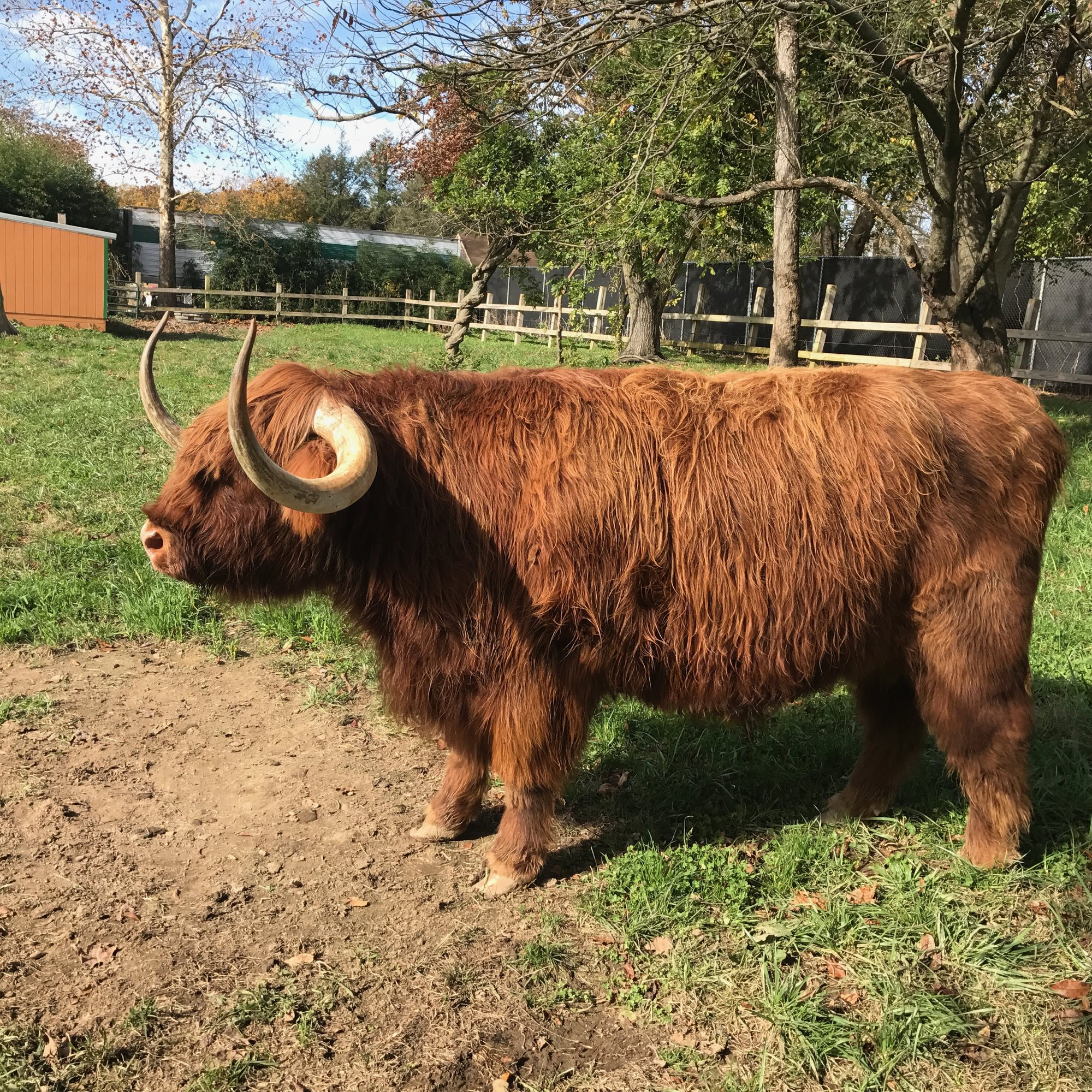
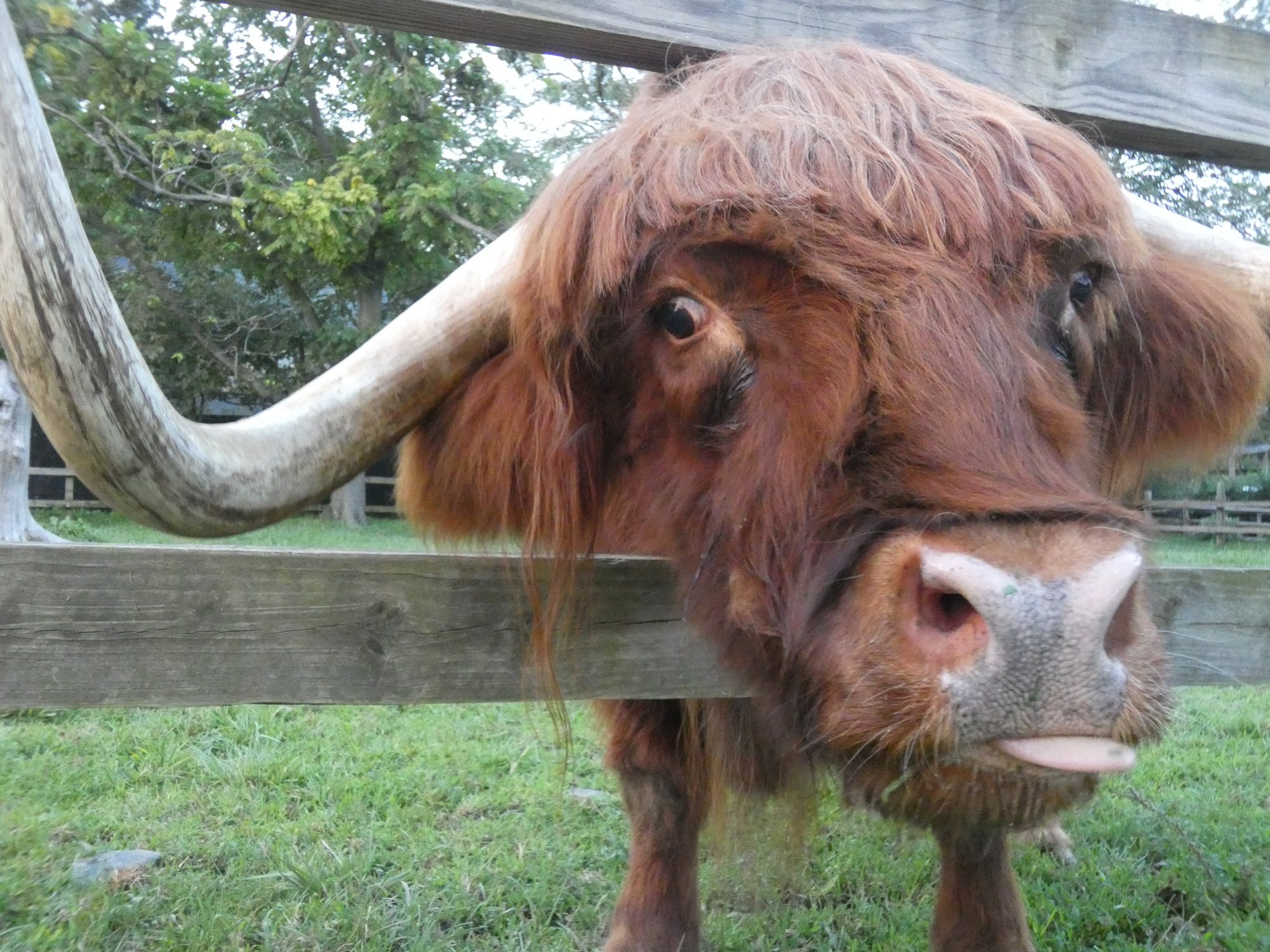
The long hair is more than a memorable appearance. Highland cattle developed in Scotland’s demanding climate, where rain, wind and rough grazing shaped the breed’s familiar features. Look for the fringe over the forehead, the longer outer hair and the horns that curve away from the head.
A cow is an adult female; a bull is an adult male. Highland cattle is the name for the breed as a whole. Comparing that vocabulary with the title of our guide helps children separate a kind of animal from its age or sex. Coat colour alone does not identify an individual animal.
Sources: Highland Cattle Society · American Highland Cattle Association · Wildlife Trust BCN · Animal Diversity Web
For teachers and homeschool families
Print our free one-page Scottish Highland Cow fact sheet: fast facts, words to know, discussion questions and a drawing activity. Teachers may copy and share it freely as long as they credit Plumpton Park Zoo.
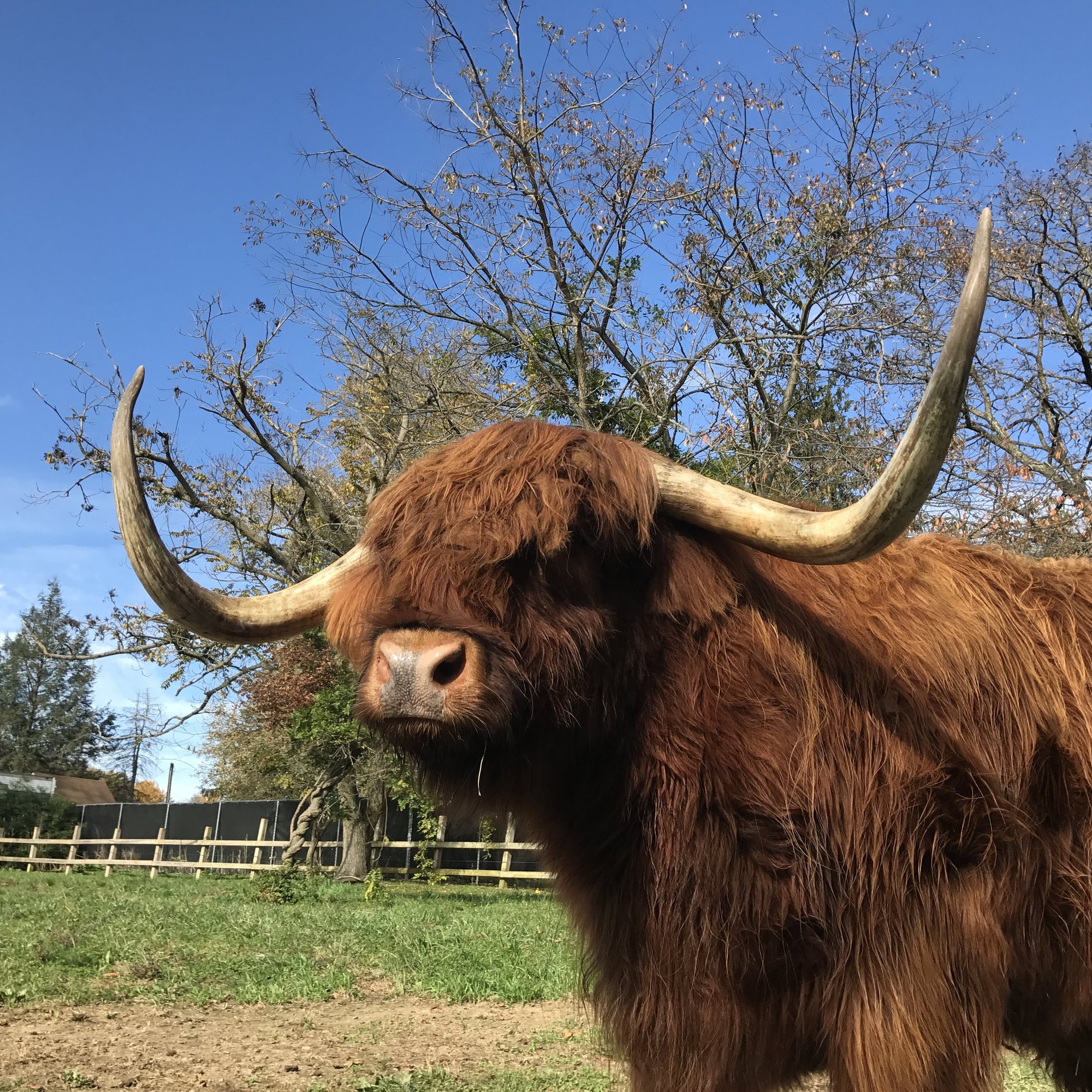
One of our Highland cattle, showing the breed’s shaggy coat and sweeping horns.
At a glance
Scottish Highland Cow fast facts
Scientific nameBos taurus
CoatTwo layers
GroupFold or herd
StatusDomestic breed
From our original guide
Size: About 3.5 – 4 feet at the shoulder; horn span can reach 3 feet or more
Weight: Cows 900 – 1,100 lbs; bulls up to 1,800 lbs
Lifespan: 18 – 20 years
DOMESTIC BREED
Our original guide is retained above. The breed society dates the first published herd book to 1885; this is distinct from the society’s formation in 1884. Published adult weights vary with sex and condition: the American association gives roughly 900–1,200 pounds for cows and 1,500–1,800 for bulls. A range describes a population, rather than the weight of the animal in this photograph.
Sources: Highland Cattle Society · American Highland Cattle Association · Wildlife Trust BCN · Animal Diversity Web
2
layers in a Highland coat
A coat built for wet, cold weather
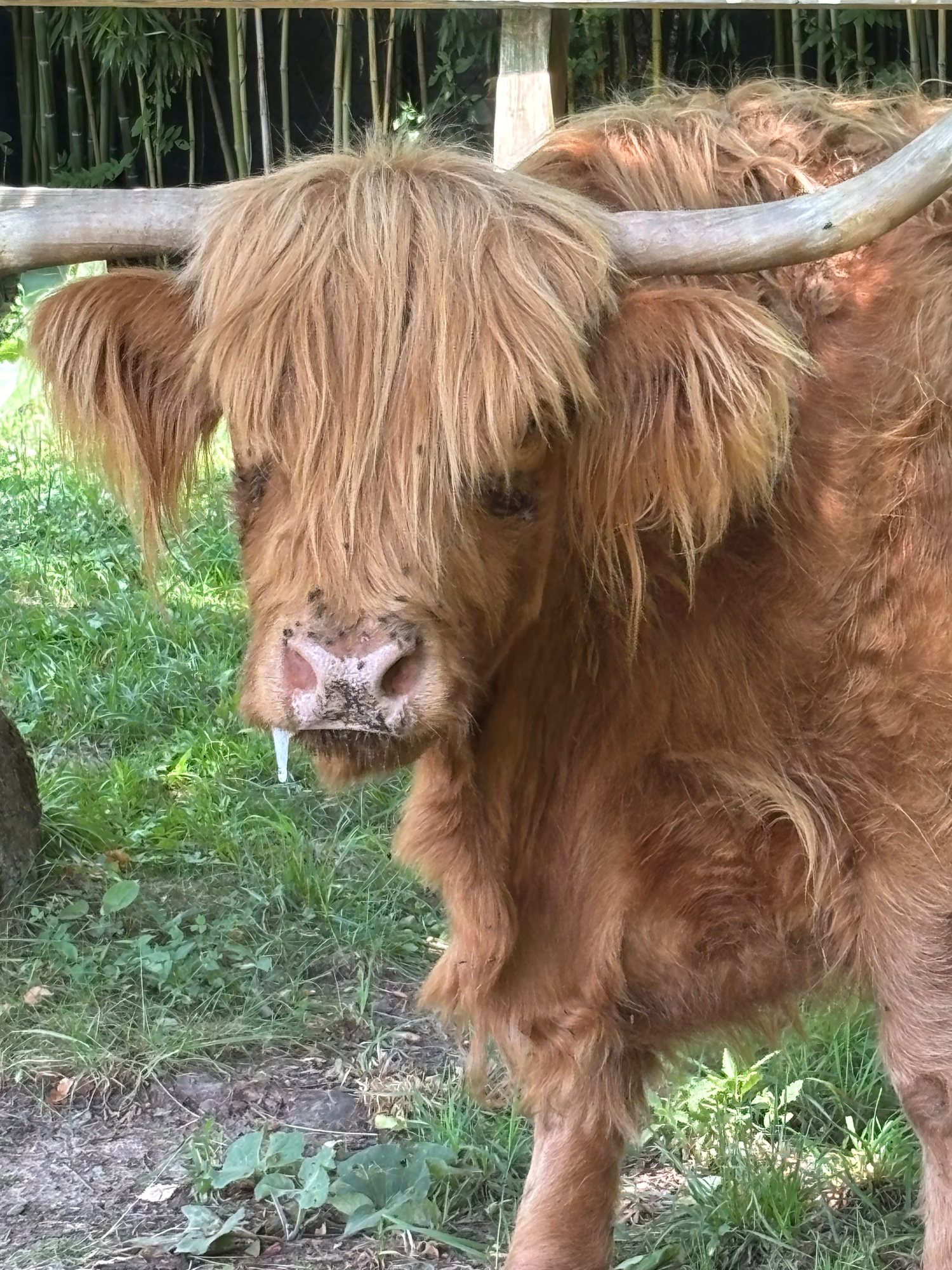
The coarse outer coat helps shed rain, while the softer undercoat provides insulation. Those layers explain why the animal can look much larger than its frame: the outline includes a substantial covering of hair. The American Highland Cattle Association also describes seasonal shedding.
For a field observation, compare hair along the forehead, sides and legs. Describe length and texture without touching the animal. Then consider two different jobs a covering can perform: keeping rain away from the skin and reducing heat loss. A body structure can serve more than one purpose.
Sources: Highland Cattle Society · American Highland Cattle Association · Wildlife Trust BCN · Animal Diversity Web
Behaviour
Living and learning in a group
A group of Highland cattle is often called a fold, although herd is also widely used. Watch whether animals face the same direction, rest near one another or move toward food at different times. Those observations describe what is happening now; they do not reveal a whole social relationship from a single moment.
Both male and female Highland cattle normally grow horns. Their shape changes with age and can differ between the sexes. Horns, body size and the shaggy forelock are useful structures to compare, but visitors should give every animal space and follow the zoo’s viewing guidance.
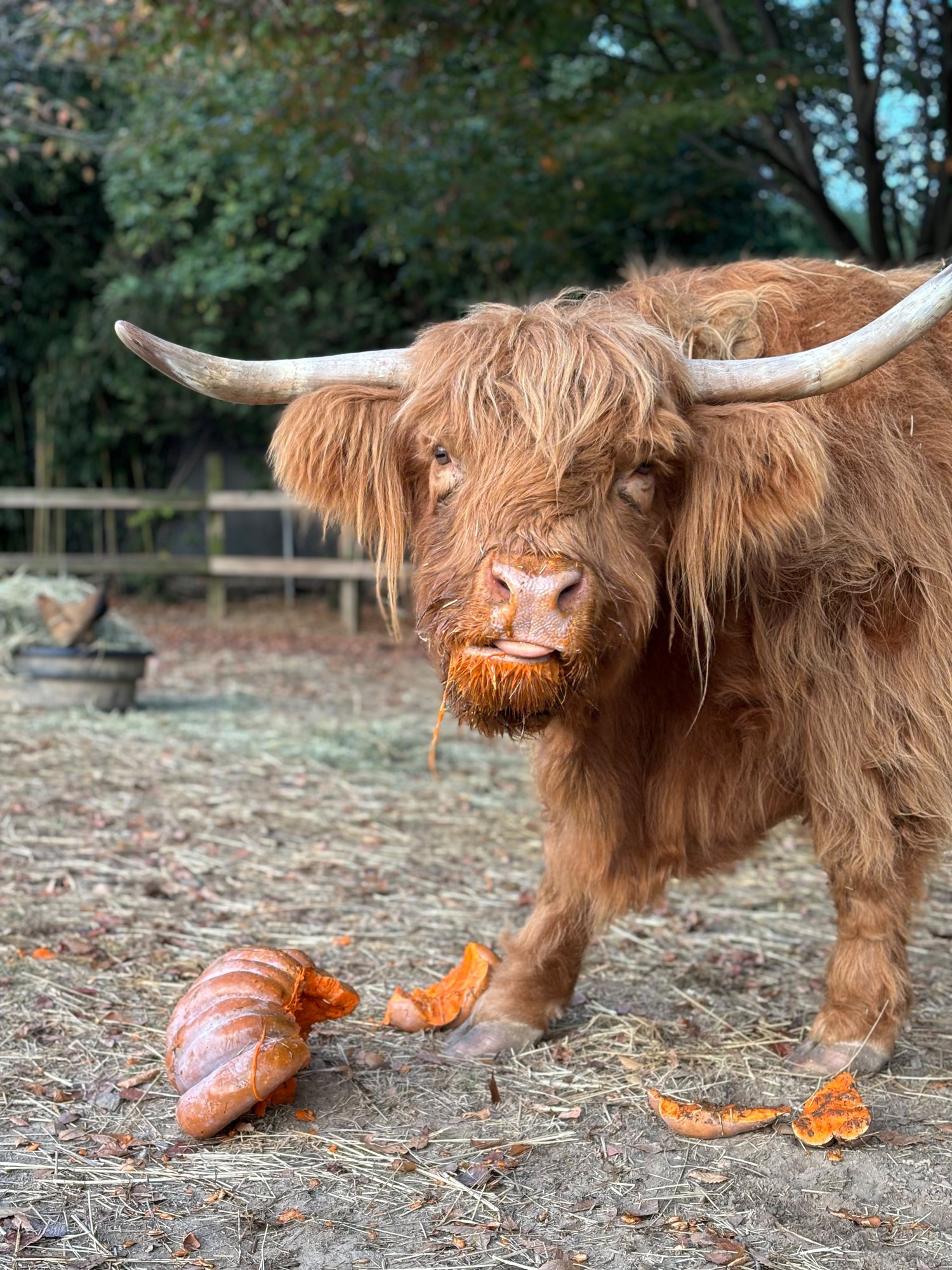
A pumpkin treat for one of our Highland cattle.
Sources: Highland Cattle Society · American Highland Cattle Association · Wildlife Trust BCN · Animal Diversity Web
On the menu
What Highland cattle eat
Highland cattle are grazers. They eat grass, hay and browse, and are known for working through rough, coarse plants that other cattle walk past. Ours is fed hay and grain alongside pasture.
Cattle are ruminants. Microbes in their digestive system help break down fibrous plant material. Chewing cud returns partly digested food to the mouth for another round of chewing, so a resting animal may still be busy processing a meal.
Highland cattle are known for making use of rough vegetation. In Britain, conservation grazing programmes sometimes use them to manage scrub and allow a greater variety of plants to grow. Wildlife Trust BCN describes that work at its own reserves. It provides an example of a breed’s role in land management, rather than a feeding instruction for zoo visitors.
Sources: Highland Cattle Society · American Highland Cattle Association · Wildlife Trust BCN · Animal Diversity Web
Family life
A calf’s first days
Cattle pregnancy lasts about nine months, and a single calf is usual. A calf can stand soon after birth and gets milk from its mother. These early abilities connect two parts of an animal’s life: the calf’s body structures help it move, while parental care supplies food.
When learning about young animals, ask which facts apply generally and which require an observation of a particular family. A photograph of an adult cannot tell you whether it has a calf. The teacher sheet instead invites students to explain how legs and a mother’s milk help a young animal survive.
Sources: Highland Cattle Society · American Highland Cattle Association · Wildlife Trust BCN · Animal Diversity Web
Compare animals
Three domestic animals, different coverings
Highland cattle
A shaggy, double coat and long horns.
Sheep
Woolly fleece; young are lambs.
Alpaca
A fibre-producing camelid; young are cria.
Hair and fleece change an animal’s outline and protect its body. Compare the long hair of Highland cattle with the fleece in our sheep guide and the fibre of an alpaca. Describe what is visible before deciding how those coverings work.
Sources: Highland Cattle Society · American Highland Cattle Association · Wildlife Trust BCN · Animal Diversity Web
Conservation
Scottish Highland Cow conservation
Domestic breed
Highland cattle are a domestic breed, rather than a wild species with its own global IUCN category. Breed associations maintain records and standards that preserve this agricultural heritage. Their history is one part of the broader relationship between people, animals and landscapes.
Conservation grazing illustrates another connection. Grazing can change the height and composition of vegetation, which in turn affects habitats for other organisms. The result depends on the place and how animals are managed. Students can explore that idea by drawing a habitat and identifying which plants and animals could be affected by grazing.
Sources: Highland Cattle Society · American Highland Cattle Association · Wildlife Trust BCN · Animal Diversity Web
Support
Help care for our Highland cattle & the animals of Plumpton Park
As a nonprofit zoo, Plumpton Park Zoo relies on admissions, memberships and the generosity of people who believe in what we do. Donations help support animal care, veterinary services, nutritious diets, enrichment, habitat improvements and the continued development of the zoo.
Plumpton Park Zoological Gardens, Inc. is a 501(c)(3) nonprofit organization. Donations support the zoo’s charitable mission and are tax-deductible to the extent permitted by law.
Frequently asked questions about Highland cattle
Why are Highland cattle so hairy?
Their coarse outer coat sheds rain and the soft undercoat helps insulate them.
Do female Highland cattle have horns?
Yes. Both males and females normally grow horns.
What is a group of Highland cattle called?
It is often called a fold. Herd is also used.
What is a baby Highland cow called?
A young animal is a calf, which nurses on its mother’s milk.
Are Highland cattle a wild species?
No. Highland cattle are a domestic cattle breed with Scottish origins.
Where can I see Highland cattle in Maryland?
Visit Plumpton Park Zoo in Rising Sun, Maryland. Check Hours and Tickets before your visit.
Sources: Highland Cattle Society · American Highland Cattle Association · Wildlife Trust BCN · Animal Diversity Web
See Highland cattle at Plumpton Park Zoo
Plan your visit to Rising Sun, Maryland. Compare our Watusi cattle, sheep and alpacas, and explore the Mammals guide. Keep learning in the Animal Learning Center, and discover giraffe feeding.