♥ Rescued · Big cat · Russian Far East
♥ Rescued at Plumpton Park Zoo

Siberian
Tiger

Panthera tigris altaica

Meet Alexis and Miracle, Plumpton Park Zoo’s rescued tigers, in Rising Sun, Maryland, and discover the Siberian tiger, the largest cat in the world.

A tiger standing on a log at Plumpton Park Zoo in Rising Sun, Maryland
FamilyFelidae (cats)
Native rangeRussian Far East
DietCarnivore
Meet our tigersAlexis & Miracle

Our tigers

Alexis & Miracle

Listen for the chuff. It means hello.
AlexisMiracle

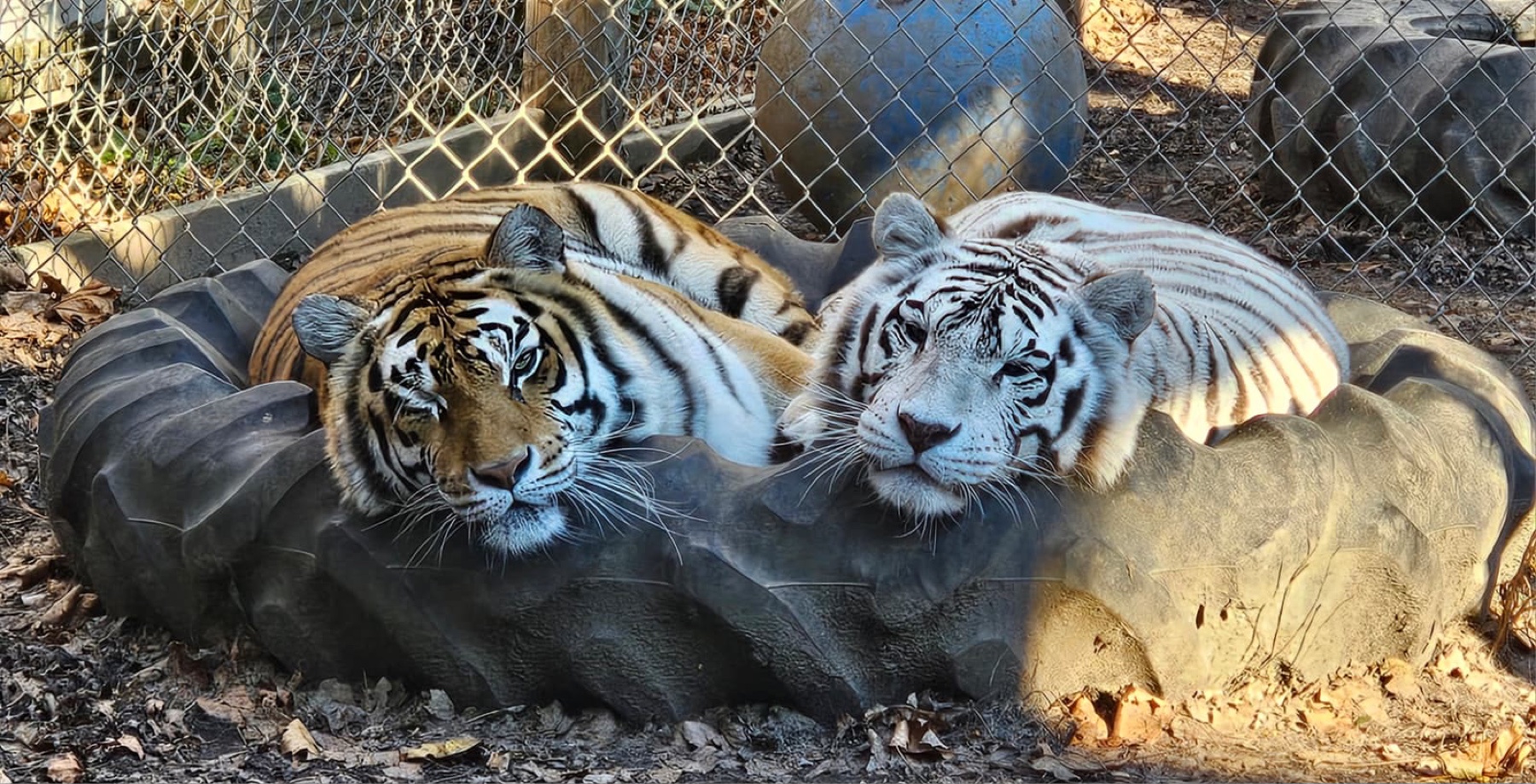
An orange tiger and a white tiger resting side by side on a tire bed at Plumpton Park Zoo

Alexis and Miracle resting together at Plumpton Park Zoo.

Alexis and Miracle are Plumpton Park Zoo’s tigers, and both were rescued.

About half of our animals are rescued, taken in from people and places that could no longer care for them. Our tigers are not a pure subspecies, so the zoo uses separate pages to teach the different kinds of tiger. This page is about the Siberian tiger; see our Bengal tiger page as well.

Like every animal at Plumpton Park, Alexis and Miracle are cared for daily by our trained animal-care team. See them at Plumpton Park Zoo — plan your visit.

Resident names from the zoo’s animal records.

For teachers and homeschool families

A free one-page Siberian tiger fact sheet with fast facts, words to know, discussion questions and a drawing activity. Teachers may copy and share it freely as long as they credit Plumpton Park Zoo.

Printable Fact Sheet (PDF)


Field guide

The tiger of the far north

The Siberian tiger, also known as the Amur tiger, is the largest of all cats in the world. Siberian tigers differ from other tigers because they have fewer, paler stripes. They are found in a small region of southeastern Russia, though some exist in China and North Korea.

Amur tigers live mainly in the forests of the Russian Far East. Tigers as a whole now occupy only about 7 percent of their historic range, which once stretched from Russia to Sumatra.

No two tigers have the same stripes, so researchers can identify wild tigers by their markings alone.

Sources: Smithsonian’s National Zoo: Tiger.

One of Plumpton Park Zoo’s tigers looking up from a wooden platform

One of our tigers looks up from a wooden platform.


At a glance

Siberian tiger fast facts

Scientific namePanthera tigris altaica
Also calledAmur tiger
LengthMales up to about 10 ft
WeightMales up to about 660 lb
Litter1–7 cubs, usually 2–4
Lifespan10–15 years in the wild; up to 20 in human care
Conservation statusEndangered
At Plumpton ParkAlexis & Miracle

Siberian tigers can measure up to 10.5 feet in length and weigh 550 to 660 pounds. Females of every tiger subspecies are smaller than males.

Sources: Smithsonian’s National Zoo: Tiger.


75 lb

How much a tiger can eat in a single night

Feast and fast

Hunting about once a week

Tigers are ambush hunters that stalk mostly at night by sight and sound. A tiger hunts about once a week and can eat up to 75 pounds of meat in one night.

Due to their size and power, it has no natural predators in its native environment. Tigers are also strong swimmers and can cross rivers and lakes as wide as 5 miles.

Sources: Smithsonian’s National Zoo: Tiger.


Tiger talk

Chuffs, roars and scratch marks

Tigers make a chuffing sound which is their version of a content purr. They also roar and grunt, and they mark their territories with scent and with scratches on trees.

A tiger’s stripes are as individual as a fingerprint: no two tigers share the same pattern.

  • Stripes: a pattern unique to every tiger
  • Size: the Amur is the largest tiger subspecies
  • Swimming: can cross water up to 5 mi wide
  • Voice: roars, grunts and friendly chuffs

Sources: Smithsonian’s National Zoo: Tiger.

On the menu

What Siberian tigers eat

The Siberian tiger mostly consumes elk, boars, bear, and deer. They also hunt smaller animals like rabbits, pikas, and fish.

Across their range, tigers depend on large hoofed animals such as wild boar and deer.

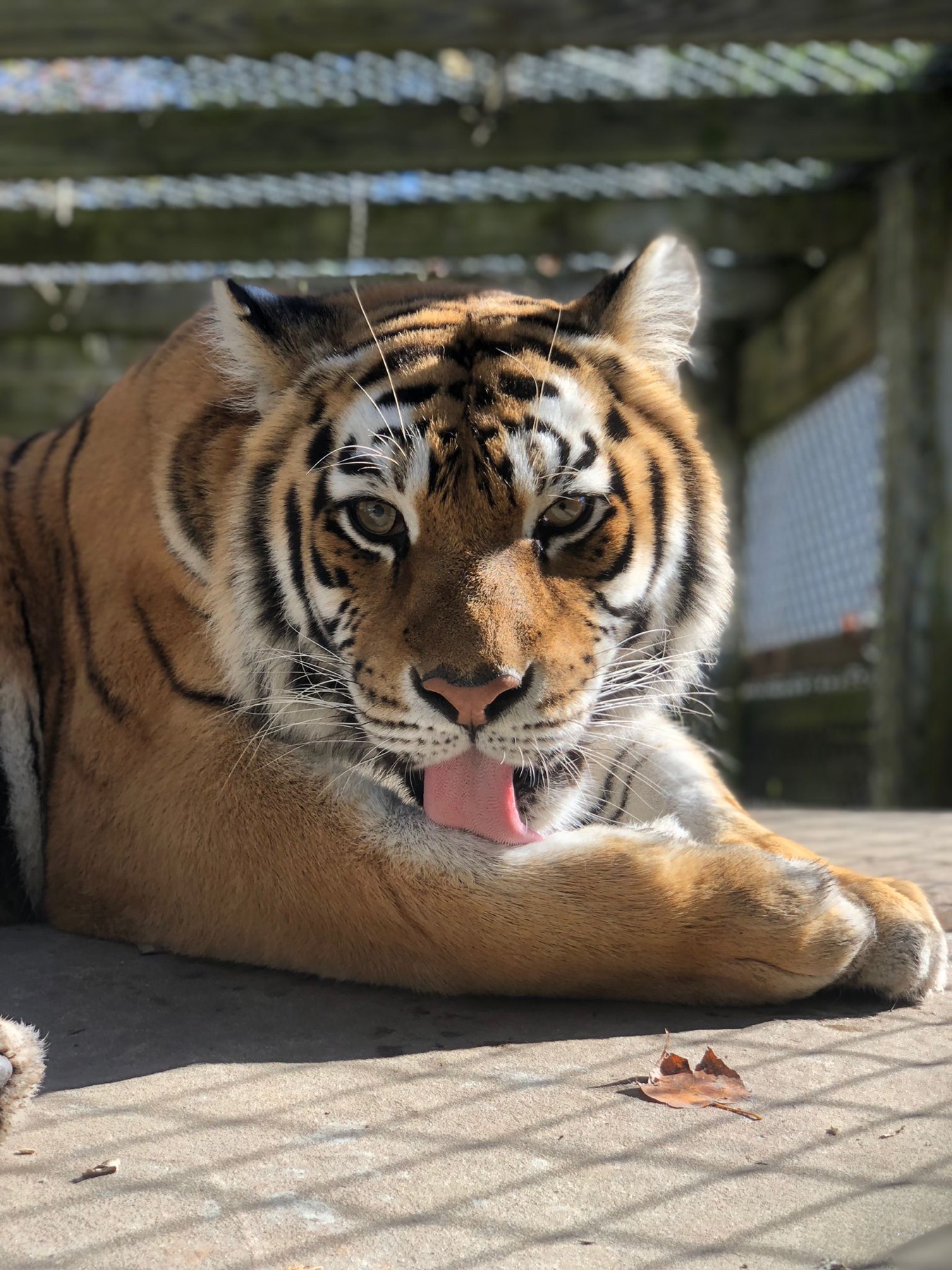
Orange tiger resting with its tongue out at Plumpton Park Zoo

A relaxed moment for one of our tigers.

Sources: Smithsonian’s National Zoo: Tiger.


Family life

Raising tiger cubs

~100days of pregnancy
2–4cubs in a usual litter
2–3years until independence
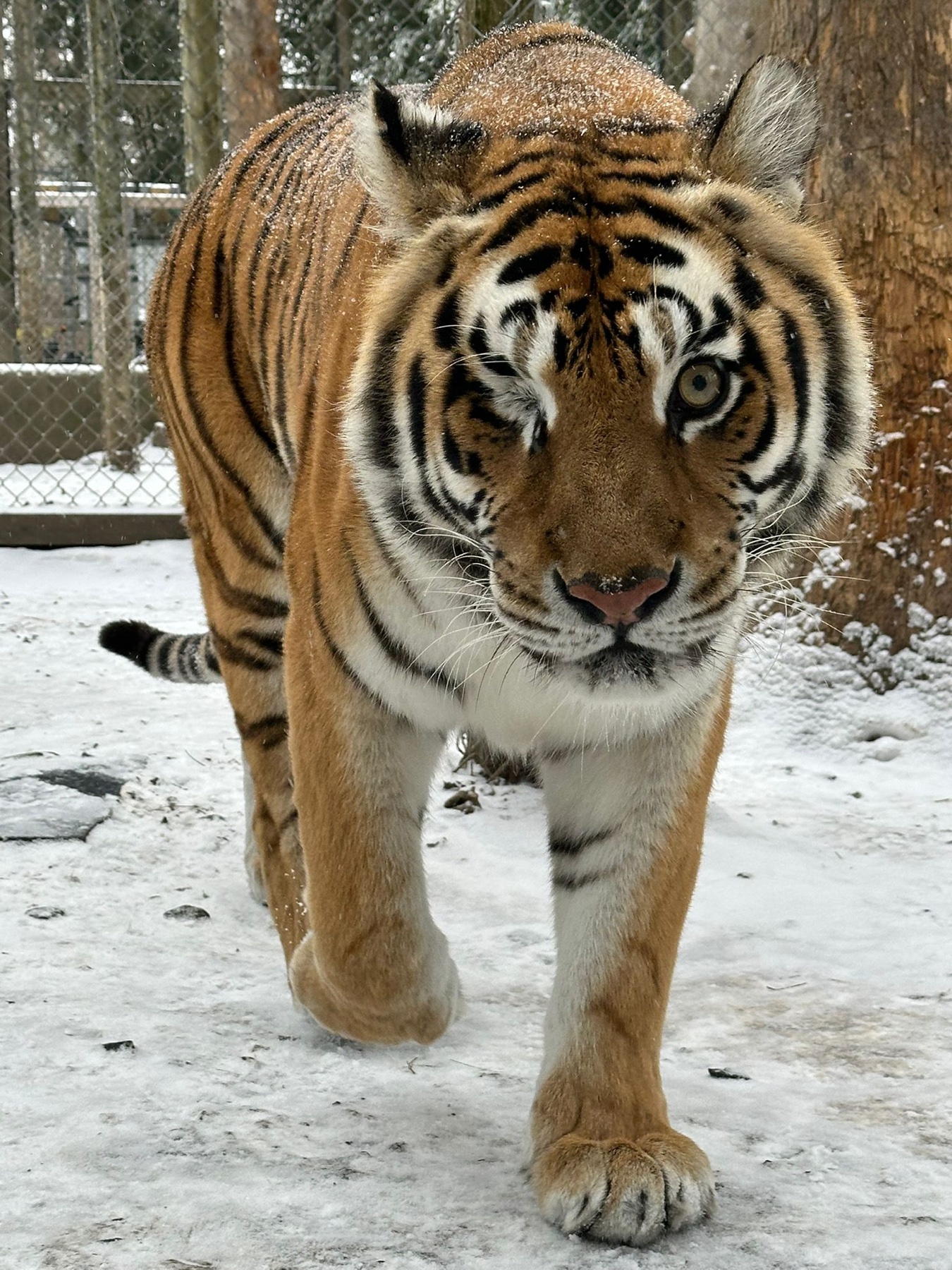
Orange tiger walking toward the camera through snow at Plumpton Park Zoo
One of our tigers on a snowy day at Plumpton Park Zoo.

A mother tiger raises her cubs alone. They stay with her until they are about 18 to 24 months old and become fully independent at two to three years. Life is hard for wild cubs: about half die before they turn two.

Sources: Smithsonian’s National Zoo: Tiger.


Spot the difference

Siberian tiger or another tiger?

Siberian (Amur) tiger

Panthera tigris altaica. The largest tiger, with fewer, paler stripes.

Bengal tiger

The tiger of India. Learn more on our Bengal tiger page.

Sumatran tiger

The smallest living tiger, found only on the Indonesian island of Sumatra; males reach about 310 lb.

Our other cats

Meet our white lions, cougars and servals.

Sources: Smithsonian’s National Zoo: Tiger.


Conservation

Saving the world’s largest cat

Endangered

There are thought to be less than 500 Siberian tigers left in the wild. Habitat loss and poaching threaten the dwindling population.

The Amur tiger is listed as Endangered, and all tigers are protected under CITES Appendix I. An estimated 3,900 tigers of all kinds survive in the wild, including about 360 Amur tigers. Six of the nine historical tiger subspecies still survive.

Sources: Smithsonian’s National Zoo: Tiger.


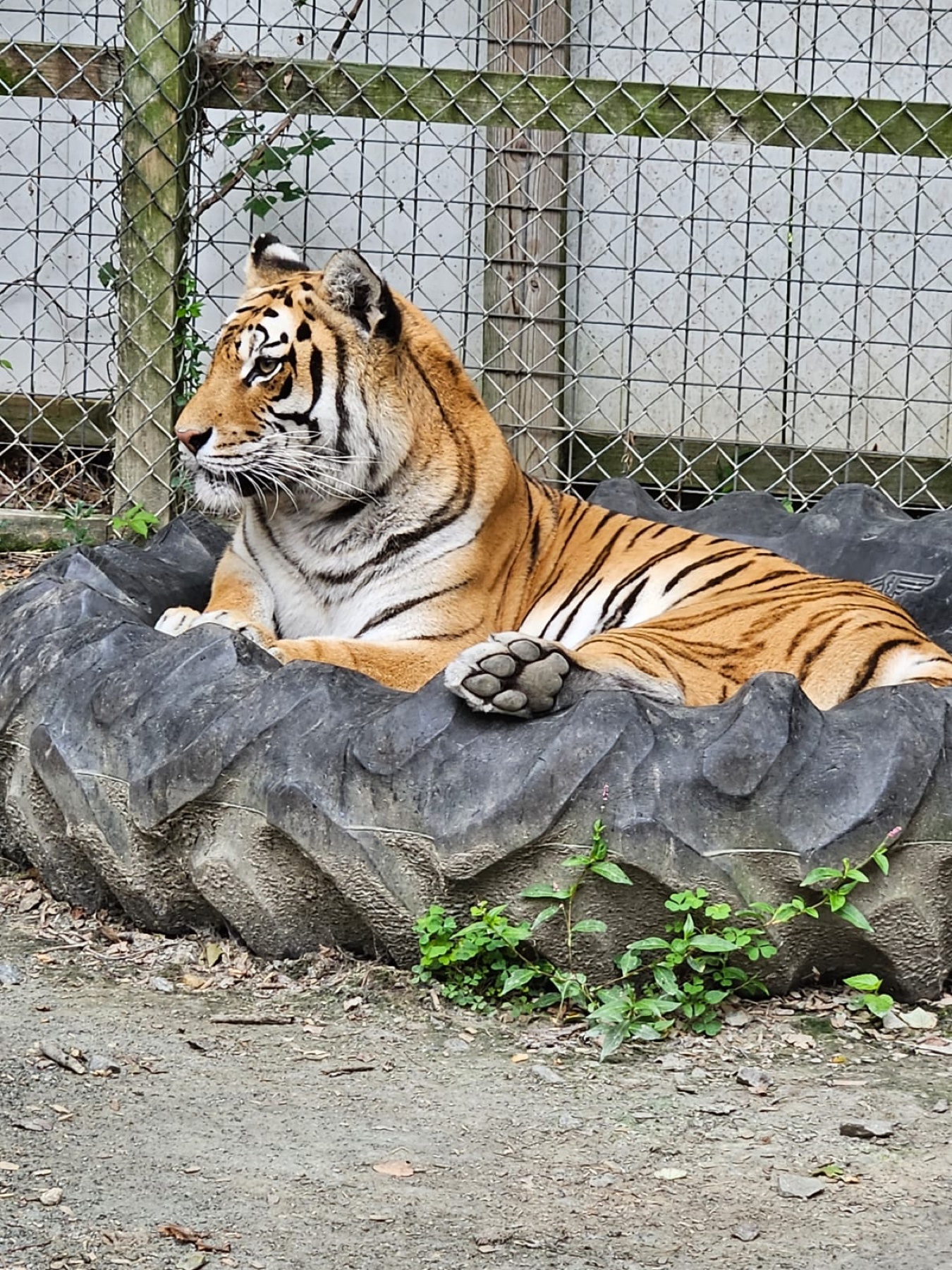
Orange tiger lounging on a large tire bed at Plumpton Park Zoo
A tire bed makes a comfortable lookout.

Support

Help care for Alexis, Miracle & the animals of Plumpton Park

As a nonprofit zoo, Plumpton Park Zoo relies on admissions, memberships and the generosity of people who believe in what we do. Donations help support animal care, veterinary services, nutritious diets, enrichment, habitat improvements and the continued development of the zoo.

Support Our Animals

Plumpton Park Zoological Gardens, Inc. is a 501(c)(3) nonprofit organization. Donations support the zoo’s charitable mission and are tax-deductible to the extent permitted by law.


Questions

Frequently asked questions about Siberian tigers

What is the difference between a Siberian tiger and an Amur tiger?

Nothing. They are two names for the same tiger, Panthera tigris altaica.

Is the Siberian tiger the biggest cat?

Yes. It is the largest tiger and the largest cat in the world. Males can reach about 10 feet long and 660 pounds.

Where do Siberian tigers live?

Mainly in the forests of the Russian Far East, with small numbers in China and possibly North Korea.

How many Siberian tigers are left?

Fewer than 500. Smithsonian’s National Zoo estimates about 360 Amur tigers in the wild.

What sound does a happy tiger make?

A chuff, a soft snorting sound that is a tiger’s friendly greeting.

Where can I see tigers in Maryland?

At Plumpton Park Zoo in Rising Sun, Cecil County, Maryland, home to Alexis and Miracle. See Hours and Tickets for times and admission.

Sources: Smithsonian’s National Zoo: Tiger.


See our tigers at Plumpton Park Zoo

Meet Alexis and Miracle and discover more than 200 animals in Rising Sun, Maryland.

The zoo is in Cecil County, an easy drive from Delaware and southern Pennsylvania. Explore our Bengal tiger page, white lions, clouded leopards and Animal Learning Center, and feed a giraffe.